Tandem Jump Safety Briefing Explained
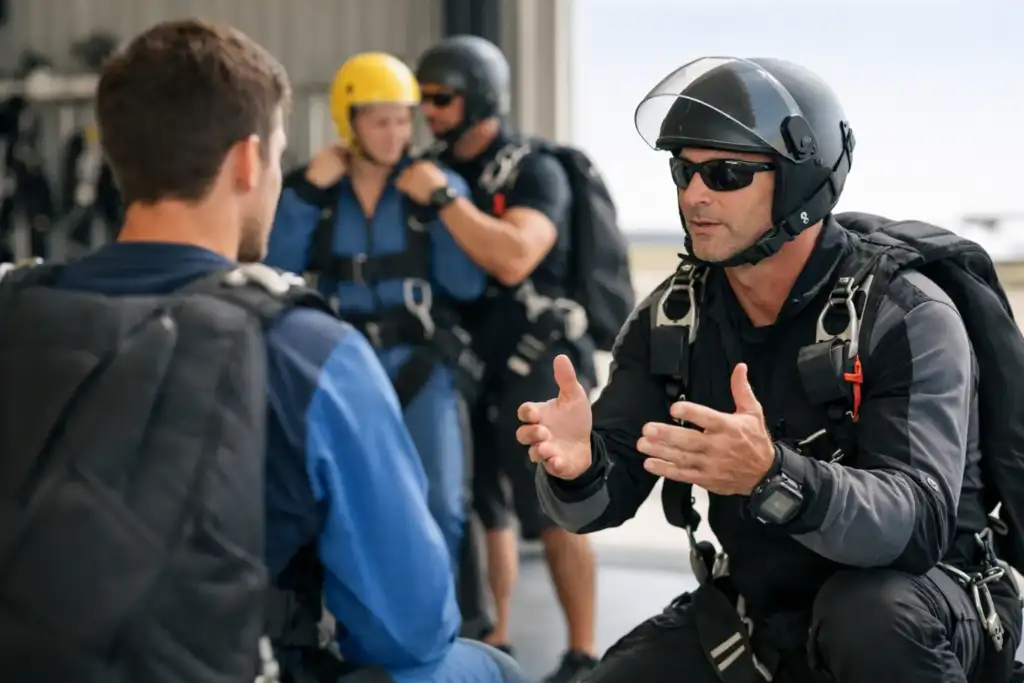
That nervous energy usually hits right before training starts – not when you book, not when you drive in, but when you realize this is actually happening. That is exactly why the tandem jump safety briefing matters. It takes a huge, adrenaline-filled experience and breaks it into simple, clear steps so you know what to expect, what your instructor is doing, and how you can help make the jump smooth from takeoff to landing.
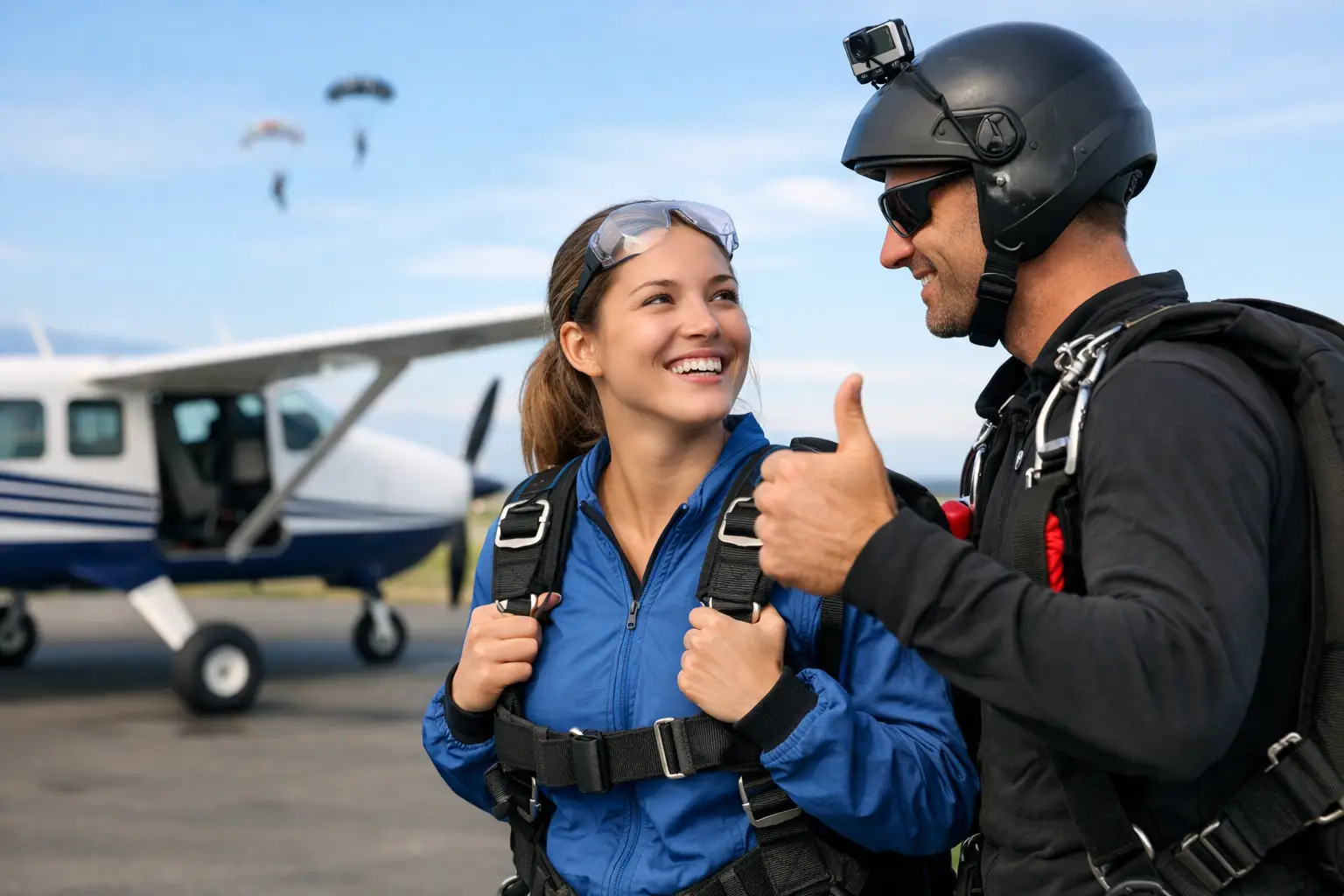
For first-time skydivers, fear often comes from one place: the unknown. A good briefing replaces guesswork with confidence. You are not expected to know how to skydive on your own. In a tandem jump, you are connected to a licensed, highly experienced instructor the entire time. The briefing is there to make sure you understand your role, trust the process, and walk to the plane feeling excited instead of overwhelmed.
What a tandem jump safety briefing actually covers
A strong tandem jump safety briefing is not a lecture packed with technical language. It is practical, direct, and focused on the moments that matter most. Your instructor will usually walk you through body position, aircraft exit, freefall posture, when to keep your head back, what happens when the parachute opens, and how to prepare for landing.
That might sound like a lot at first, but it is designed to be easy to remember. Tandem skydiving is built for beginners. You are not learning to control the parachute, navigate the airspace, or make split-second decisions at 10,000 feet. Your instructor handles the operation. Your job is to listen, follow a few clear instructions, and stay engaged.
The best briefings are calm and confident. They do not try to impress you with jargon. They make the experience feel manageable, because it is manageable when you are attached to the right professional and using properly maintained equipment.
Why the briefing matters more than people think
Some people assume the real safety work is all in the gear, the plane, or the instructor’s certifications. Those things absolutely matter. But the briefing matters too because tandem skydiving works best when instructor and student move together.
Think about the aircraft exit. Your instructor will guide the move, but your body position still plays a role. The same is true for freefall and landing. A simple reminder like keeping your legs up at the right time can make the landing more comfortable and controlled. Small instructions make a big difference.
The other reason the briefing matters is mental. When people know what is coming, they tend to stay calmer. A calmer student usually listens better, moves better, and enjoys the jump more. That is not just about comfort. It supports the entire experience from a safety standpoint.
The most important instructions you will hear
Body position at the door
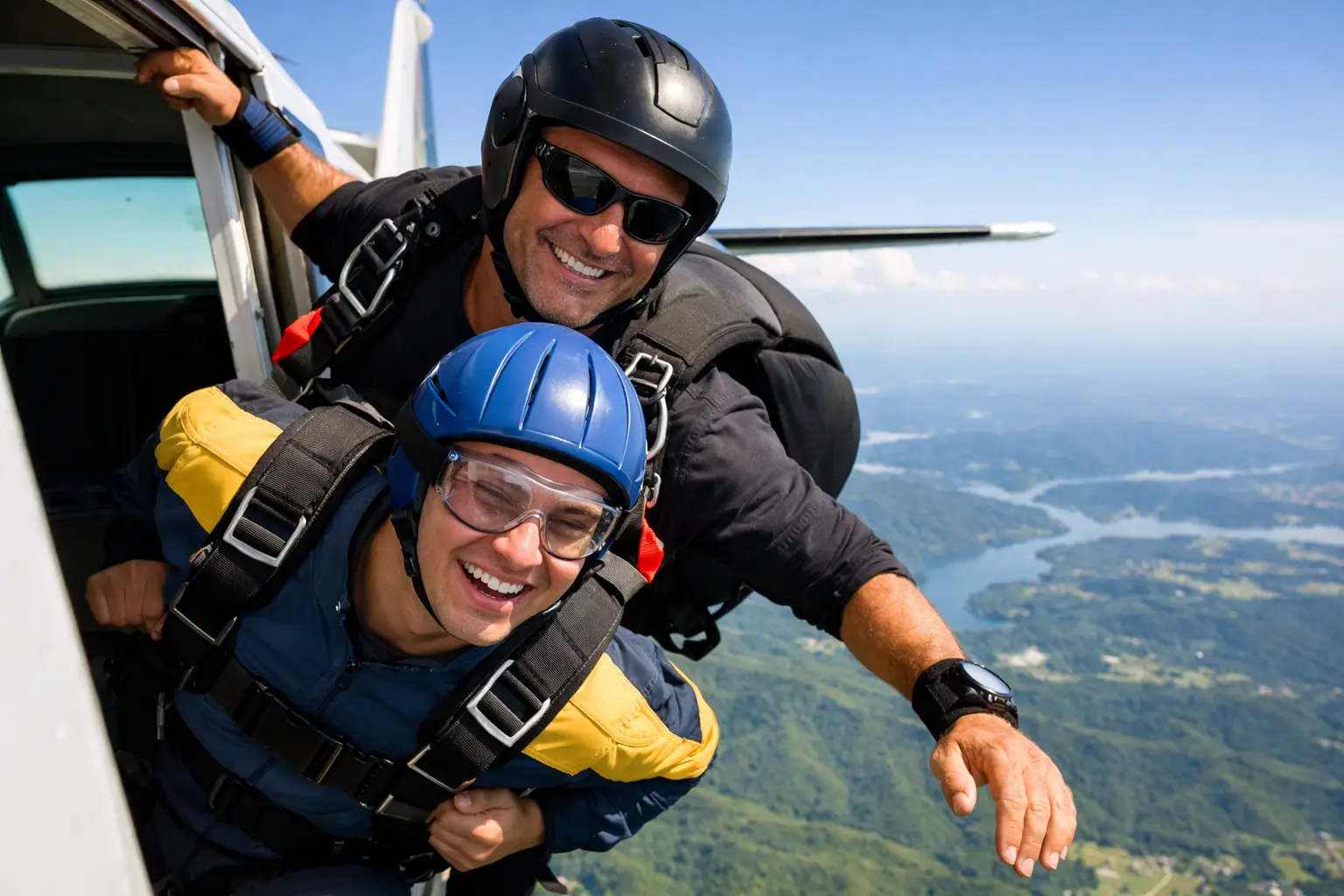
One of the biggest moments in any first jump is standing at the aircraft door. It feels fast, loud, and very real. During the briefing, your instructor will explain where to place your hands and how to hold your body as you exit. In many tandem jumps, that means crossing your arms or holding your harness in a specific way while keeping your head back.
This position helps create a cleaner, more stable exit. You do not need to force anything or jump like you are in a movie. In fact, trying to improvise usually makes things harder. The goal is to follow the exact position your instructor gives you.
Freefall posture
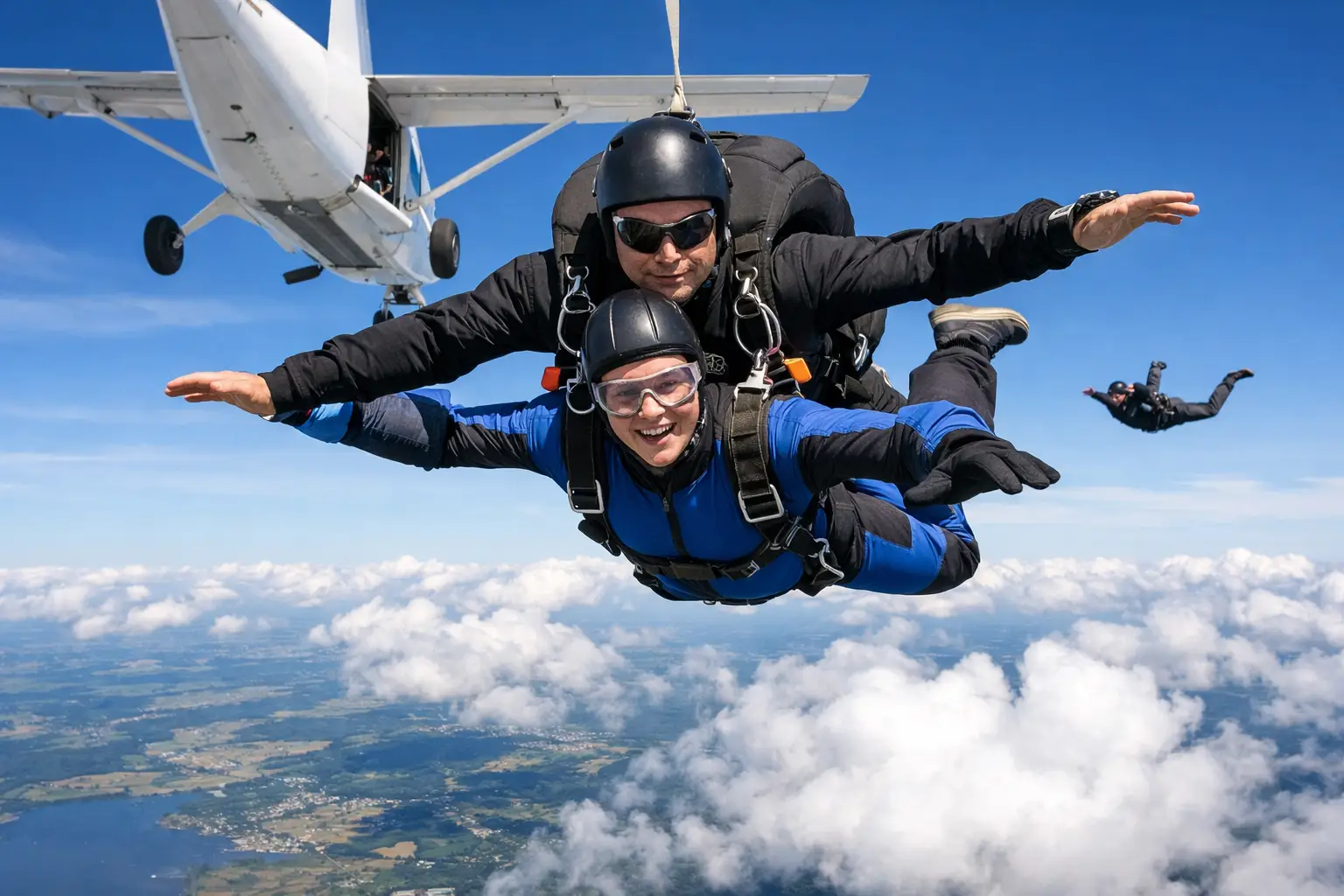
Once you leave the plane, the sensation is intense, but it is not chaos. Freefall in a tandem setup is highly controlled. Your instructor will tell you how to arch your body, where your arms should be after exit, and why lifting your chin or keeping your head back may matter for stability.
This part is often easier than people expect. The wind supports your body, and the instructor does the technical work. Still, the briefing helps you understand what a good freefall position feels like so you are not guessing in the moment.
Parachute opening
The parachute deployment can feel like a strong upward pull after freefall. It is normal, and your instructor will usually tell you to expect that change in sensation. Knowing it is coming helps a lot. People who are surprised by the opening sometimes tense up more than they need to.
The briefing may also cover what happens right after deployment, including equipment checks and the shift from fast-paced freefall to a quieter, scenic ride under canopy.
Landing position
Landing is one of the most important parts of the briefing because it is where your participation matters most. Depending on conditions, your instructor may ask you to lift your legs high for a slide-in landing or prepare for a stand-up style landing if appropriate. It depends on wind, surface conditions, and the specific jump.
This is where paying attention really pays off. A proper landing position helps your instructor land the pair safely and comfortably. It is simple, but it is not optional.
Questions you should ask during the tandem jump safety briefing
A good briefing is not one-sided. If you are unsure about something, ask. In fact, the right drop zone expects questions from first-time jumpers.
If you wear contacts or glasses, mention it. If you have a prior injury, bring it up. If you are worried about motion sickness, your harness fit, or the landing, say so. None of these questions are unusual. They help your instructor prepare and tailor guidance to your situation.
There is also no prize for acting fearless. Some jumpers are loud and pumped from the moment they arrive. Others get quiet. Both are normal. The only bad move is pretending you understand something when you do not. Clear communication is part of the safety culture.
What the briefing does not do
A tandem jump safety briefing is there to prepare you, not scare you. It should not feel like someone reading worst-case scenarios off a clipboard. If the instruction is done well, it will feel focused, honest, and reassuring.
It also does not turn you into a solo skydiver. Tandem is designed to let beginners experience the thrill of freefall while the instructor handles the technical responsibilities. That is the trade-off that makes tandem skydiving so approachable. You get the full rush of the jump without carrying the workload of independent skydiving.
For many people, that is exactly the right entry point. If you ever want formal solo training later, that is a different path with a much deeper ground school. But for a first bucket-list jump, tandem gives you the experience in the safest, most guided format available.
How to get more out of your briefing
The easiest way to make your briefing more useful is to arrive ready to listen. That means being hydrated, avoiding alcohol or anything that affects judgment, and giving yourself enough time so you are not mentally rushing. If you show up distracted, you will miss details that are there to help you.
It also helps to treat the briefing like part of the adventure, not the delay before it. This is the moment when the experience starts becoming real. You begin to understand how professional the process is, how much your instructor has done before this jump, and how many checks happen before anyone leaves the ground.
If you booked photos or video, the briefing can help there too. Once you know what to do with your hands, head, and body, you are more likely to look relaxed and present during the jump instead of stiff and uncertain.
The real goal of a tandem jump safety briefing
The real goal is not just rule-following. It is confidence built on clarity. When people hear “safety briefing,” they sometimes picture something dry and forgettable. In skydiving, it is one of the moments that changes everything. You go from imagining the jump to understanding it.
That shift matters. It is what helps first-time skydivers stop bracing for the unknown and start anticipating the thrill. At Middle Tennessee Skydiving, that guided feeling is a big part of what makes a first jump so memorable. You are not figuring it out alone. You are stepping into a proven process with an expert beside you from the first instruction to the final touchdown.
If you are feeling nervous before your jump, that does not mean you are not ready. It usually means you care. The right safety briefing meets that feeling head-on, gives it structure, and turns it into something better: trust, excitement, and a clear sense of what comes next.