10,000 Foot Skydive: What to Expect
You feel it before the door even opens. The plane climbs, the ground drops away, and somewhere around a 10,000 foot skydive, the whole idea of “someday” turns into “this is really happening.” For a lot of first-time jumpers, that altitude hits the sweet spot – high enough to deliver a real adrenaline-filled freefall, but approachable enough to feel manageable with the right instructor by your side.
If you are thinking about your first tandem jump, this is one of the most common questions you will ask: what is a 10,000 foot skydive actually like? The short answer is thrilling, fast, surprisingly smooth, and far less intimidating once you understand how the experience works from takeoff to landing.
What a 10,000 foot skydive means
At its simplest, a 10,000 foot skydive means you exit the aircraft at 10,000 feet above ground level. From there, you and your tandem instructor freefall for a short but unforgettable stretch before the parachute deploys and the jump shifts into a calmer canopy ride back to the landing area.
For first-time jumpers, altitude matters because it shapes the pace of the experience. A higher exit altitude usually means more freefall time. A lower one means a shorter freefall and a quicker transition to the parachute ride. At 10,000 feet, you get a strong taste of both parts of skydiving without the jump feeling overly drawn out.
That balance is a big reason tandem skydives at this altitude appeal to beginners. You get the bucket-list moment, the rush, the views, and the accomplishment, all under the direct guidance of a licensed, experienced instructor.
How long is the freefall in a 10,000 foot skydive?
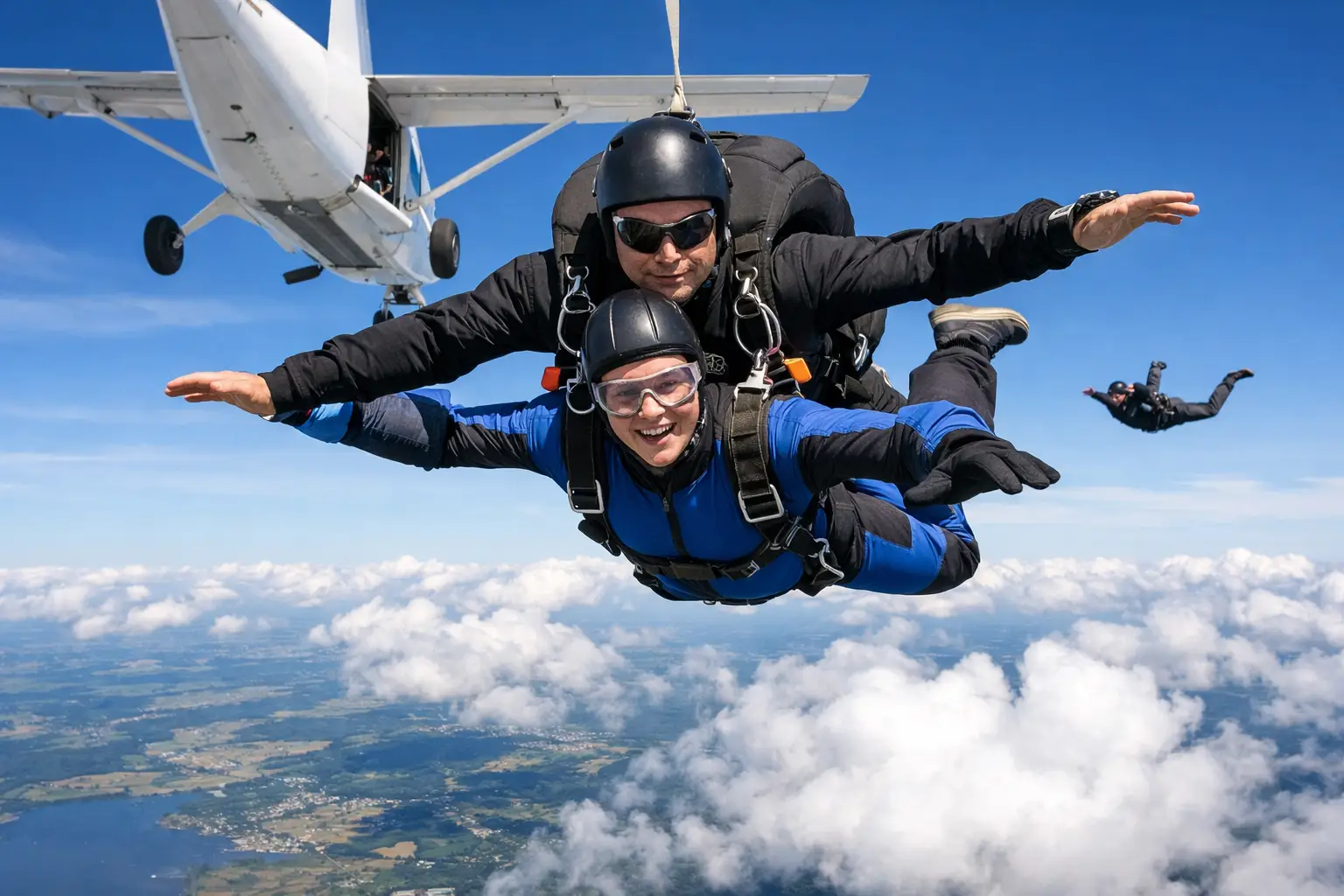
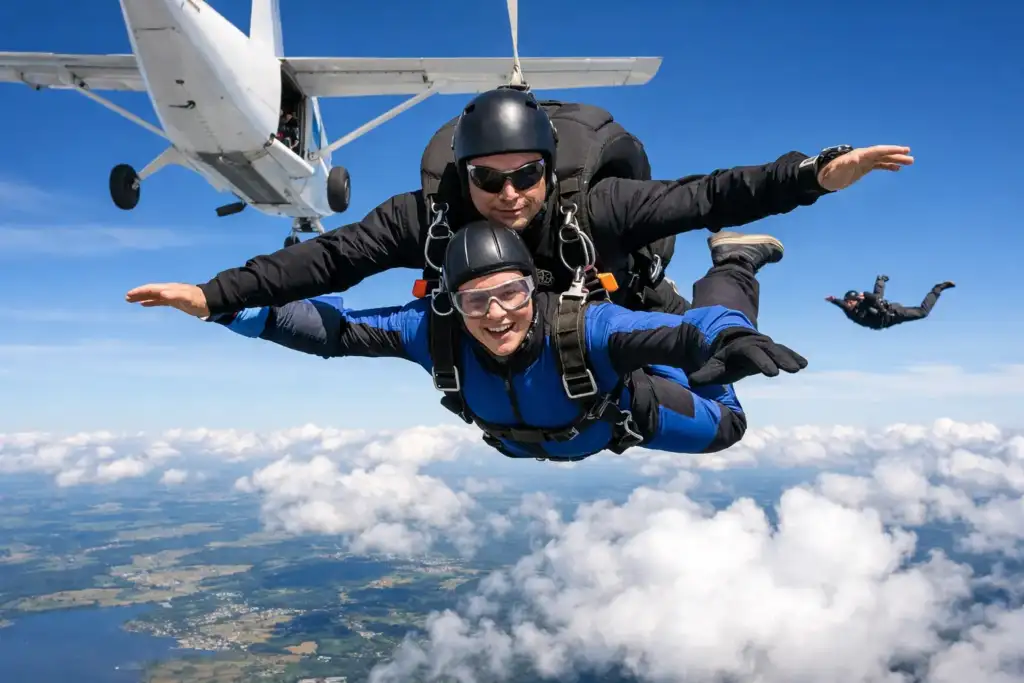
This is the part most people want a number for, and the honest answer is that it depends a little on body position, conditions, and deployment timing. In general, a 10,000 foot skydive gives you roughly 30 seconds of freefall before the parachute opens.
Thirty seconds may sound short when you are reading about it on your phone. It does not feel short in the sky. Your senses are fully switched on, your view stretches for miles, and your attention is locked into the moment in a way everyday life rarely gives you.
Then the parachute opens, and everything changes. The speed drops. The noise fades. You go from pure rush to a floating, scenic ride that lets you actually take in where you are. For many first-time jumpers, that contrast is one of the best surprises of the whole experience.
What the jump feels like from start to finish
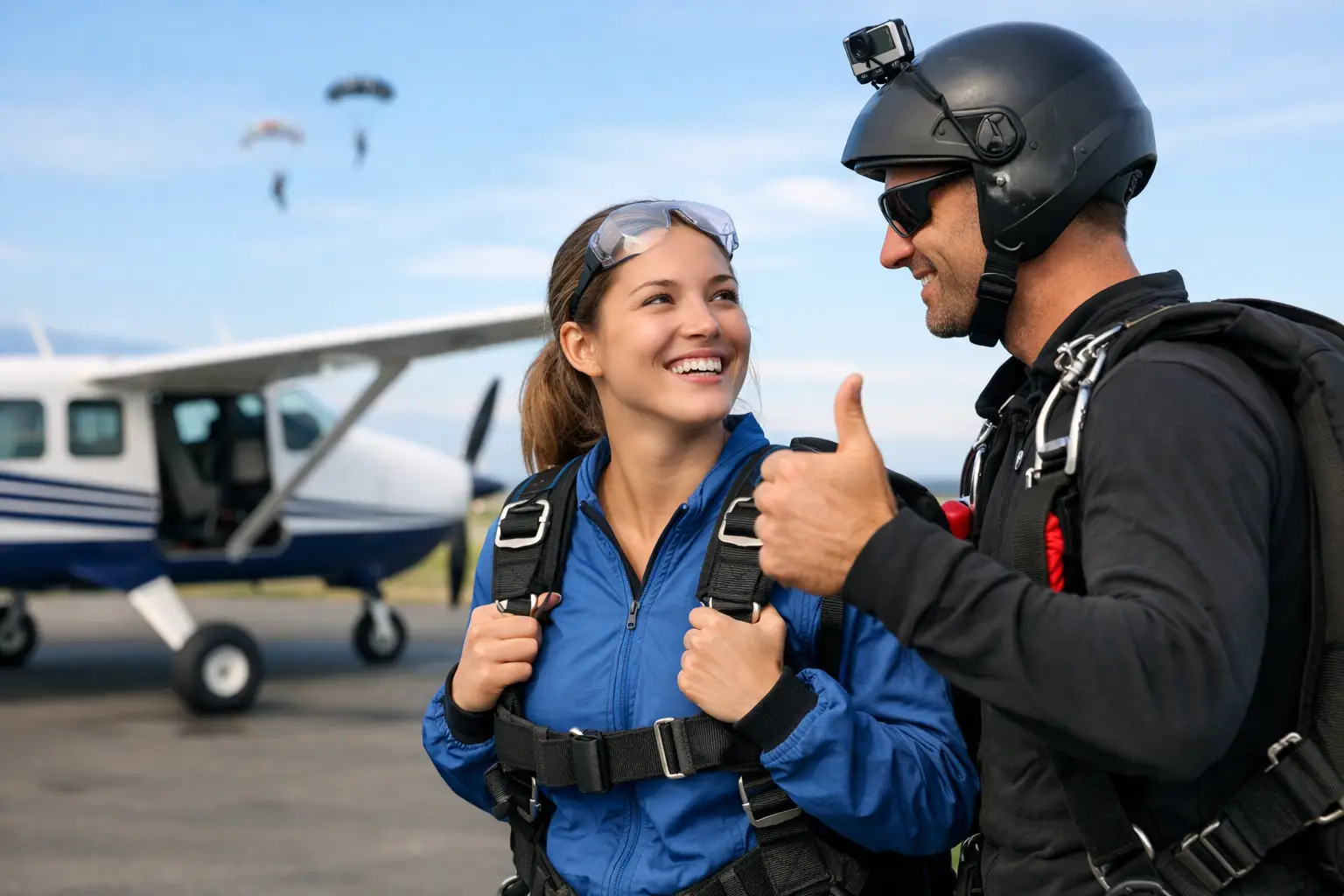
A first tandem jump is much more structured than most people expect. You do not just show up and get pushed out of a plane. You arrive, check in, meet your instructor, go through a safety briefing, get fitted into your harness, and learn the few body-position basics that matter for exit, freefall, and landing.
That process is not there to overwhelm you with technical details. It is there to make the experience feel clear and controlled. When you know what is coming next, fear usually drops fast.
The plane ride up is often when nerves peak. You are strapped in, climbing higher, and watching the landscape spread out below. For people coming from Nashville or anywhere in Middle Tennessee, this is usually the moment the day starts feeling bigger than just an activity. It feels like a real milestone.
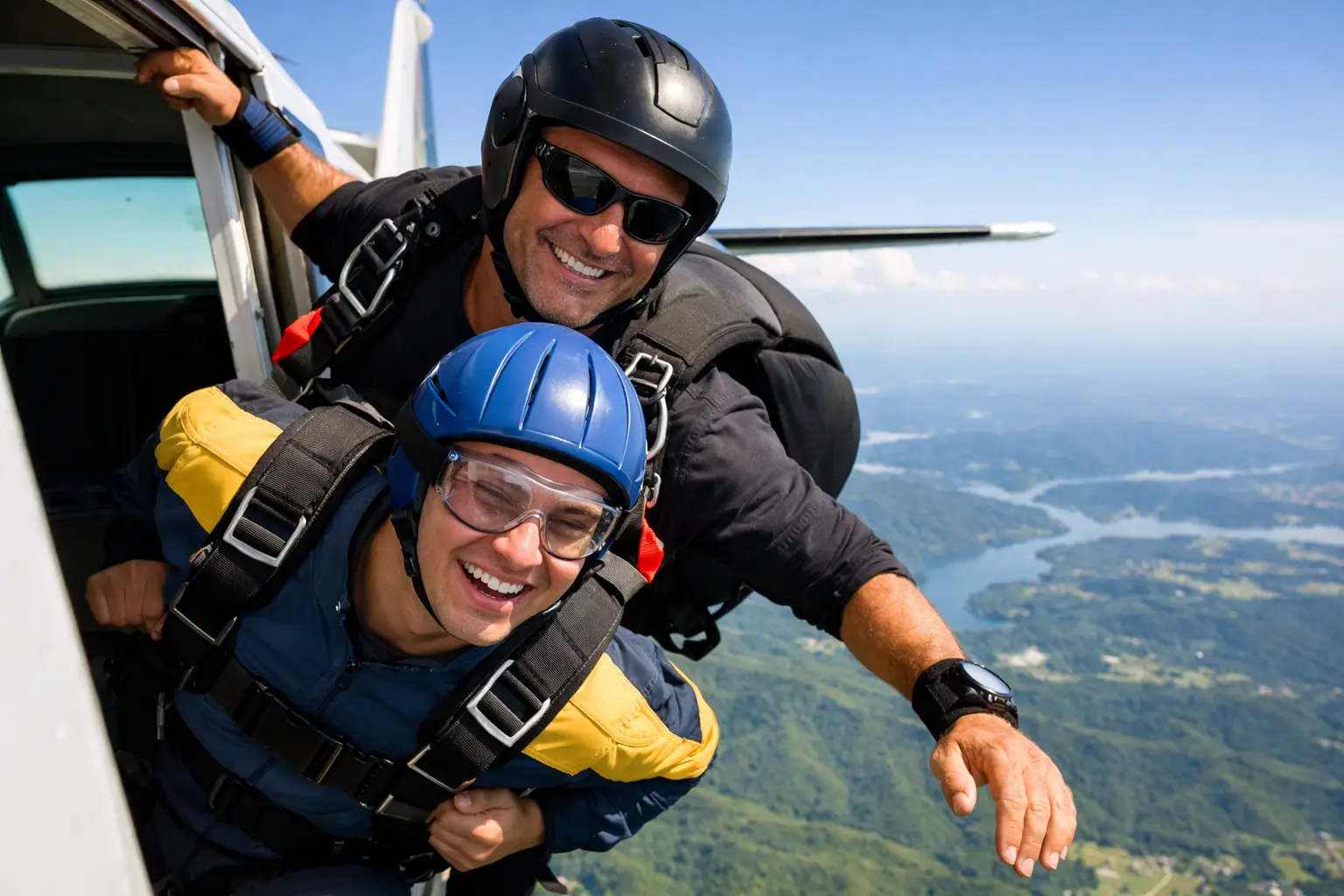
The exit is the part people build up in their heads the most, but it happens quickly. One moment you are at the door, the next you are in freefall with your instructor handling the jump sequence. Most first-timers are shocked by how little the “falling” feeling matches what they imagined. It is more like riding a powerful cushion of air than dropping on a roller coaster.
Under canopy, the pace shifts. This is where you can breathe, smile, look around, and enjoy the ride. Depending on conditions, your instructor may even let you take a light turn or two. The landing is typically gentle and guided, with your instructor directing exactly what to do.
Is a 10,000 foot skydive good for beginners?
Yes, for many people, it is a very good first-jump altitude.
A 10,000 foot skydive gives beginners a complete experience without asking them to process too much for too long. You still get the thrill that makes skydiving famous, but the freefall is not extended to the point where an already nervous first-timer starts feeling mentally overloaded.
That said, “best” always depends on the person. Some jumpers want as much freefall as possible and will naturally lean toward higher-altitude options when available. Others care less about extra seconds and more about simply taking the leap in a safe, guided setting. Neither mindset is wrong. The right choice comes down to your comfort level, your budget, and the kind of experience you want to remember.
For tandem students, the biggest factor is not trying to optimize every second. It is choosing a professional operation that treats safety, training, equipment, and instructor experience seriously. That matters more than chasing altitude alone.
Why the safety side matters more than the altitude
If you are new to skydiving, it is natural to focus on the dramatic part – the height, the speed, the freefall. But the real confidence comes from understanding how much of the jump is built around preparation and professional oversight.
A tandem skydive pairs you with a USPA-certified instructor who handles the technical side of the jump. You still play an active role by listening during the briefing and following simple instructions, but you are not expected to know how to skydive on your own. That is the whole point of tandem training. It makes a life-changing experience accessible to first-timers without cutting corners.
Good operators also place heavy emphasis on gear checks, aircraft procedures, weather assessments, and clear communication. Sometimes that means waiting. Sometimes it means rescheduling. That can be frustrating if you are eager to jump, but it is exactly the kind of decision-making you want from a team responsible for your experience.
Should you add photos or video?
For a lot of people, yes. Not because you need proof that you were brave enough, but because the day moves fast and memory gets selective when adrenaline is involved.
Professional photo and video packages capture the moments you will miss while living them – the grin on the plane, the door opening, the freefall face, the parachute ride, and the landing reaction. If you are celebrating a birthday, anniversary, graduation, proposal, or just crossing off a bucket-list goal, having that footage tends to feel more valuable after the jump than before it.
It is also one of the easiest ways to share the experience with friends and family who were nervous for you, excited for you, or both.
How to know you are ready
You do not need to feel fearless to book a skydive. Almost nobody does. You just need to be ready to trust the process, listen to your instructor, and let yourself step into something bigger than your usual weekend plans.
That is why a first tandem jump works so well for couples, friend groups, milestone celebrations, and solo bucket-list seekers. It gives you a real edge-of-your-comfort-zone moment, but with structure, support, and expert guidance the whole way through.
At Middle Tennessee Skydiving, that is exactly how the experience is meant to feel – bold, guided, and unforgettable from arrival to landing.
A 10,000 foot skydive is not just about how high you go. It is about what changes when you realize you can do something that once felt impossible.