Can You Eat Before Skydiving? Yes – Here’s How
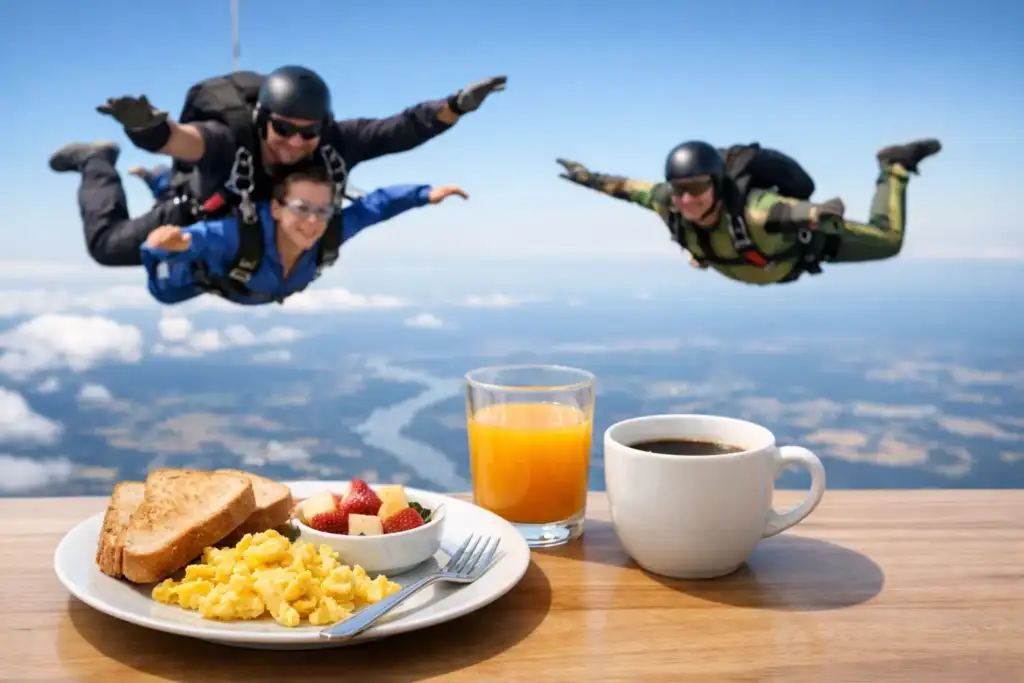
That pre-jump feeling is real. Your heart is up, your mind is racing, and somewhere between excitement and nerves, one question usually shows up fast: can you eat before skydiving? The short answer is yes, and for most first-time jumpers, eating a light, balanced meal is the smarter move.
Showing up on an empty stomach might sound like a good idea if you are worried about nerves, motion, or the adrenaline rush. In practice, it often does the opposite. Hunger, low blood sugar, and dehydration can leave you feeling shaky, lightheaded, or more anxious than you need to be. If you want to enjoy the experience, think clearly during the briefing, and feel strong under the harness, your body needs some fuel.
Can You Eat Before Skydiving, or Should You Skip It?
You should eat before skydiving, but what and how much matters. A reasonable meal a couple of hours before your jump helps you stay comfortable and steady. It gives you energy without leaving you overly full when it is time to gear up, ride in the aircraft, and head for the door.
This is where common sense wins. Skydiving is not like running a marathon, but it is still a physical experience. You will be wearing gear, following instructions, arching your body in freefall, and absorbing a huge adrenaline spike. Most people feel better when they are fed, hydrated, and not trying to power through the day on coffee alone.
If you are a first-time tandem jumper, this matters even more. Nerves can already make your stomach feel off. Skipping food may seem safer, but being hungry can make you feel worse, not better.
What to Eat Before a Skydive
The best pre-jump meal is simple, familiar, and easy to digest. Think of food that leaves you satisfied, not stuffed. A turkey sandwich, eggs and toast, oatmeal with fruit, grilled chicken and rice, or yogurt with granola can all work well. These kinds of meals give you a mix of carbs and protein without being too heavy.
Aim for normal food you know your body handles well. Your skydive day is not the time to experiment with the hottest chicken sandwich in town or a giant brunch loaded with greasy extras. If a meal usually sits heavy, save it for another day.
A small snack can also help if your jump is later in the day. Something like a banana, a protein bar, crackers, or peanut butter toast can keep your energy up without overdoing it.
The sweet spot for timing
For most people, eating one solid meal about two to three hours before arrival works well. If your schedule is tight, a lighter meal or snack about an hour before can still be fine. The goal is to avoid two extremes: being painfully full and being completely empty.
Your check-in time is not always your exact jump time. Weather, aircraft loads, training, and the natural rhythm of dropzone operations can affect the schedule. That is another reason eating earlier is a smart move. You want to be comfortable even if your jump happens a little later than expected.
What to Avoid Before Skydiving
Heavy, greasy, oversized meals are the biggest mistake. Burgers, fries, giant breakfast platters, and anything that leaves you sluggish can make the ride to altitude less comfortable. They are not automatically a disaster, but they raise the odds that you feel bloated, nauseous, or just off.
Alcohol is a much clearer no. If you are planning a tandem jump, do not drink before skydiving. Alcohol affects judgment, hydration, and how your body handles stress. It does not calm you down in any helpful way for a skydive. It just works against you.
Too much caffeine can also backfire. One normal cup of coffee is fine for many people, especially if that is part of your regular routine. But if you pile on energy drinks and extra espresso because you barely slept, you may end up more jittery and dehydrated. Skydiving already brings enough adrenaline on its own.
Foods that can trigger motion issues
If you know you get motion sickness easily, be extra careful with greasy foods, very sugary snacks, or anything that upsets your stomach in the car or on amusement rides. The plane ride is usually smooth, but everyone is different. A lighter meal is often the better call if motion has been an issue for you before.
Why Eating Helps More Than People Expect
A lot of first-timers assume the main challenge is mental. There is definitely a mental side to it, especially when you are about to do something bold and unforgettable. But your physical state shapes that mental experience.
When you are under-fueled, your body can mimic anxiety. You may feel weak, sweaty, unfocused, or uneasy. Then it is easy to assume the jump is making you panic, when part of the problem is simply that you skipped breakfast.
When you eat well and drink enough water, you give yourself a better baseline. You are more likely to stay calm during training, listen closely to your instructor, and enjoy the adrenaline-filled freefall instead of fighting through preventable discomfort.
That is exactly what first-time tandem skydiving should feel like – thrilling, guided, and manageable.
Hydration Matters Too
Food gets most of the attention, but water matters just as much. Start hydrating earlier in the day rather than chugging a bottle at the last second. Being dehydrated can leave you tired, foggy, and more prone to feeling sick.
You do not need to overdo it. Just drink water like you normally should, especially if it is a hot Tennessee day. A balanced approach is best because being overhydrated right before gearing up is not exactly ideal either.
If you are having coffee, match it with water. If you are traveling in from Nashville or elsewhere in Middle Tennessee, bring a bottle along and sip during the drive.
What If You’re Too Nervous to Eat?
That happens all the time, especially with first jumps. If your stomach is tied in knots, do not force a huge meal. Go smaller and simpler. A banana, toast, oatmeal, a smoothie, or a few crackers with peanut butter is still better than nothing.
Try to think in terms of enough fuel, not a perfect meal. Even a light snack can help settle your system and keep your energy from dropping. Once you arrive and meet your instructor, a lot of that nervous energy usually starts turning into excitement.
At Middle Tennessee Skydiving, first-time jumpers are guided through the process step by step, and that structure helps. The more prepared your body feels, the easier it is for your mind to catch up.
Special Cases: When “It Depends” Really Applies
Most healthy adults do best with a light meal before skydiving, but there are a few situations where extra caution makes sense. If you have diabetes, blood sugar concerns, a digestive condition, or a history of severe motion sickness, plan ahead based on what normally works for you. Your safest choice is usually not to improvise.
If you are on medication that needs to be taken with food, follow your normal routine unless a medical professional has told you otherwise. If you tend to get nauseous easily, keep your meal smaller and blander. If you are doing an early morning jump, eating something light may be more realistic than a full breakfast.
This is one of those cases where the right answer is not dramatic. It is practical. Eat in a way that helps your body feel stable and familiar.
A Simple Pre-Jump Food Plan
If you want the easiest answer to can you eat before skydiving, here it is: yes, eat a normal light meal two to three hours before your jump, drink water, and avoid anything greasy, heavy, or alcoholic.
That one decision can make your whole experience better. You will be more comfortable in the harness, more focused during the briefing, and more ready to enjoy the rush instead of battling hunger or nausea.
Skydiving is supposed to feel big, bold, and unforgettable. You do not need to manufacture extra drama by showing up starving. Eat smart, trust your instructor, and give yourself every reason to enjoy the moment when the door opens.