Guide to Skydiving Safety Checks
A great first jump starts long before the airplane door opens. If you are booking your first tandem, this guide to skydiving safety checks will help you understand what happens before takeoff, why it matters, and how a professional dropzone works to make your experience feel thrilling and controlled at the same time.
For a lot of first-time jumpers, the nerves do not come from the freefall itself. They come from not knowing what is being checked, who is checking it, and what your role is in the process. That is completely normal. Skydiving feels bigger and bolder than most things you do on an average weekend, so it makes sense to want clear answers before you commit.
The good news is that tandem skydiving is built around guidance. You are not expected to know how to inspect parachute systems, read wind conditions, or make in-air decisions on your own. Your instructor and the dropzone team handle the technical side. Your job is to show up ready to listen, ask questions, and follow directions.
What safety checks happen before a tandem skydive?
The first layer of safety starts before you ever get geared up. A well-run operation checks weather, aircraft status, staffing, equipment readiness, and jump conditions before putting anyone on a load. That part is easy for customers to miss because it happens in the background, but it is one of the biggest reasons professional skydiving feels organized rather than chaotic.
Weather is a major factor. A sunny day does not automatically mean perfect jump conditions. Wind speeds, cloud cover, visibility, and changing conditions all matter. Sometimes a day looks beautiful from the ground but is not right for jumping. That can be frustrating if you are excited and ready, but holding a jump for weather is exactly what you want a safety-first team to do.
Aircraft readiness matters too. The plane is part of the system, not just the ride to altitude. Pilots, ground crew, and jump staff all have a role in making sure the aircraft is ready for repeated climb-outs and safe jump operations. Customers may only see the boarding process, but a lot is happening before that point.
Then there is staffing. Tandem jumping is not casual. You want licensed, experienced instructors who know how to manage equipment, body position, altitude awareness, and student communication under pressure. For first-time jumpers, confidence often comes from realizing that the person attached to you has done this many, many times before.
The gear check is not a one-and-done moment
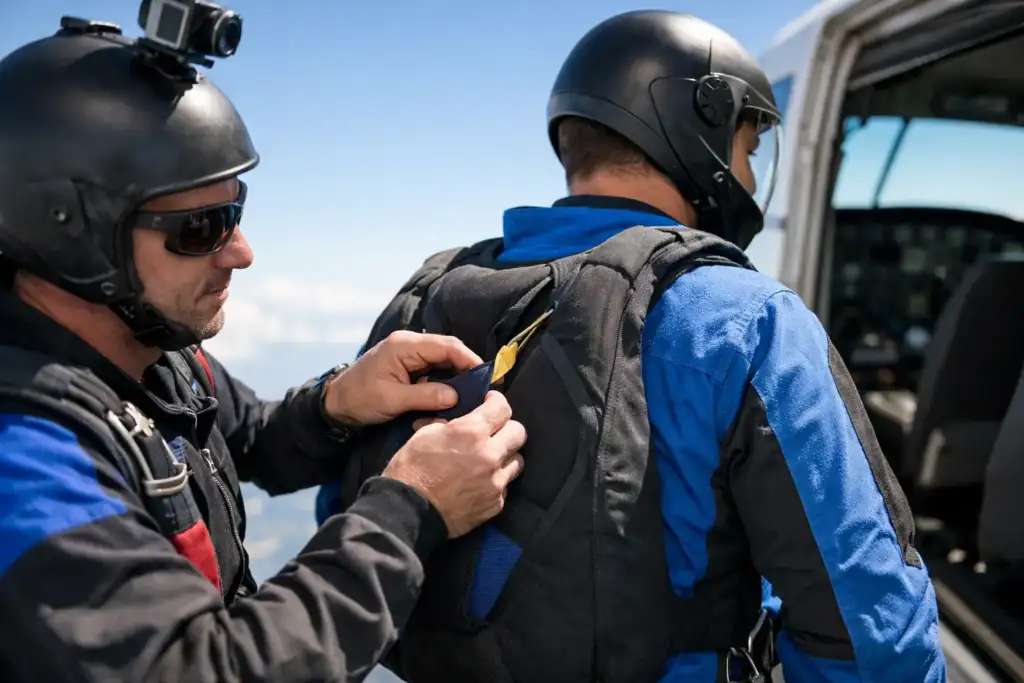
One of the most reassuring things about tandem skydiving is that equipment gets checked more than once. There is no single dramatic glance at a buckle and then everyone hopes for the best. Professional skydiving relies on repeated checks at different stages.
Your harness will be fitted to your body and adjusted for security and comfort. The tandem system includes multiple attachment points connecting you to your instructor, and those connections are verified carefully. Expect your instructor to tighten, inspect, and recheck straps. This can feel snug, especially around the legs and shoulders, but snug is part of secure.
The parachute system itself is also part of the pre-jump process. Tandem rigs are specialized systems designed for two people. They include a main parachute, a reserve parachute, and an automatic activation device. You do not need to become an expert in how each piece works, but it helps to know there are layers built in. Redundancy is a real part of skydiving safety, not just a comforting phrase.
A strong guide to skydiving safety checks should also clear up one common misconception. Customers sometimes assume the most important check is the one they can see. In reality, many critical checks happen before you ever step into the gear room. Maintenance schedules, packing procedures, reserve requirements, and inspection standards all matter. The visible check is only one piece of a bigger system.
Your briefing is a safety check too
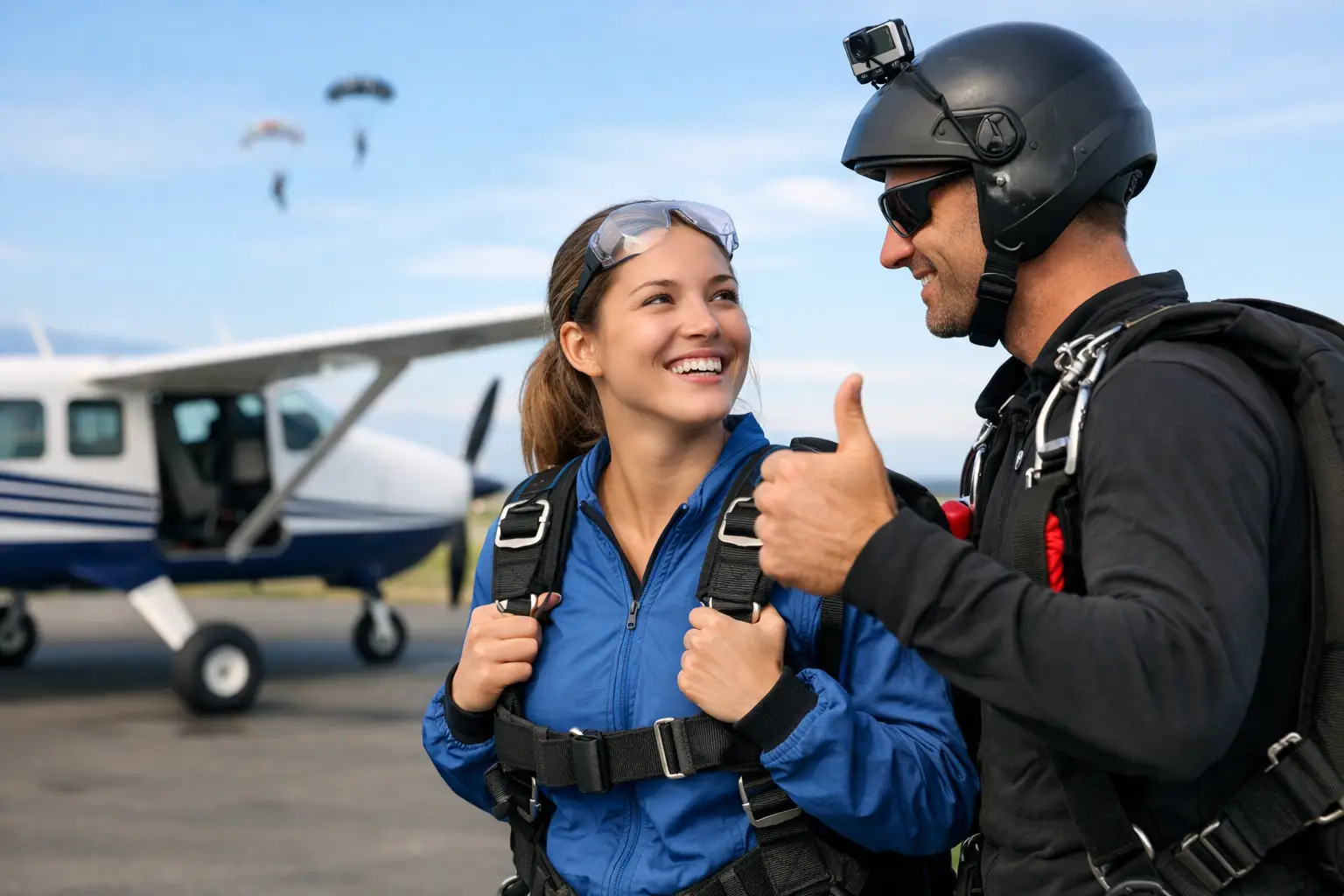
The pre-jump briefing is not filler. It is one of the most important parts of the experience because it turns uncertainty into action. When customers are nervous, they sometimes focus only on the big emotional moment of the jump. What helps most is knowing exactly what to do with your body before exit, during freefall, under canopy, and at landing.
Your instructor will show you how to wear the harness correctly, where to place your hands, how to position your head, and what landing posture to use. These directions are simple on purpose. Tandem skydiving is designed to keep the student role clear and manageable.
This is also the right time to speak up. If your harness feels strange, if you wear glasses, if you have an old injury, or if you are confused about a command, say so before boarding. People sometimes worry they are slowing things down by asking questions. They are not. Clear communication is part of the safety culture.
Safety checks in the airplane
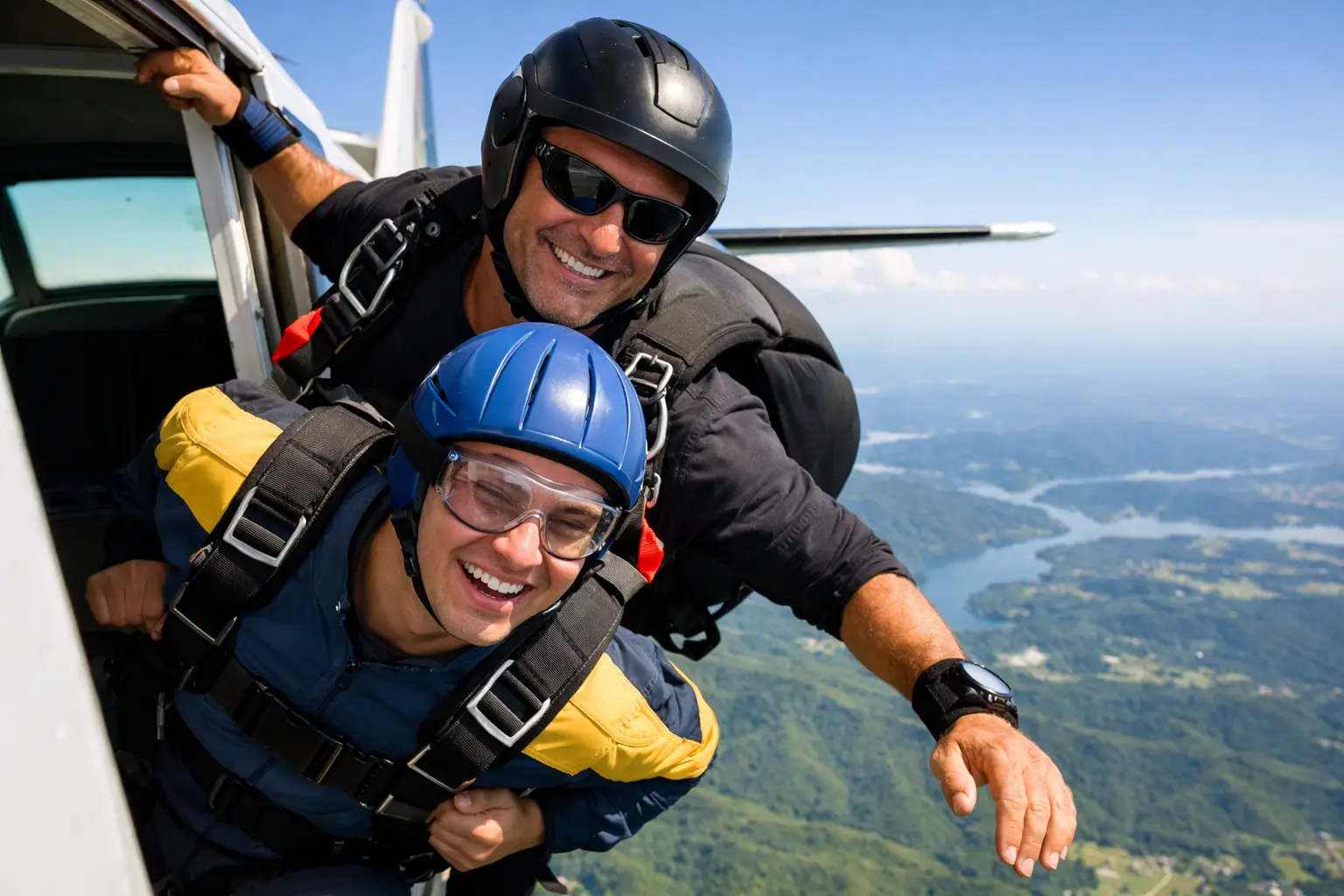
Once the plane is climbing, safety is still active. This is not the part where the checks stop and the adrenaline takes over. Instructors continue monitoring gear, attachment points, timing, altitude, and jump run coordination.
Inside the aircraft, you may notice your instructor making adjustments or checking connections again. That is normal. Movement in the plane, seating position, and pre-exit setup all affect how the pair is prepared for the door. Small corrections matter.
This is also where experience shows up in ways first-time jumpers can feel. A calm instructor changes the energy of the whole ride. They know when to keep things light, when to give quick reminders, and how to keep your attention on the next simple step instead of letting your mind run wild.
Exit, freefall, and canopy checks
The jump itself is the part customers dream about, but it is still structured around process. Exit position matters because a stable start leads to a smoother freefall. Your instructor manages that position and keeps the pair aligned as you leave the plane.
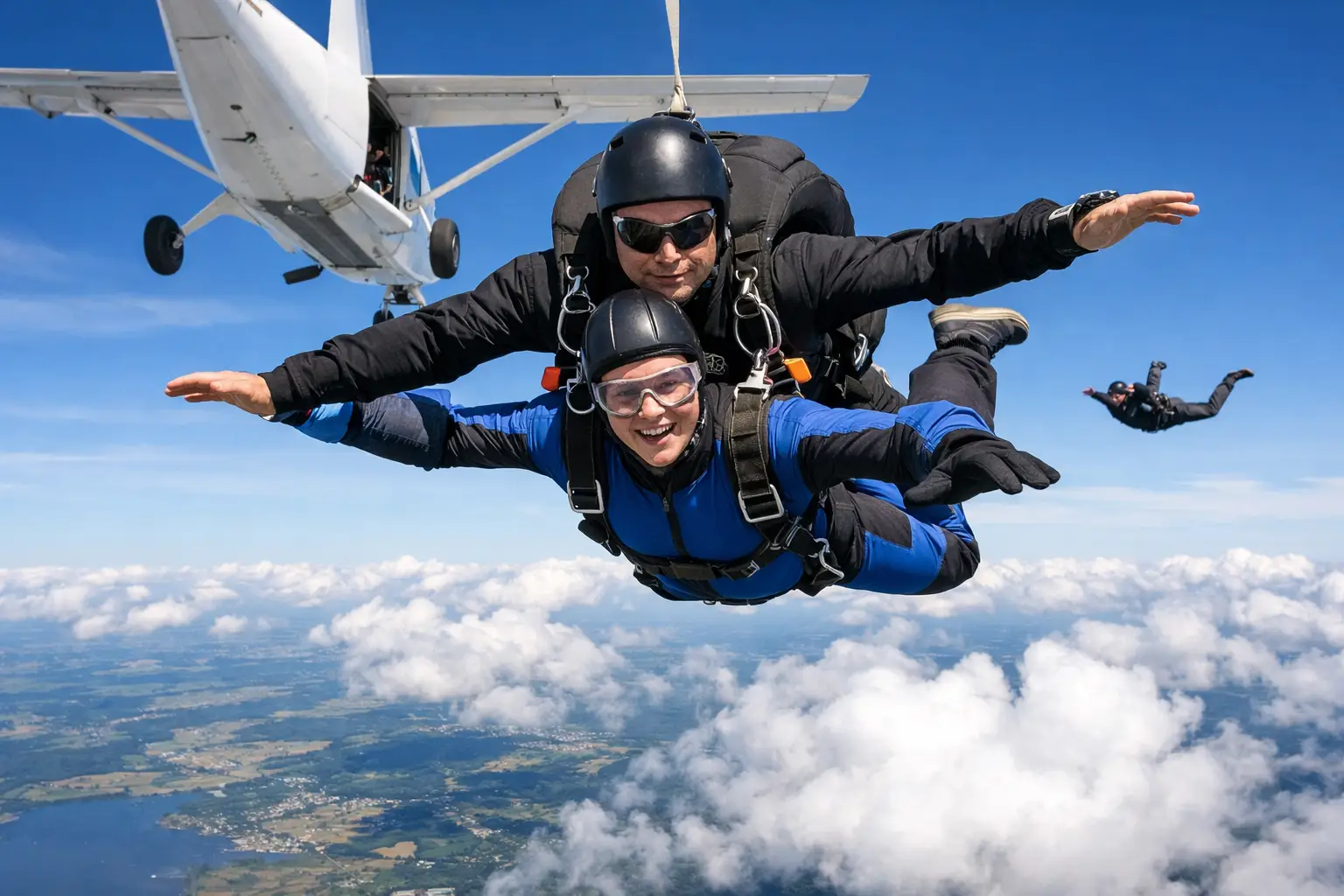
In freefall, your instructor is doing more than enjoying the rush. They are monitoring stability, altitude, timing, and deployment. Tandem skydiving gives you the thrill of the experience without putting technical tasks on your shoulders. That is a major reason it is the entry point for first-time jumpers.
When the parachute opens, the experience changes fast. Freefall is loud and intense. Under canopy, it becomes quieter and more controlled. This is another point where checks happen. Your instructor assesses the canopy, confirms it is functioning properly, and continues managing the flight down to the landing area.
Not every part of the descent feels the same from day to day. Wind can affect the pace and pattern of the canopy ride. A calm day may feel gentle and floaty. A breezier day may feel more active. That does not mean something is wrong. It means skydiving always involves real conditions, and experienced instructors adjust to them.
The landing is part of the plan
A lot of first-timers focus so heavily on freefall that they forget landing is a key part of the skydive. Your instructor will tell you exactly what to do as you approach the ground, usually by having you lift your legs for landing. Following that instruction matters.
Good landings come from preparation, timing, and communication. They are not improvised at the last second. By the time you are nearing the ground, your instructor has already been making decisions about flight path, speed, and approach based on the conditions and the landing area.
If you want to feel more confident, think of landing the same way you think of the harness check or the weather hold. It is one more part of a system built around getting you down safely, not one final gamble after the fun part is over.
What you should check as the customer
You are not responsible for the technical side of the jump, but you do play a real role. The best customer safety check is honesty. Be truthful on your paperwork. Listen during the briefing. Wear the recommended clothing. Arrive rested, hydrated, and ready to follow directions.
It also helps to choose a professional tandem operation that is upfront about training, instructor qualifications, and safety procedures. If a company makes safety sound vague or treats your questions like a nuisance, that is worth noticing. Confidence is good. Carelessness is not.
For first-time jumpers around Nashville and Middle Tennessee, that balance matters. You want the adrenaline, the photos, the story you will tell for years, but you also want to feel looked after from the moment you arrive. That is exactly how a strong tandem experience should feel – exciting, guided, and grounded in real checks at every stage.
A skydive should raise your heartbeat, not your doubts. When you know what is being checked and why, fear gives way to focus, and the whole experience starts to feel a lot more possible.