Tandem Skydiving Beginner Guide for First Jumps
That moment before your first skydive is usually a mix of two thoughts – “I can’t believe I’m doing this” and “What exactly happens next?” That is why a solid tandem skydiving beginner guide matters. When you know what to expect, the nerves settle down, the excitement takes over, and your first jump starts to feel less mysterious and a lot more doable.
Tandem skydiving is built for first-timers. You are harnessed to a licensed instructor who handles the technical parts of the jump, from exit to freefall to parachute flight and landing. For most people, that changes the whole experience. You are not trying to learn how to skydive on your own in one day. You are stepping into a guided, safety-first adventure with an expert right behind you.
What tandem skydiving means for beginners
If you have never jumped before, tandem is the clearest path in. Your instructor is trained to manage the aircraft exit, body position, parachute deployment, and landing sequence. You will still get a briefing before the jump, but the goal is not to overload you with technical detail. The goal is to help you feel prepared, confident, and ready to enjoy it.
That is the biggest difference between tandem skydiving and solo training. Solo skydiving requires much more instruction and responsibility from the student. Tandem keeps the barrier to entry low without treating safety casually. You get the thrill of the jump and the freedom of the view, while an experienced professional guides the process.
For a lot of first-time jumpers, that is the sweet spot. It feels bold, but not reckless. You are doing something unforgettable, not something unmanageable.
Tandem skydiving beginner guide to the full experience
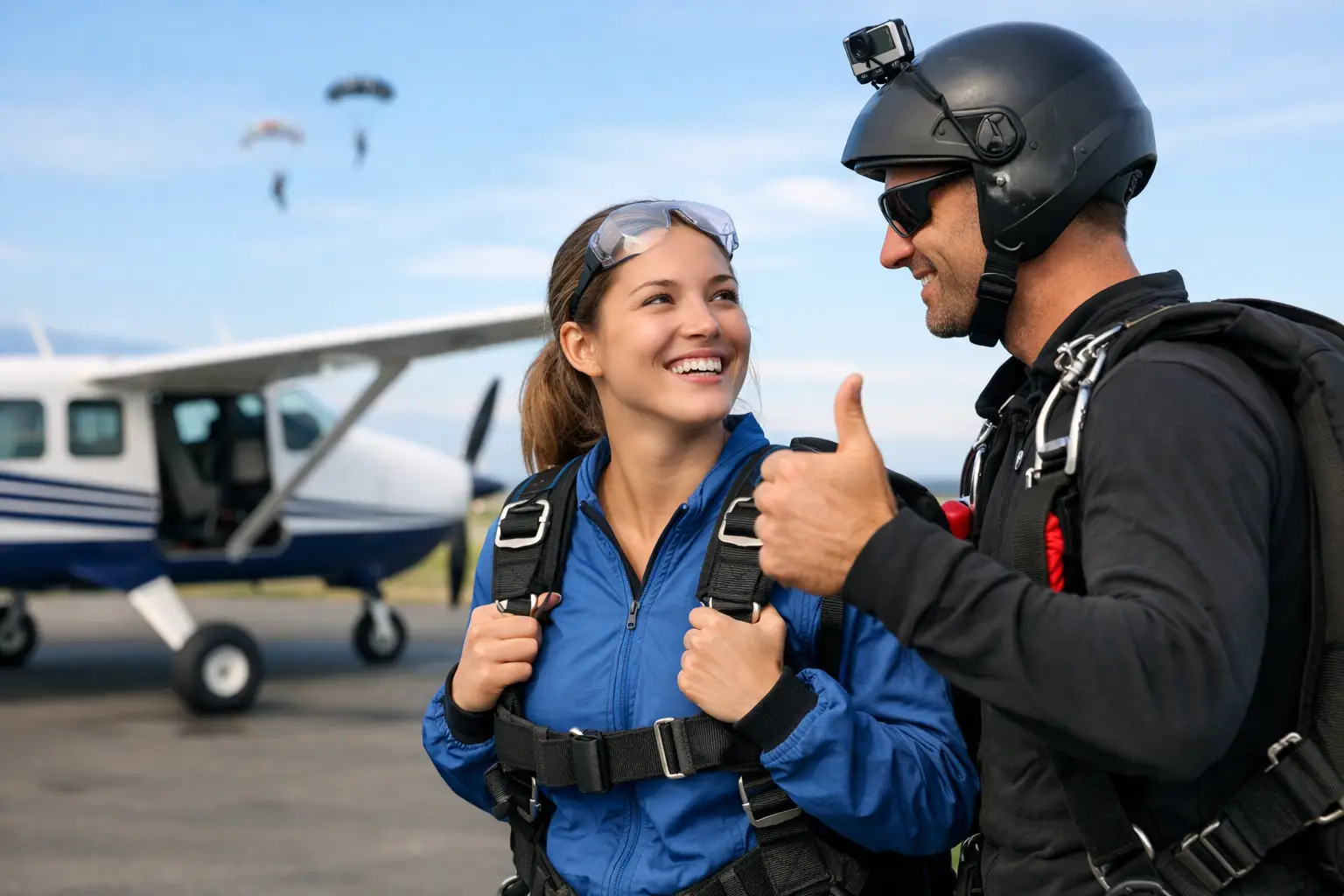
The first surprise for many people is how normal the day feels at the start. You check in, complete paperwork, meet your instructor, and go through a safety briefing. That briefing covers your harness, body position, what to do during takeoff, how to hold yourself at the door, and what landing will look like.
Then comes gearing up. Your instructor helps fit the harness and checks everything carefully. This part tends to calm people down because it makes the process real in a good way. You can see the structure behind the experience. Nothing is rushed, and nothing is left to guesswork.
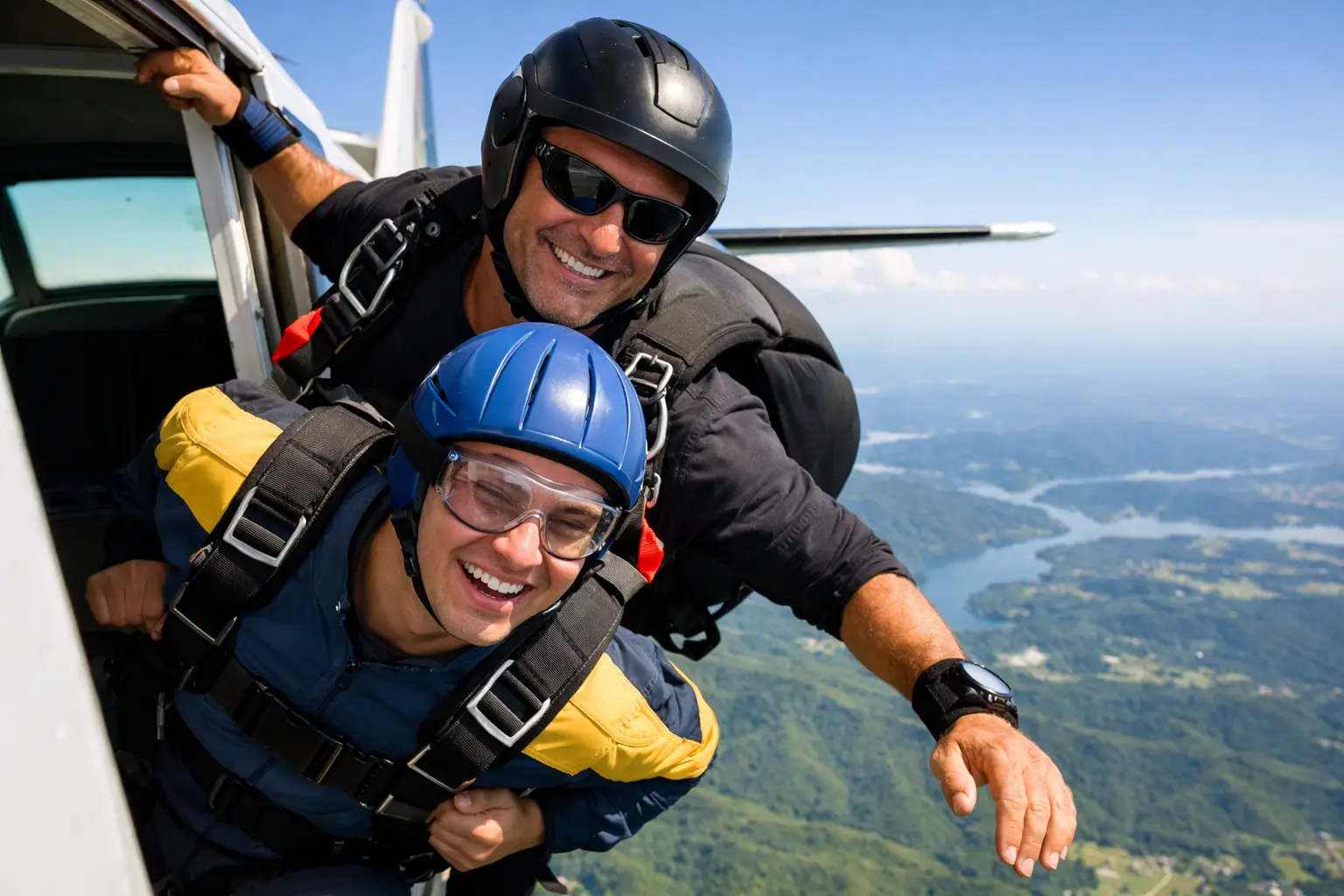
The plane ride up is when the anticipation really kicks in. You will probably feel your heart rate climb as the ground gets smaller and the views open up. If you are jumping near Middle Tennessee, this is where the scenery starts doing some heavy lifting. Rolling hills, farmland, and wide-open skies have a way of turning nerves into awe.
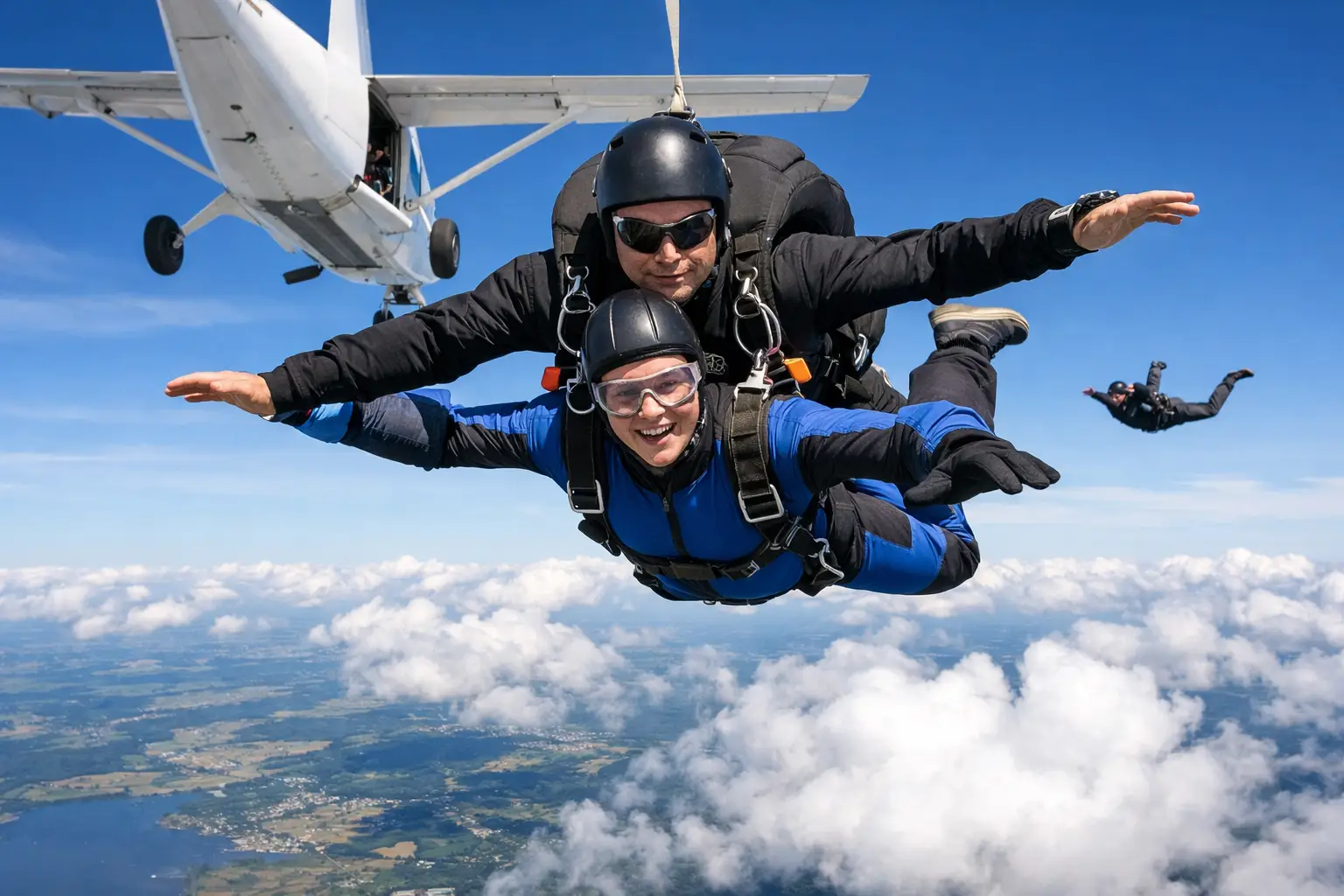
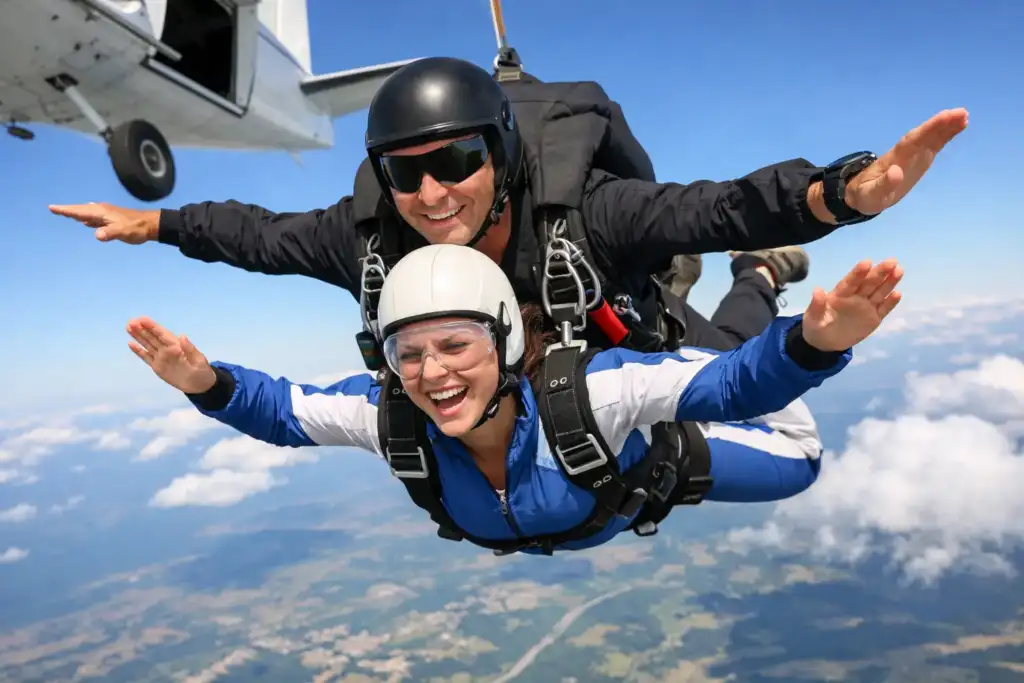
When the door opens, expect a quick rush of adrenaline. Then everything moves fast. The exit is brief, and the freefall is intense, loud, and exhilarating. People often assume freefall feels like falling from a roller coaster drop. It does not. It feels more like floating on a powerful stream of air.
Once the parachute opens, the whole mood changes. It gets quieter. You can breathe, look around, and actually take in where you are. This is the part many first-time jumpers do not expect to love as much as they do. Freefall brings the adrenaline. Canopy flight brings the perspective.
Landing is typically smoother than beginners imagine. Your instructor will tell you exactly what to do, usually lifting your legs at the right moment so the landing can be handled cleanly and safely.
How safe is tandem skydiving?
This is the question nearly every beginner wants answered first, and rightly so. Tandem skydiving is an extreme activity, so no honest guide should pretend there is zero risk. But there is a big difference between risk and chaos. A professional tandem operation is built around procedures, instructor training, equipment checks, weather standards, and aircraft protocols designed to manage risk at every step.
Your instructor matters more than anything here. A licensed, USPA-certified tandem instructor has gone through extensive training and has substantial experience in the sport. That experience shows up in the details – how they brief you, how they check your gear, how they read conditions, and how calmly they lead you through the jump.
Good equipment matters too, but so does maintenance and inspection. So does the decision not to jump when conditions are not right. Weather delays can frustrate people, especially if they have been building up to the day for weeks, but they are part of a safety-first mindset. If a dropzone is cautious about weather, that is a good sign, not a bad one.
What to wear and bring on jump day
Dress for comfort and movement. Athletic clothes are usually your best bet. Think T-shirt or long sleeve depending on the weather, comfortable pants or shorts, and secure sneakers. You do not want loose footwear, bulky layers that restrict movement, or anything that can shift around too much in freefall.
Leave valuables in the car or at home unless you need them. Jewelry, watches, and anything loose can become a distraction. If you wear glasses or contacts, ask ahead of time. Many dropzones can accommodate both, usually with goggles designed to fit over eyewear.
It also helps to eat a normal meal before your jump. Do not show up on an empty stomach trying to be tough. At the same time, this is not the morning for a huge greasy breakfast and three energy drinks. Keep it balanced, stay hydrated, and give yourself the best chance to feel steady.
The mental side of a first jump
Fear is normal. In fact, it would be strange not to feel it. The goal is not to eliminate nerves. The goal is to keep them from taking over.
A lot of first-time jumpers make the mistake of thinking confidence has to come before action. Usually it works the other way around. Confidence shows up once you arrive, meet the team, hear the briefing, and realize you are being guided by people who do this every day.
If you are anxious, say so. A professional instructor has heard every version of first-jump nerves and knows how to coach people through them. Some people get quiet. Some crack jokes nonstop. Some are all confidence until the plane climbs. There is no perfect way to feel before a skydive.
What helps most is focusing on one step at a time. Show up. Get briefed. Gear up. Board the plane. You do not have to mentally complete the whole jump while you are still in the parking lot.
Should you get photos or video?
For many beginners, this feels like an extra. After the jump, it usually feels essential. Your memory of a first skydive can be vivid, but it also goes by fast. A photo or video package lets you relive the buildup, the exit, the freefall, and the reaction right after landing when the adrenaline is still buzzing.
It is also one of the best ways to share the experience with friends and family, especially the people who thought you would never actually do it. If you are turning your jump into a birthday surprise, anniversary memory, or bucket-list milestone, media can be worth it.
The trade-off is simple: it adds to the total cost. Some jumpers want the cleanest possible price and skip it. Others know the experience is a one-time event, or at least a first-time event, and want the full record. There is no wrong answer, but very few people regret having proof.
How to know you are ready to book
If you keep coming back to the idea, you are probably closer than you think. Most first-time tandem jumpers do not feel 100 percent fearless before booking. They feel curious, excited, and just nervous enough to know it matters.
A good first jump should feel accessible, not confusing. Clear pricing, experienced instructors, straightforward communication, and a strong safety message all make a difference. That is exactly why so many first-time jumpers choose tandem in the first place. It turns a huge bucket-list goal into something real, guided, and achievable.
At Middle Tennessee Skydiving, that beginner-friendly approach is the point. You get the adrenaline-filled freefall, the views, and the bragging rights, but you also get structure, instruction, and the confidence that comes from jumping with experienced professionals.
If this has been living on your bucket list for years, there is no perfect moment when fear disappears and certainty arrives. There is just the moment you decide that being ready enough is enough, and that the view from the open door is worth meeting head-on.