How Safe Is Tandem Skydiving, Really?
That question usually shows up right before someone books – or right before they talk themselves out of it. If you are asking how safe is tandem skydiving, you are already thinking about it the right way. You want the thrill, but you also want the facts. And for a first-time jumper, that is exactly where the decision should start.
The short answer is this: tandem skydiving is designed to be the safest way for a beginner to experience skydiving. It is not risk-free, because no real adventure ever is. But when you jump with a licensed, experienced tandem instructor, using properly maintained equipment and weather-based decision making, the risk is tightly managed from start to finish.
How safe is tandem skydiving for first-time jumpers?
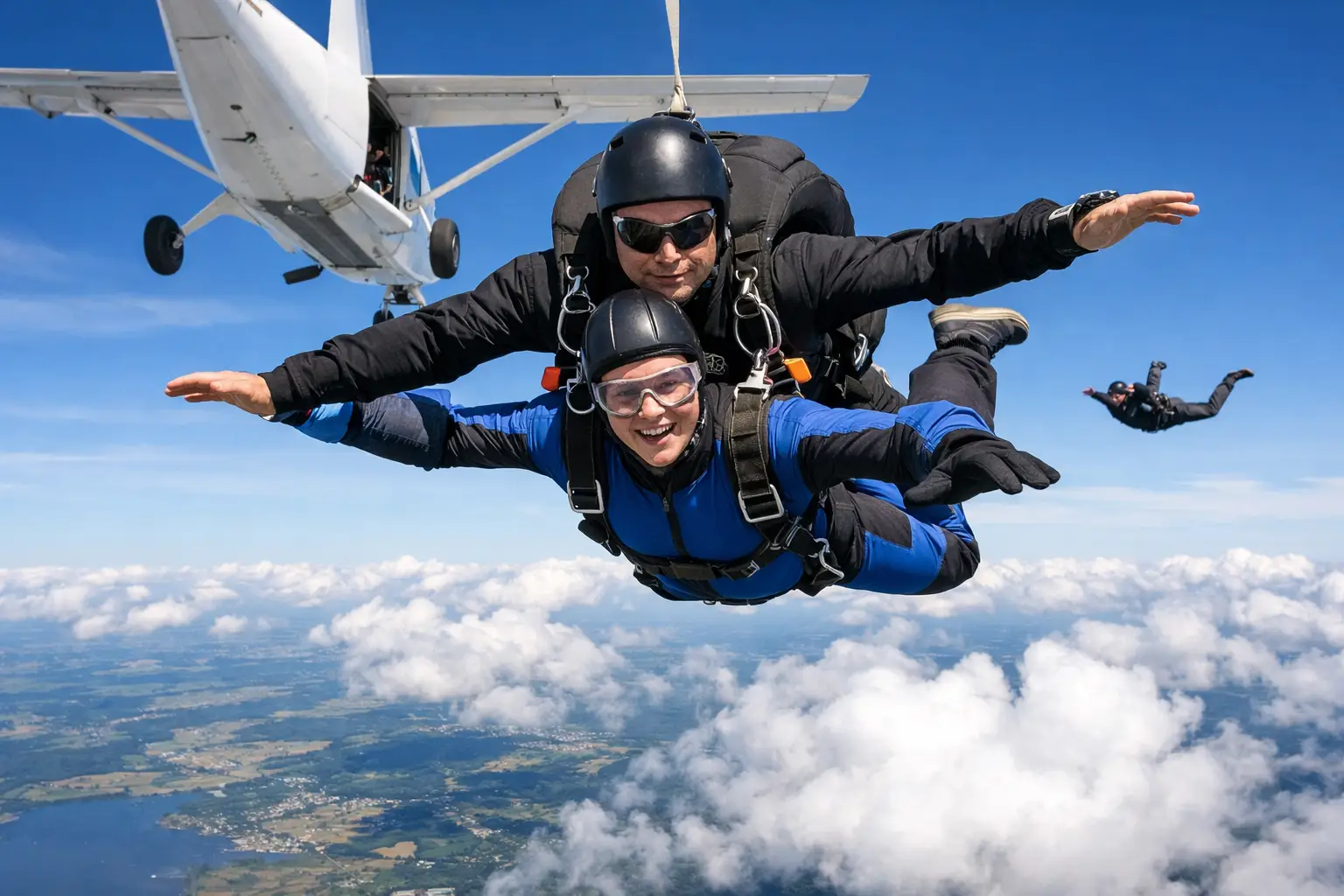
For beginners, tandem is the entry point for a reason. You are not jumping alone. You are harnessed to a trained instructor who handles the aircraft exit, freefall body position, parachute deployment, canopy flight, and landing decisions. That changes the experience completely.
Instead of trying to learn every technical skill on day one, you focus on a few simple instructions. Arch. Keep your legs where your instructor tells you. Follow the landing cues. The instructor does the high-level work, and that lowers the chance of beginner mistakes creating bigger problems.
This is why tandem skydiving is widely used for first jumps across the country. It takes a highly technical sport and makes it accessible without pretending the risks do not exist.
What actually makes tandem skydiving safer?
Safety in skydiving is not based on luck. It comes from layers. Good dropzones build those layers into every part of the jump.
The first layer is the instructor. Tandem instructors are not casual thrill guides. They are experienced skydivers who have earned advanced ratings and certifications, including USPA qualifications, and they are trained specifically to manage tandem jumps with students attached to them. Experience matters here. Repetition matters. Calm judgment matters.
The second layer is equipment. Modern tandem systems are built with redundancy in mind. There is a main parachute and a reserve parachute, and reserve systems are packed and maintained to strict standards. Many systems also include an automatic activation device, often called an AAD, which is designed to deploy the reserve parachute if certain conditions are met.
The third layer is procedure. Before anyone leaves the ground, there is a gear check, aircraft loading process, exit plan, altitude awareness process, and landing setup. The jump may feel wild and unforgettable to the customer, but behind that feeling is a very controlled operation.
The fourth layer is weather. Safe dropzones do not force jumps in bad conditions. Wind speed, cloud cover, visibility, and other factors affect whether a jump should happen at all. Sometimes the safest call is a delay or a reschedule. That can be frustrating when you are excited, but it is one of the clearest signs that a skydiving operation takes safety seriously.
The real risk level – and how to think about it
If you are asking whether tandem skydiving is completely safe, the honest answer is no. Nothing involving aircraft, altitude, and speed can be sold as completely risk-free. But that does not mean it is reckless.
A better question is whether the risk is managed well enough for many first-time jumpers to feel confident saying yes. In a professional tandem setting, the answer is often yes. The sport has established training standards, equipment standards, instructor requirements, and operating procedures specifically to reduce preventable problems.
What matters most is not just the sport itself, but where you go and who you jump with. A well-run dropzone with qualified instructors, maintained gear, and clear safety protocols is very different from any mental picture of chaos people sometimes bring with them.
That is also why price alone should never be the deciding factor. A bargain jump means nothing if you do not trust the operation behind it. When you are choosing a bucket-list experience, professionalism is part of the product.
What can go wrong, and how pros prepare for it
People usually want the straight answer here, and they should get it. Skydiving carries risk because things can go wrong with equipment, weather conditions can change, or a landing can be harder than expected. Even small issues can matter when you are moving fast and working at altitude.
The reason tandem jumping remains approachable is that instructors are trained for those possibilities before they ever take a student. They know how to inspect gear, respond to canopy issues, adjust for wind, and make landing choices in real time. They are not reacting for the first time. They are applying training and experience.
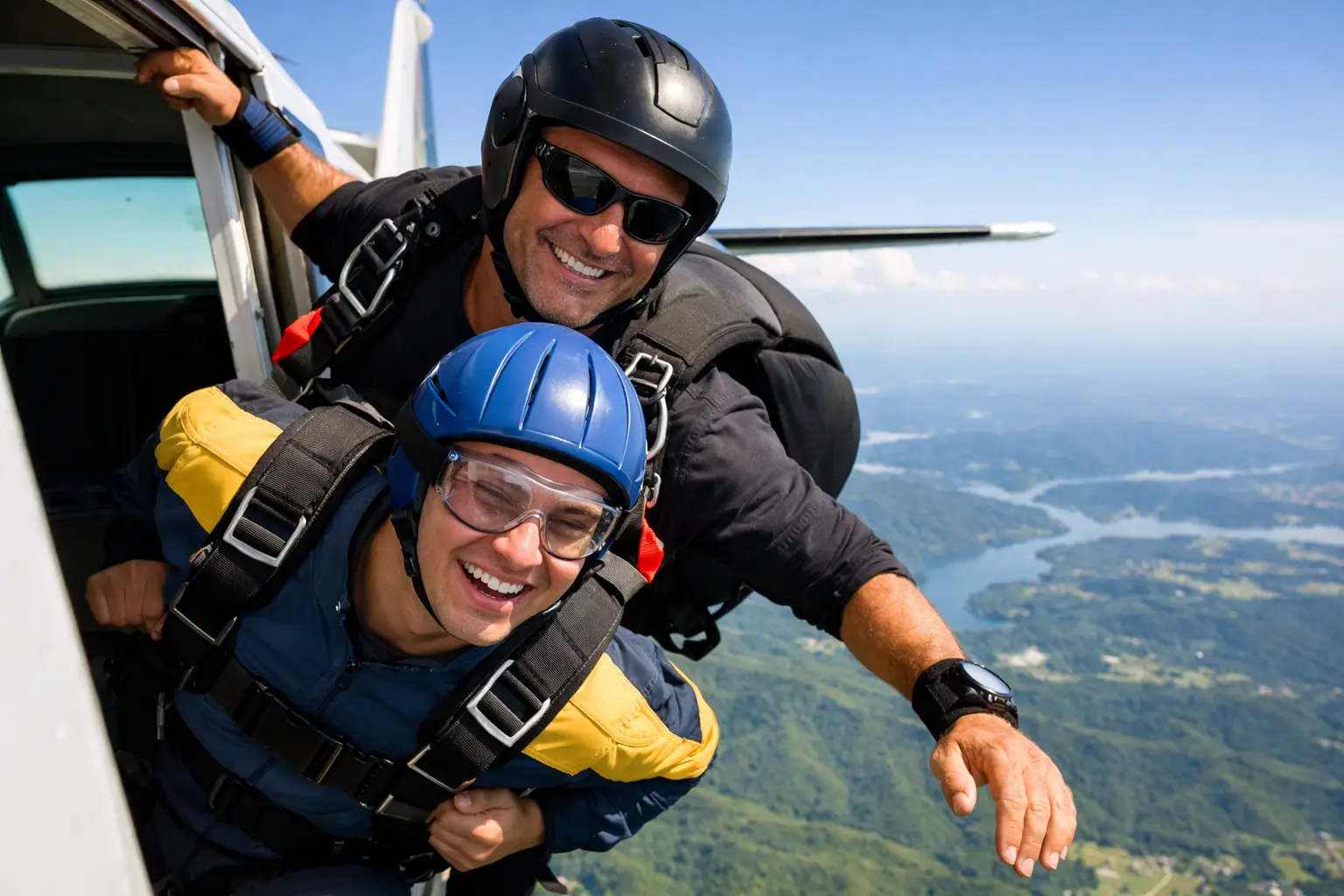
Landing is one area that deserves special attention. Most people imagine freefall as the dangerous part because it looks dramatic. In reality, landings require a lot of precision. That is one more reason tandem is a smart first-jump choice. Your instructor controls the canopy and guides the landing while you follow a few simple directions, usually including lifting your legs at the right moment.
How safe is tandem skydiving compared to solo jumping?
Tandem is generally safer for beginners than trying to progress straight into solo skydiving. That is not because solo skydiving is inherently reckless. It is because solo jumping asks much more of the person under the parachute.
A solo student has to manage body position, altitude awareness, deployment timing, emergency procedures, canopy control, and landing execution. That is a lot to process for someone brand new to the sport. Tandem removes most of that burden and places it in the hands of a trained professional.
For first-timers, that difference matters. It turns the jump from an overwhelming task into a guided experience. You still get the adrenaline-filled freefall and the incredible view, but you do not have to carry the technical load alone.
What first-time jumpers can do to help make the jump safer
A lot of safety happens before the plane ever takes off. Your job as a customer is simple but important. Be honest about your medical history, medications, injuries, and physical limitations. If the dropzone has weight requirements or other participation rules, those are there for safety and equipment performance, not to make the process harder.
It also helps to show up rested, hydrated, and ready to listen. Do not treat the briefing like background noise. The instructions are not complicated, but they matter. The smoother you follow them, the smoother your experience usually feels.
And if you are nervous, say that out loud. Good instructors expect it. Fear does not make you a bad candidate for a tandem jump. It makes you normal. In fact, nervous first-timers often do great because they pay close attention.
Signs you are booking with a safety-first operation
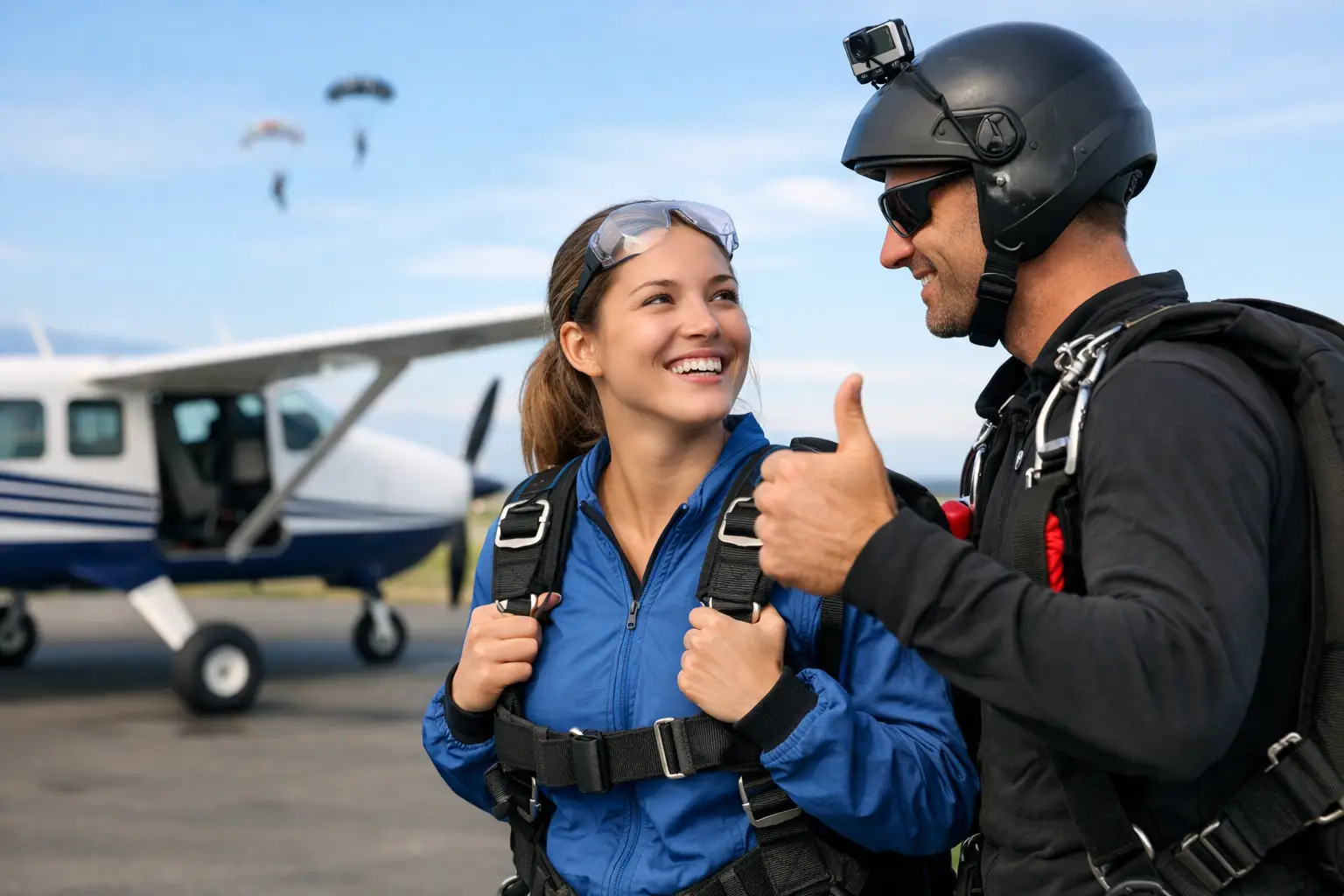
Not every customer knows what to look for, but a few things should stand out. You want to see licensed tandem instructors, clear safety messaging, straightforward explanations of the process, and a willingness to delay for weather when needed. Professionalism should be obvious from the first conversation.
You should also notice how the experience is presented. A trustworthy operation makes the jump feel exciting and approachable without acting like nothing can ever go wrong. Confidence is good. Overpromising is not.
For people looking at Nashville skydiving options, this matters just as much as location and price. Middle Tennessee Skydiving is built around that guided first-jump experience – serious safety standards, experienced instructors, and a welcoming approach that helps beginners feel ready instead of overwhelmed.
So, should fear stop you?
Fear has a purpose. It slows you down enough to ask smart questions. It makes you pay attention. It reminds you that this is a real adventure, not a carnival ride. But fear does not always mean stop. Sometimes it means get the facts, choose the right team, and decide with clarity.
Tandem skydiving is one of those experiences that feels bigger in your head before you do it. Then the harness is on, the instructor is talking you through each step, the plane climbs, and your nerves start turning into focus. A few moments later, you are in the sky doing the thing you were not sure you were brave enough to try.
If you want a bucket-list experience that feels thrilling, guided, and grounded in real safety standards, tandem skydiving makes sense for a lot of first-time jumpers. Ask good questions. Choose professionals. Then let yourself have the kind of day you will still be talking about years from now.