Does Tandem Skydiving Hurt? What to Expect
The question almost every first-time jumper asks is simple: does tandem skydiving hurt? Usually, no – not in the way people fear. It is intense, fast, and loaded with adrenaline, but most tandem skydivers walk away saying the experience felt thrilling far more than painful.
That said, skydiving is still a physical activity. You are wearing a harness, exiting an aircraft, riding a parachute, and landing on the ground. Depending on your body, your flexibility, the weather, and how relaxed you are during the jump, you may feel pressure in a few spots or some mild soreness afterward. For most people, that is the full story.
Does tandem skydiving hurt during the jump?
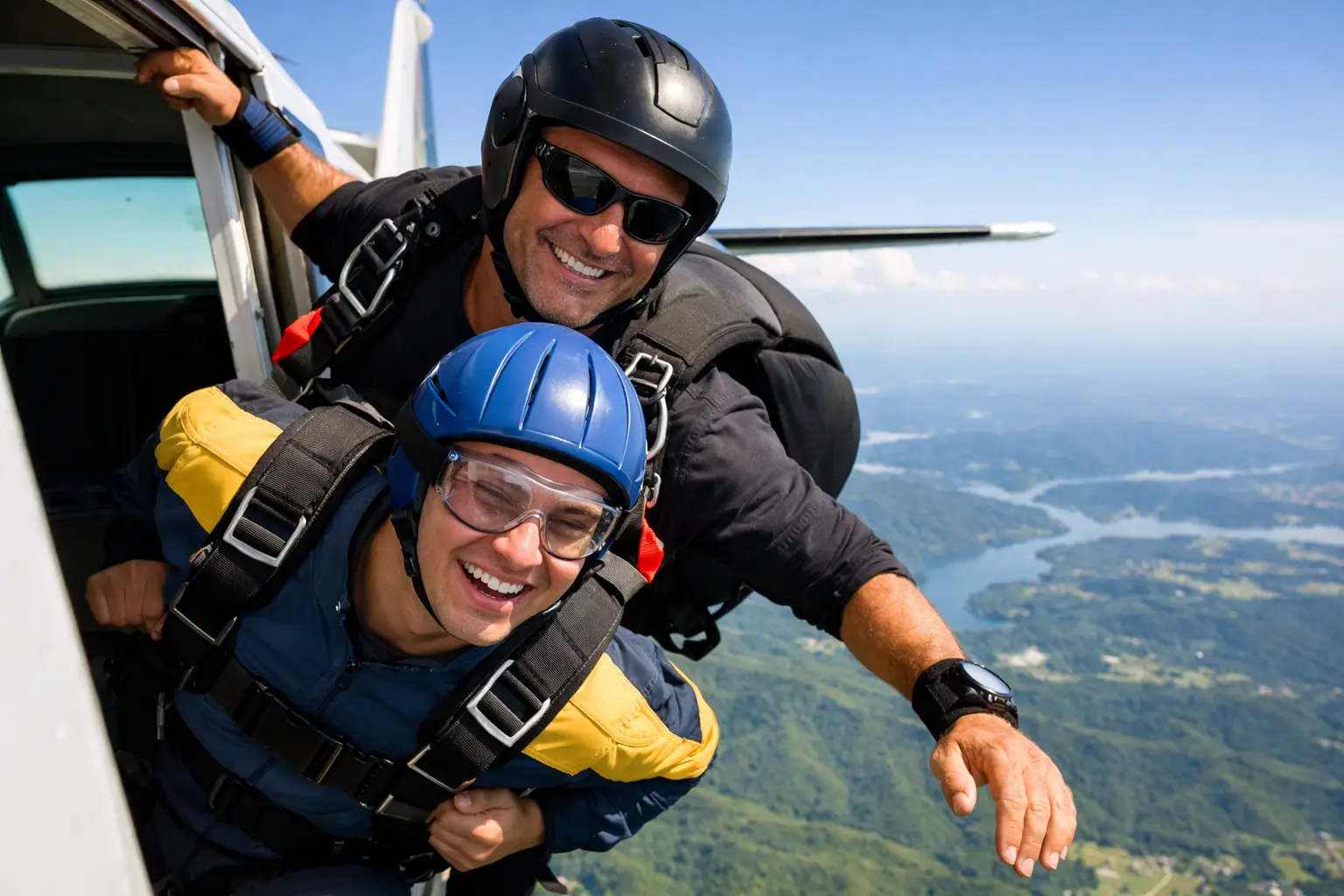
For a typical tandem student, the jump itself does not feel painful. The biggest surprise is usually how sensory the whole experience is. Your heart is racing on the ride up, your mind is trying to catch up with what is about to happen, and then the door opens and everything gets very real.
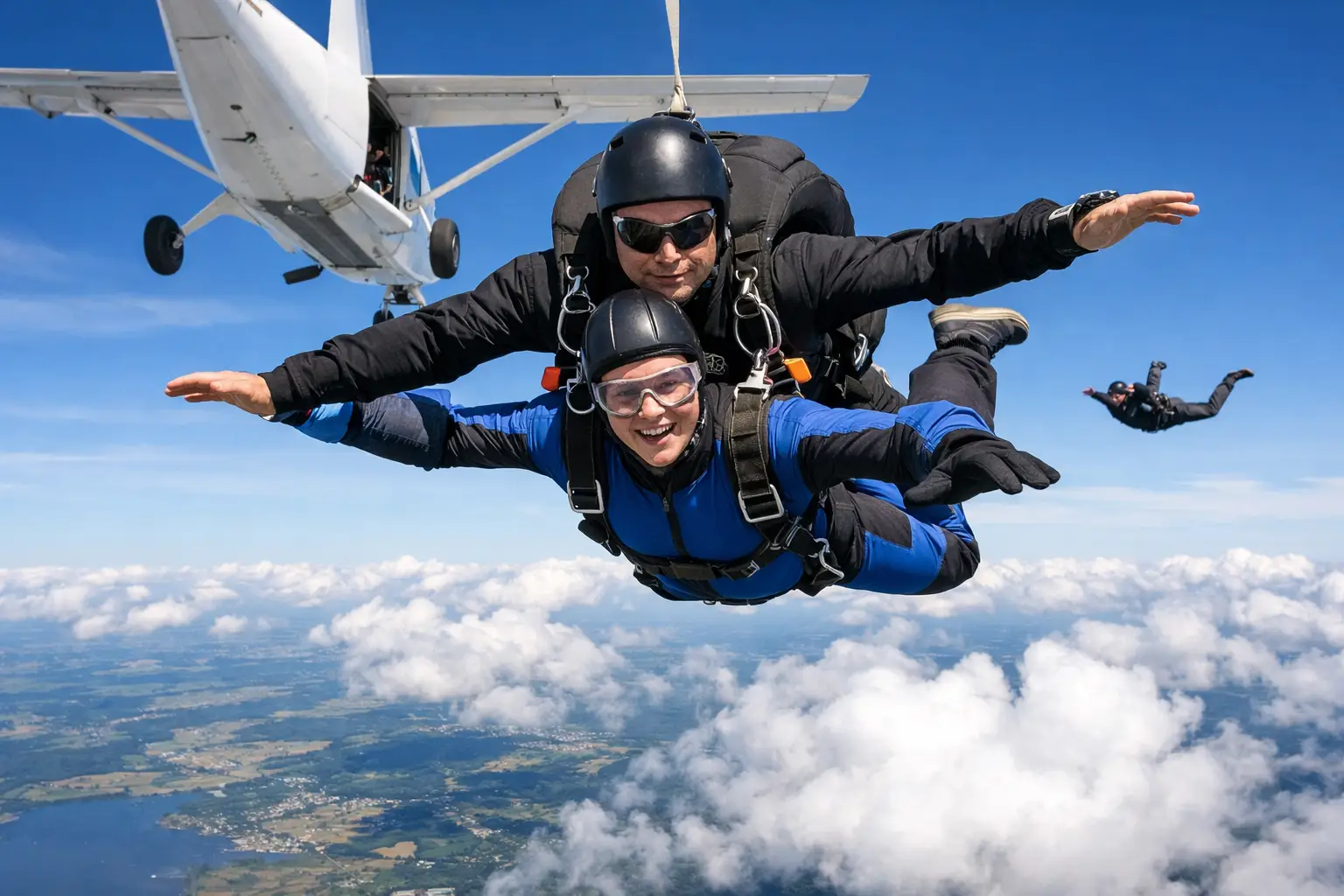
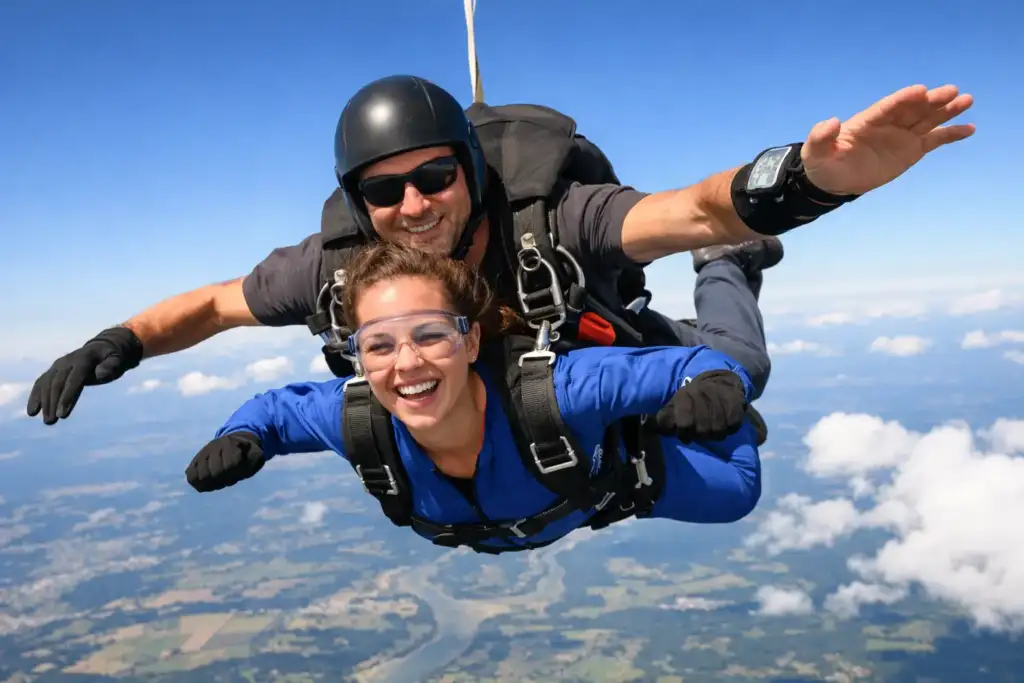
When you leave the plane, you are not getting the stomach-drop feeling people expect from a roller coaster. Freefall feels more like being held up by strong air pressure than falling straight down. You feel wind, speed, excitement, and a huge rush of adrenaline. Most people are too focused on the moment to think about discomfort at all.
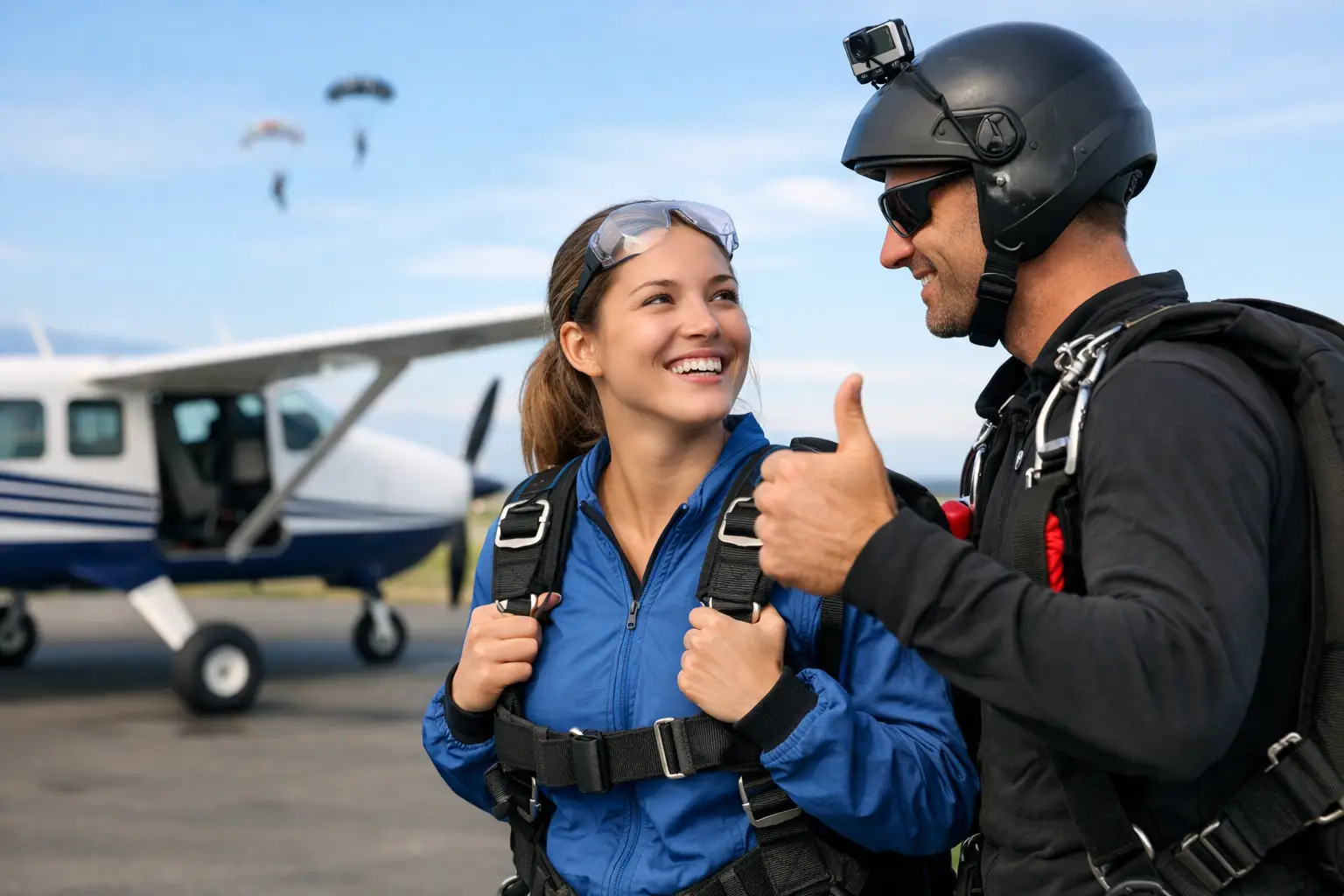
The harness can create pressure, especially around the shoulders and upper thighs, but it should not feel sharp or unbearable. A properly fitted tandem harness is designed to keep you secure while your instructor manages the technical side of the jump. If something feels off before takeoff, speak up. Good instructors want you comfortable on the ground so you can enjoy the ride in the air.
Where people might feel discomfort
If there is any discomfort, it usually comes from a few predictable places rather than the skydive itself.
Harness pressure
The leg straps and chest area can feel snug. That is normal. They are supposed to be secure. Some jumpers notice more pressure when the parachute opens because your body transitions from freefall to canopy flight. It is a noticeable change, but for most healthy adults it is more awkward than painful.
People with sensitive hips, tight hamstrings, or lower back stiffness may notice the harness more than others. Wearing comfortable clothes that let you move easily helps. So does listening closely during the pre-jump briefing, especially when your instructor explains body position.
Parachute opening
A lot of first-timers worry the parachute opening will feel violent. In reality, tandem equipment is built to open in a controlled way. You will absolutely feel the change in speed, but it is not like hitting a wall. Think firm deceleration, not a jolt that knocks the breath out of you.
Some people compare it to a strong tug upward. If you already carry tension in your neck or shoulders, you might feel that transition a little more. This is one reason experienced instructors coach you on posture before the jump.
Landing
Landing is the part many people are most nervous about, and it is also where the answer becomes a little more personal. A smooth tandem landing is often gentler than people expect. On many jumps, your instructor will guide you into a seated landing or a soft slide, depending on conditions.
Weather matters here. Wind, ground conditions, and the pace of descent all play a role. So do your body position and how well you follow instructions. Lifting your legs when told is a small detail that can make a big difference. A good landing should not hurt, but if you come in tense, stiff, or distracted, you may feel more impact than necessary.
Does tandem skydiving hurt after it is over?
Sometimes, a little. Usually, only a little.
It is common to feel mild soreness later that day or the next morning, especially if it is your first jump. The most common areas are your shoulders, hips, upper thighs, or lower back. For many people, it feels like the kind of soreness you get after doing something active and exciting that your body is not used to.
That does not mean skydiving is supposed to leave you hurting. It means your body just did something memorable. The harness supported your weight in certain ways, you held a specific arch position in freefall, and your adrenaline may have kept you from noticing tension until later.
If you have old injuries, tight joints, or chronic back or neck pain, that is worth discussing before you jump. Tandem skydiving is accessible for many people, but honest communication matters. A safety-first operation will want to know about physical limitations so they can tell you whether the jump is a good fit.
What tandem skydiving actually feels like
Pain is usually the wrong word. Intense is the better one.
The plane ride up feels like a countdown. Your nerves kick in, then your excitement takes over. At the door, there is a burst of pure commitment. In freefall, the wind is loud, the view is unreal, and your brain has almost no frame of reference for what is happening. Then the canopy opens, everything gets quiet, and you suddenly have time to take it all in.
That shift is one of the best parts of the experience. You go from adrenaline-filled freefall to a peaceful ride under parachute with panoramic views and a few minutes to breathe, smile, and realize you are actually doing this.
For most first-time jumpers, the lasting sensation is not pain. It is the mix of relief, pride, and absolute excitement that hits once your feet are back on the ground.
Who may feel more discomfort than others?
There is no single answer for every body. Some people may be more likely to feel sore or uncomfortable, including those with prior injuries, limited mobility, or very low pain tolerance. If you are already dealing with neck, shoulder, hip, knee, or back issues, the harness and landing can feel more demanding.
Body size and flexibility can matter too. Tandem skydiving has safety limits and fit requirements for a reason. These are not there to make things difficult. They help create a safer, more comfortable experience from takeoff to landing.
Age by itself is not the deciding factor. Plenty of adults in their 40s and 50s have an incredible first tandem jump. Overall mobility, health, and readiness matter more than the number on your driver’s license.
How to make tandem skydiving more comfortable
A lot of comfort comes down to preparation. Wear athletic clothes that allow movement and closed-toe shoes that stay secure. Eat a normal light meal beforehand unless your jump center tells you otherwise. Showing up dehydrated, overly caffeinated, or running on no sleep can make the day feel harder than it needs to.
The biggest factor, though, is following your instructor. Tandem skydiving is built for first-timers, and your instructor is there to guide everything from harness fit to body position to landing technique. If they tell you where to place your hands, how to arch, or when to lift your legs, that is not just procedure. It is part of making the jump feel smoother and more controlled.
It also helps to stay loose. People who tense every muscle usually feel the experience more. People who listen, breathe, and let the instructor do their job often come away saying, “That was way easier than I expected.”
The real fear behind the question
When someone asks, does tandem skydiving hurt, they are often asking something bigger. They want to know if the experience is manageable. They want to know if they will panic, if the landing will be rough, or if they are signing up for something that sounds fun online but feels miserable in real life.
That is a fair question. Skydiving should feel bold, not reckless. It should feel exciting, not confusing. With licensed, experienced tandem instructors, quality equipment, and a clear pre-jump briefing, the experience is designed to be approachable for ordinary people doing an extraordinary thing.
At Middle Tennessee Skydiving, that is exactly the point. First-time jumpers are not expected to show up fearless. They are expected to show up curious, a little nervous, and ready to trust the process.
So, does tandem skydiving hurt? For most people, no. You may feel pressure from the harness, a firm transition when the parachute opens, or mild soreness afterward, but the jump itself is far more thrilling than painful. If skydiving has been sitting on your bucket list because you are worried it will be rough, the better question might be this: are you ready for the kind of adrenaline rush you will be talking about long after you land?