Skydiving Safety Guide for Beginners
The nerves usually hit in waves. First when you book, then again on the drive in, and definitely when you see the plane. That is exactly why a real skydiving safety guide beginners can use matters – not to kill the excitement, but to replace mystery with confidence.
If this is your first tandem jump, you do not need to know how to skydive solo. You do need to understand how safety works, what your instructor is doing for you, and where your role begins and ends. For most first-time jumpers, the biggest fear is not the jump itself. It is the unknown. Once you know what actually happens from check-in to landing, the whole experience feels a lot more manageable.
What makes tandem skydiving safe for beginners
Tandem skydiving is built for first-timers. You are securely attached to a licensed tandem instructor who handles the technical parts of the jump, including aircraft exit, freefall control, parachute deployment, and landing guidance. That setup matters because it removes the pressure of trying to learn everything at once while still letting you experience the full thrill of skydiving.
Safety starts long before the plane leaves the ground. A reputable dropzone uses maintained aircraft, inspected gear, trained staff, and weather standards that are taken seriously. It also relies on systems, not luck. Your harness is checked more than once. Your instructor reviews body position with you before boarding. The parachute equipment is designed with backup systems and specific procedures for emergencies.
That does not mean skydiving is risk-free. No honest operator should pretend it is. It means the sport is managed through training, equipment standards, and decision-making that put safety first.
A skydiving safety guide beginners should understand before booking
The right safety questions are not dramatic. They are practical. Is the jump tandem for first-timers? Are instructors licensed and experienced? Is there a clear briefing before the jump? Are weather calls made conservatively? If those answers are vague, that is a red flag.
Experience matters, but so does communication. A good instructor does more than clip you in and go. They explain the process in plain English, tell you how your body should be positioned, and make sure you know what to expect at each stage. For beginners, that kind of calm, direct coaching makes a huge difference.
It also helps to understand what your tandem package includes. The jump itself is the priority, but many first-timers add photo or video so they can relive the moment after the adrenaline settles. That is not a safety feature, but it can make the whole experience feel more complete, especially for bucket-list jumps, birthdays, anniversaries, and group adventures.
What happens before your jump
The first part of your day is paperwork, orientation, and preparation. You will sign waivers, check in, and usually watch or hear a safety briefing. This is where the staff explains the basics of the aircraft ride, the exit, freefall, canopy flight, and landing.
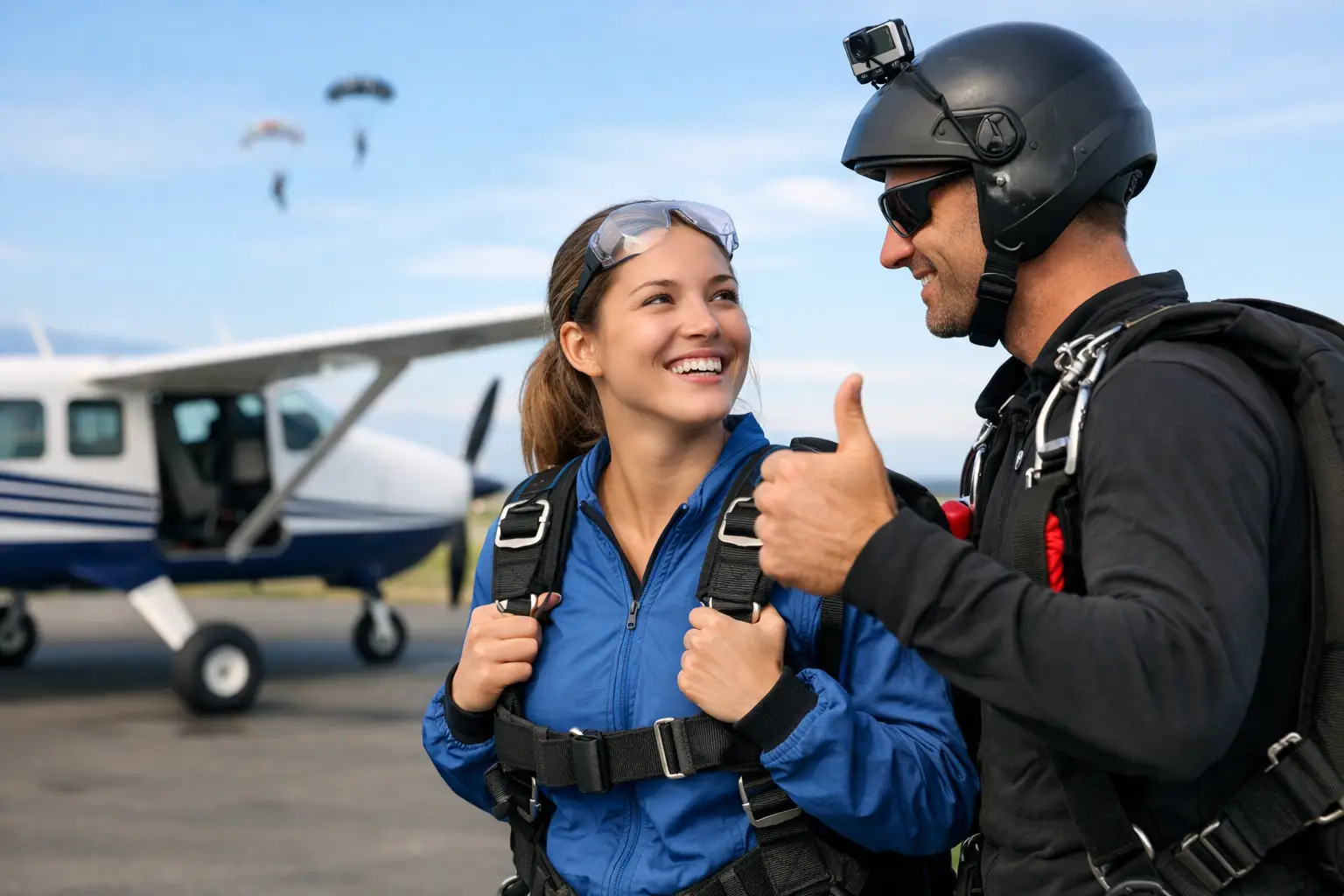
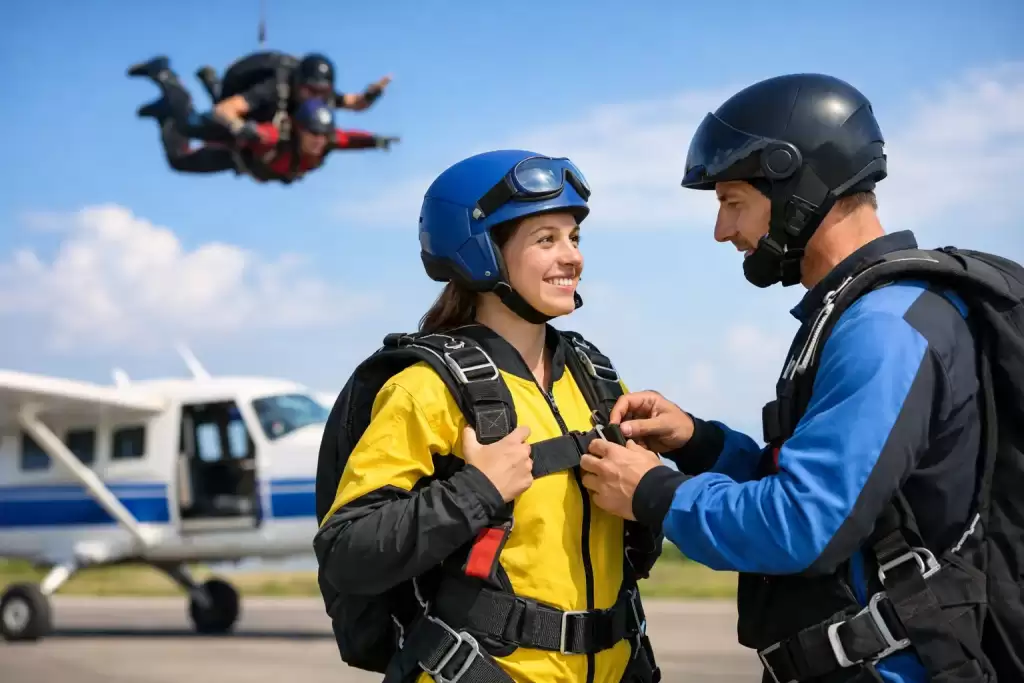
Then comes harness fitting. Your tandem harness needs to sit correctly and feel snug. It should not be painfully tight, but it should feel secure. Your instructor or ground crew will adjust it and inspect it carefully. If something feels off, say so. Beginners sometimes stay quiet because they assume discomfort is normal. Speak up. Safety works best when communication goes both ways.
Clothing matters more than people expect. Wear secure, comfortable clothes you can move in and closed-toe shoes that will stay on your feet. Leave loose accessories and anything valuable behind. This is not the day for sandals, dangling jewelry, or pockets full of stuff.
Your job in the plane and at the door
By the time you board, most of the technical responsibility is in your instructor’s hands. Your part is simple but important. Listen well, stay calm, and follow directions the first time.
On the ride to altitude, your instructor will likely review the jump sequence again. They may tell you when they will connect the tandem system fully, how to position your head and hips at the door, and what to do with your hands. Those instructions are short because they need to be easy to remember under stress.
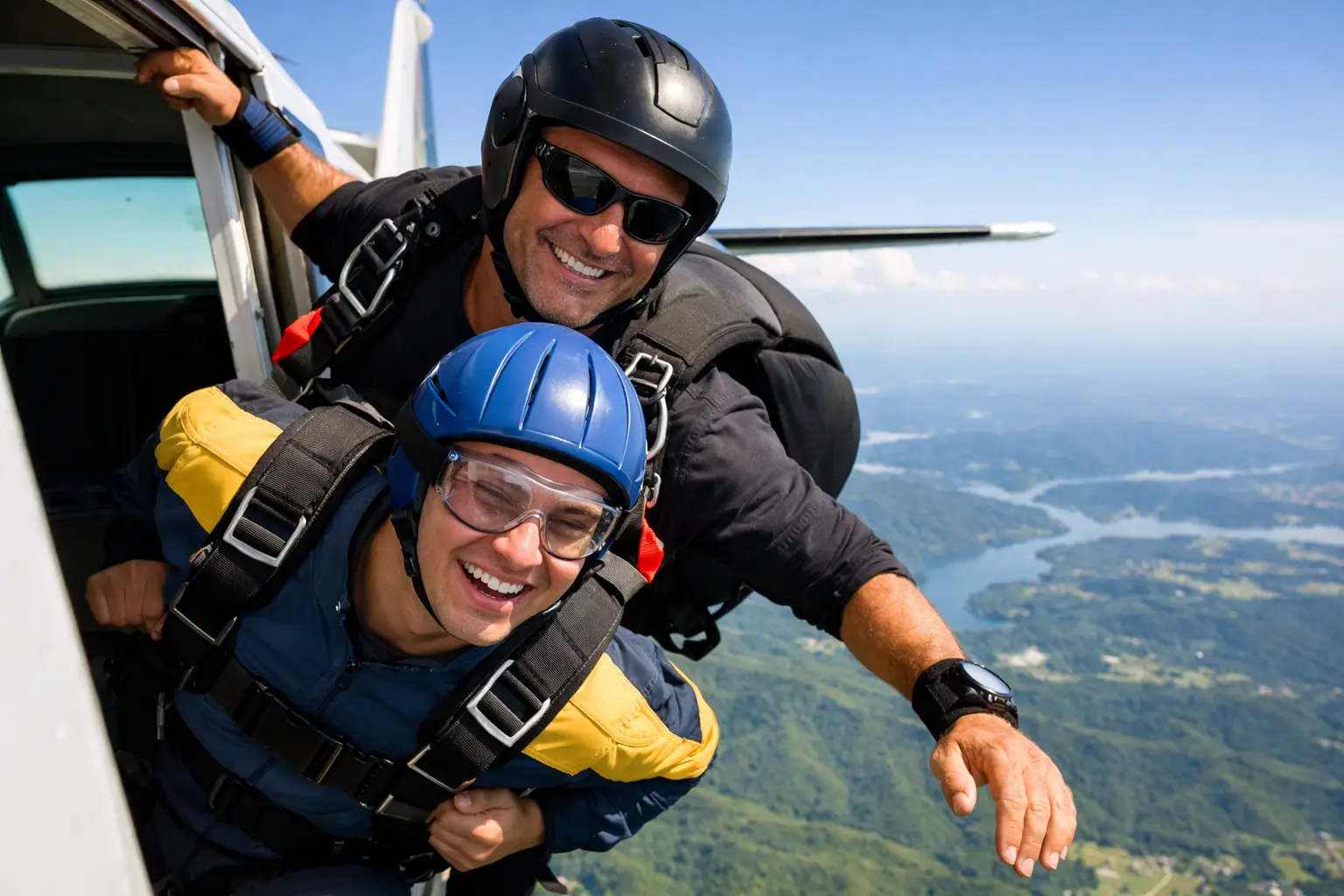
The aircraft door is where anticipation spikes. For many beginners, this is the most intense moment of the day. That is normal. You are not expected to feel perfectly relaxed. You are expected to hold the practiced body position and trust your instructor’s commands. In a tandem jump, control comes from preparation and partnership.
Freefall feels intense, but it is controlled
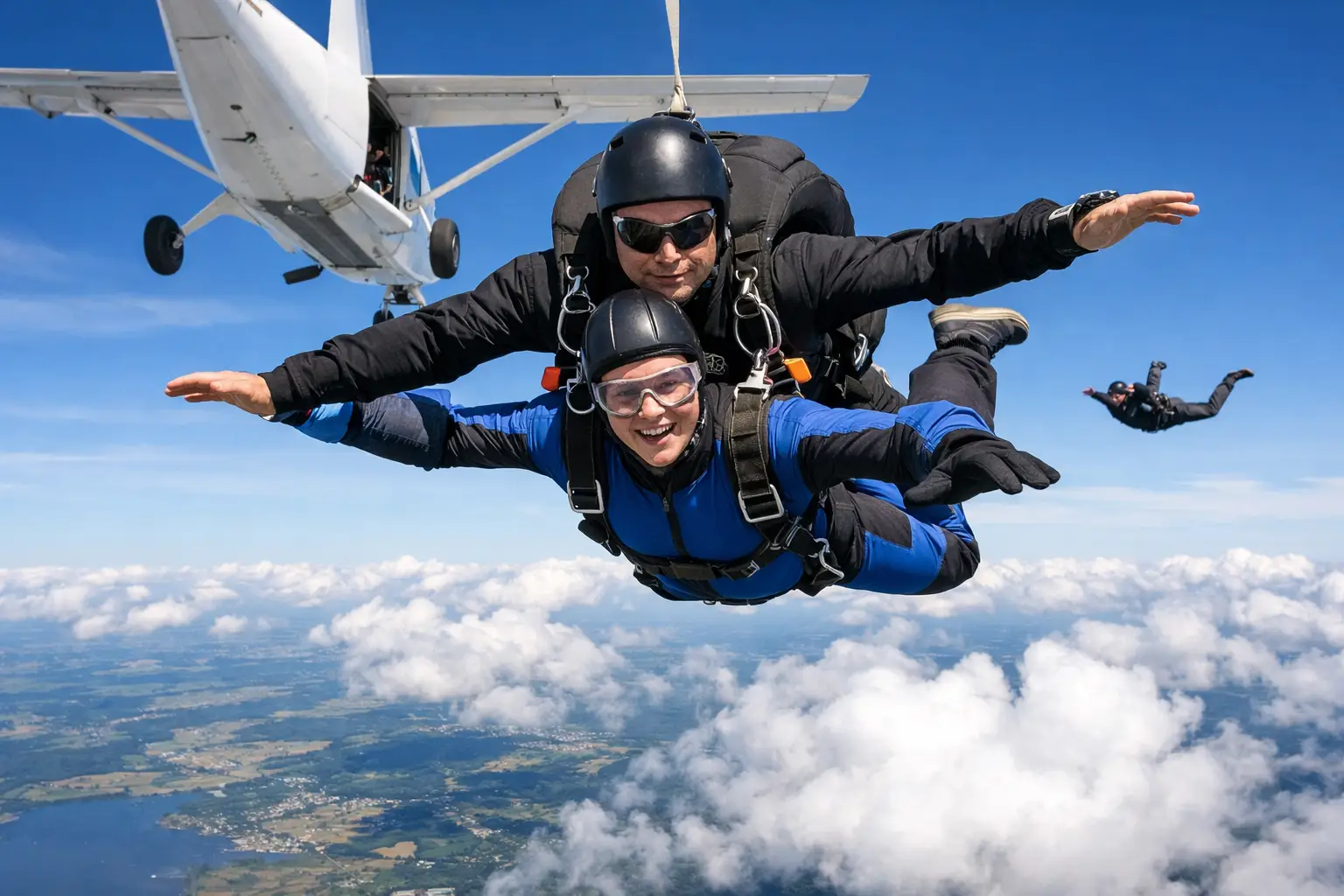
People often imagine freefall as chaos. In reality, with a trained tandem instructor, it is a controlled, stable part of the jump. The sensation is powerful, fast, and unforgettable, but your instructor is managing body position and altitude awareness the entire time.
This is one reason first-time jumpers are paired with highly trained professionals. While you are taking in the view and feeling that rush of pure adrenaline, your instructor is focused on stability, timing, and the parachute deployment plan. You get the bucket-list thrill without needing to make technical decisions at 10,000 feet or more.
A lot of fear fades once people realize they can breathe normally in freefall. It is loud and exhilarating, but not like falling in a dream. If you can smile, arch, and enjoy the moment, you are doing your job.
Under canopy is part of the safety story too
Once the parachute opens, the jump changes completely. The noise drops. The pace slows. You can look around, catch your breath, and enjoy the view of Middle Tennessee from a whole new angle.
This phase matters for safety because parachute flight is not an afterthought. Your instructor is checking the canopy, steering toward the landing area, and preparing for touchdown. If conditions call for a gentler pattern or a change in approach, that is exactly what an experienced instructor is there to manage.
Landings vary based on wind, weather, and the day’s conditions. Sometimes they are light and stand-up easy. Sometimes your instructor will have you lift your legs for a seated slide-in landing. Neither is automatically better or worse. It depends on what is safest in that moment.
Weather delays are a good sign, not a bad one
One of the fastest ways to spot a safety-first operation is how it treats weather. If conditions are not right, the jump should wait. That can be frustrating when you are excited and ready, especially if friends came to watch or you planned your whole weekend around it. But caution is part of the experience, not an obstacle to it.
Wind, cloud cover, rain, and visibility all affect jump operations. The details are technical, but the takeaway is simple: if the team pauses, delays, or reschedules your jump, that is professional judgment doing its job.
The same goes for any equipment or aircraft checks that take extra time. Nobody remembers a short delay once they are grinning under a parachute. They do remember feeling taken care of.
How to be a smart first-time jumper
The best way to help make your jump safe is to show up ready to participate. Get a normal night’s sleep, eat a light meal, stay hydrated, and avoid alcohol or anything that could affect your judgment. If you have a medical concern, ask about it ahead of time instead of hoping it will not matter.
Be honest on forms and during check-in. Weight limits, recent surgeries, injuries, and certain health conditions can affect whether or how you jump. That is not about excluding people. It is about matching the experience to the person safely.
Mentally, try not to feed the fear with dramatic videos or worst-case stories right before your jump. A trusted tandem operator with licensed instructors, clear procedures, and beginner-friendly training is not improvising. At Middle Tennessee Skydiving, that guided approach is exactly what helps first-time jumpers move from nervous to ready.
The goal is not to act fearless
A lot of beginners think they need to be brave in a loud, performative way. You do not. You can be excited, shaky, quiet, laughing too much, or asking the same question twice. None of that makes you a bad candidate for a tandem jump.
What matters is choosing a professional team, paying attention during your briefing, and letting experienced instructors guide the day. Safety and excitement are not opposites here. They work together. The safer and more informed you feel, the more room you have to actually enjoy the freefall, the view, and that wild moment when you realize you really did it.
If you have been waiting for the fear to disappear before booking, you may be waiting forever. A better goal is to understand the process well enough to trust it – and then give yourself the chance to experience something you will talk about for years.