Can You Breathe While Skydiving? Yes
That question usually shows up right before someone books – or right before they talk themselves out of it. Can you breathe while skydiving? Yes, absolutely. You are not falling so fast that air gets forced out of your lungs, and you are not too high up to get oxygen on a tandem jump. For most first-time skydivers, breathing is completely possible. The real challenge is staying relaxed enough to notice that.
A lot of people imagine freefall like sticking your head out of a car window at highway speed, except worse. That picture makes it easy to assume breathing will be hard, painful, or impossible. In reality, tandem skydiving is intense, but it is not a suffocating experience. The rush is real. The airflow is strong. Your heart is pounding. But your body can still breathe.
Why people worry they can’t breathe while skydiving
The fear makes sense. If you have never jumped out of an airplane, your brain fills in the blanks with movie scenes, roller coaster drops, and pure guesswork. People often expect the wind to slam into their face so hard they will not be able to inhale.
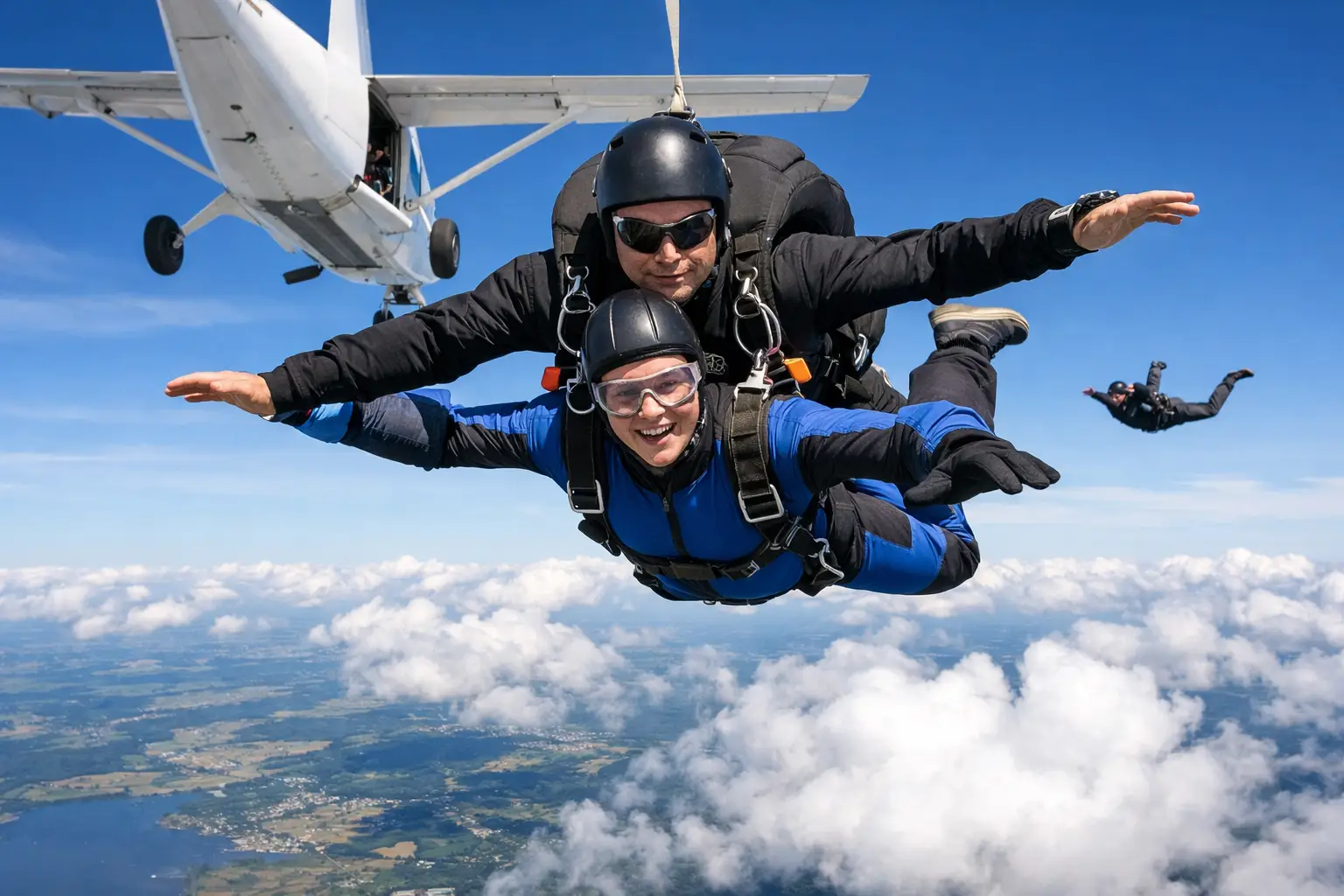
What actually happens is different. In freefall, you are moving with the air rather than having air smash into you the way it might on a motorcycle or in a fast-moving car. There is definitely pressure from the wind, especially on your face, but it does not block your lungs from working. You can inhale and exhale. Many first-timers even yell, laugh, or scream on the way down, which is pretty solid proof that breathing is happening.
There is another layer to this fear, and it has less to do with physics than adrenaline. When people feel overwhelmed, they tend to hold their breath without realizing it. That can happen on a roller coaster, during a big speech, or standing in the airplane door at jump altitude. So when someone says, “I couldn’t breathe,” what they often mean is, “I got startled and forgot to breathe normally for a few seconds.” Those are not the same thing.
Can you breathe while skydiving in freefall?
Yes. During freefall, you can breathe while skydiving.
The sensation is just unfamiliar at first. The wind is loud. Your cheeks may flap a little. Your body is processing a huge adrenaline spike. That can trick you into thinking breathing is harder than it really is. But if you take steady breaths through your mouth or nose, air moves in and out just fine.
For tandem students, body position helps too. You are attached securely to a licensed instructor who manages the jump, and your position is designed to keep you stable in freefall. Stability matters because when your body is in the right position, the airflow feels more predictable and comfortable. That makes it easier to relax and breathe naturally.
Some jumpers like to take one big breath right before exit because it gives them a sense of control. That is fine, but the key is not to lock up afterward. Slow, steady breathing works better than trying to force giant breaths. Think calm, not dramatic.
What the air actually feels like
This is where expectations matter. Freefall does not usually feel like dropping the way people expect. It feels more like floating on a powerful column of air. There is speed, but because you are not looking at a speedometer and because your body is supported by the airflow, your brain interprets it differently.
The wind against your face is strong, and you will hear it. Your eyes may water a little. If your mouth is open wide, the air will feel more noticeable. None of that means you cannot breathe. It just means your senses are getting a lot of information at once.
Once the parachute opens, the experience changes fast. The noise drops. The pace slows. Breathing feels completely normal, and many first-timers go from adrenaline overload to total awe in a matter of seconds. If freefall is the thrill, canopy flight is the exhale.
Why altitude is not the issue on a tandem jump
Some people asking can you breathe while skydiving are really asking about oxygen. That is a fair question, but on a standard tandem skydive, the altitude is not high enough to create the kind of oxygen problem people imagine.
Tandem operations follow established safety procedures, and instructors know exactly what conditions are appropriate for jumping. You are not being sent into an environment where breathing suddenly becomes unsafe. This is one reason jumping with experienced, USPA-certified professionals matters. They are not guessing. They are working within systems built around training, equipment, weather, and altitude awareness.
If conditions are not right, the jump does not go. That is part of a safety-first operation, and it is one reason first-time skydivers can focus on the experience instead of trying to manage technical details on their own.
The biggest reason breathing feels weird: adrenaline
If there is one thing that throws people off, it is not the air. It is the moment.
Your body is wired to react strongly to a brand-new, high-adrenaline experience. Heart rate goes up. Time feels strange. Your senses sharpen. For a few seconds, your brain may go into pure wow mode. That is why some first-timers forget simple things they were just told on the ground, like where to put their hands or when to smile for the camera.
Breathing can get shallow when adrenaline spikes. That is normal. The fix is simple – listen to your instructor, loosen your shoulders, and take regular breaths. You do not need perfect zen. You just need to avoid tensing up.
A good tandem instructor helps set the tone long before the airplane door opens. Clear training, calm communication, and confidence matter. When you know exactly what is coming, your body is much less likely to fight the experience.
What first-time skydivers can do to breathe easier
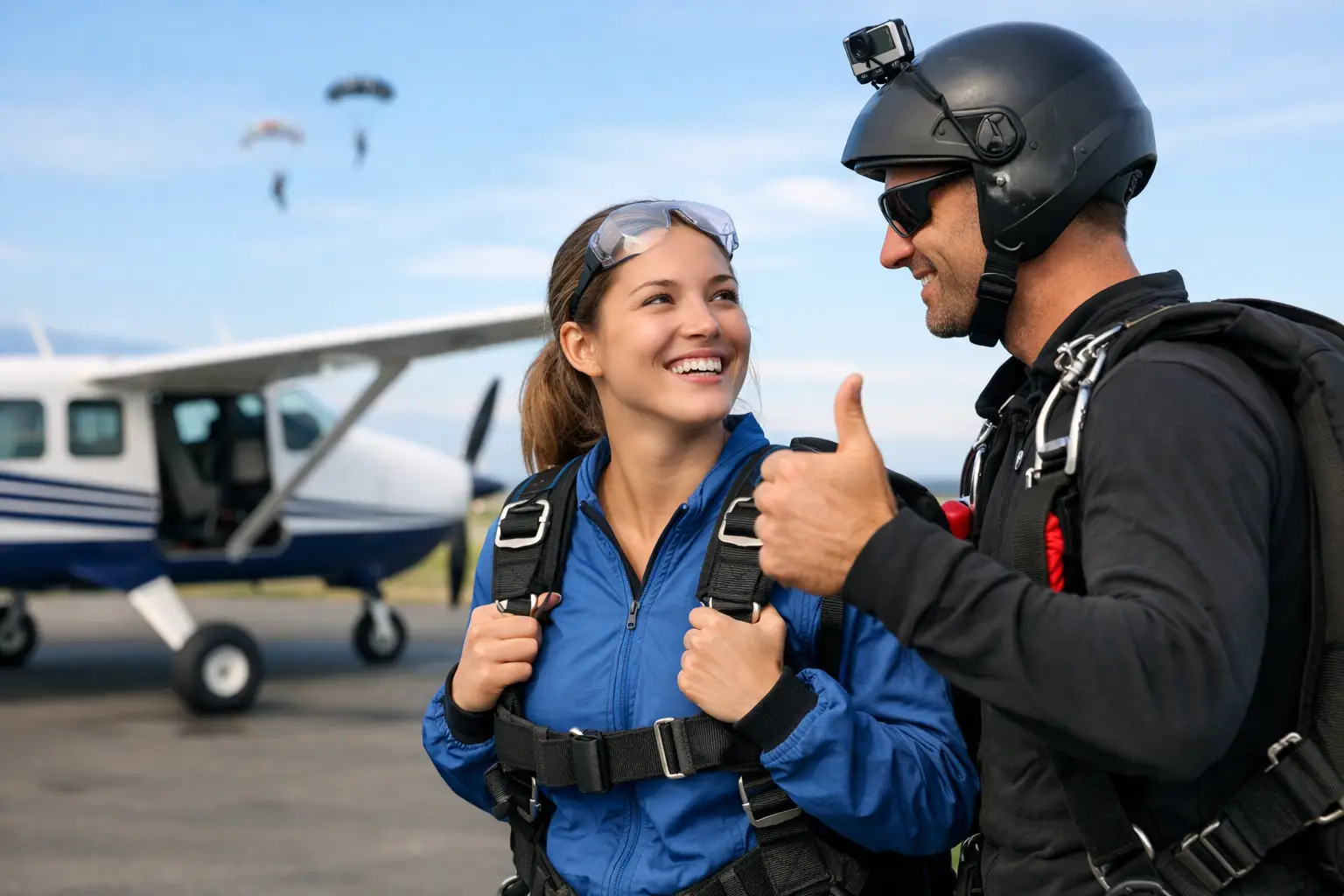
The best thing you can do is show up ready to listen and not overthink every second of the jump. If you are nervous, say so. That is normal, and your instructor has heard it all before.
It also helps to avoid treating the jump like a test you have to pass. On a tandem skydive, your job is simple: follow instructions, keep your body in the right position, and enjoy the ride. You do not need to control the skydive. You just need to participate in it.
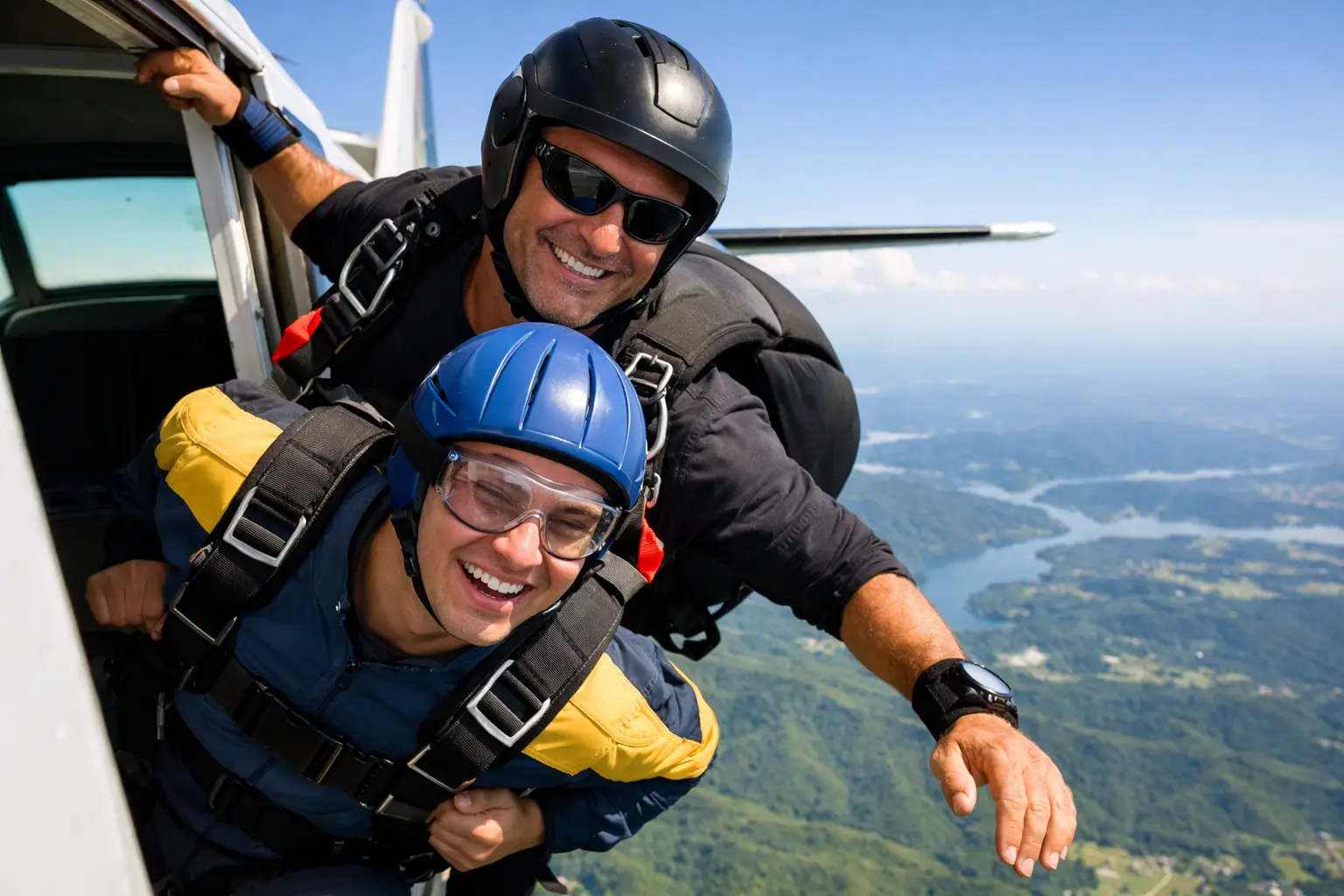
A few practical habits can help. Take full breaths during the pre-jump briefing. In the plane, unclench your jaw and shoulders. At exit, do not try to fight the wind. Once you are in freefall, breathe the way you would during any exciting moment – steadily, naturally, and without forcing it.
If you want a mental cue, use something short like “breathe and smile.” That sounds basic, but it works. It keeps your attention on what your body needs and what this experience is supposed to be: thrilling, safe, and unforgettable.
When people say they couldn’t breathe
Usually, they mean one of three things. They were shocked for a moment on exit, they held their breath because of adrenaline, or they were so overwhelmed by the sensation that breathing felt strange compared to normal everyday breathing.
That is different from actually being unable to breathe. Most people settle in quickly once the initial rush passes. By the time the parachute opens, they are grinning, talking, and wondering why they were so worried.
That does not mean every person experiences the jump the exact same way. Some people relax instantly. Others take a few more seconds to adjust. But across the board, tandem skydiving is designed to be approachable for beginners, including people whose biggest concern is the unknown.
The real takeaway for nervous jumpers
If fear has you stuck on the question can you breathe while skydiving, the honest answer is yes – and that fear is more common than you think. Breathing is not the part that stops people. Anticipation is.
Once the jump begins, most first-timers realize the scary version they imagined was not the real one. The real version is loud, fast, wild, and unbelievably fun, but it is also guided from start to finish. With the right instructor, the right training, and the right mindset, your body does what it already knows how to do.
At Middle Tennessee Skydiving, that first deep breath before the jump is often the hardest one. After that, the adventure tends to take over.