Can You Skydive With Glasses? Yes
That question usually comes up right after someone decides they actually want to make the jump. Can you skydive with glasses? Yes, you can. If you wear prescription glasses every day, you do not need to sit out a bucket-list adventure or spend the whole ride to altitude worrying about whether you will be able to see once the door opens.
For most tandem skydives, glasses are not a problem. In fact, this is a common concern for first-time jumpers, and experienced drop zones are used to helping people jump comfortably with frames, contacts, or other vision needs. The key is simple – tell your instructor ahead of time, wear your usual glasses if that is what helps you see best, and use the protective goggles provided for the jump.
Can You Skydive With Glasses During a Tandem Jump?
Yes, and for most people, it is easier than they expect. Tandem skydiving is built for first-timers, which means the process is designed to be guided, controlled, and straightforward. Your instructor handles the technical side of the skydive, and your job is to show up ready for an unforgettable experience.
If you wear glasses to drive, walk around, or recognize faces at a distance, you will likely want them on for your skydive too. Being able to clearly see the aircraft, the horizon, the ground below, and the people you are sharing the moment with makes a big difference. Skydiving is not something you want to experience in a blur if you do not have to.
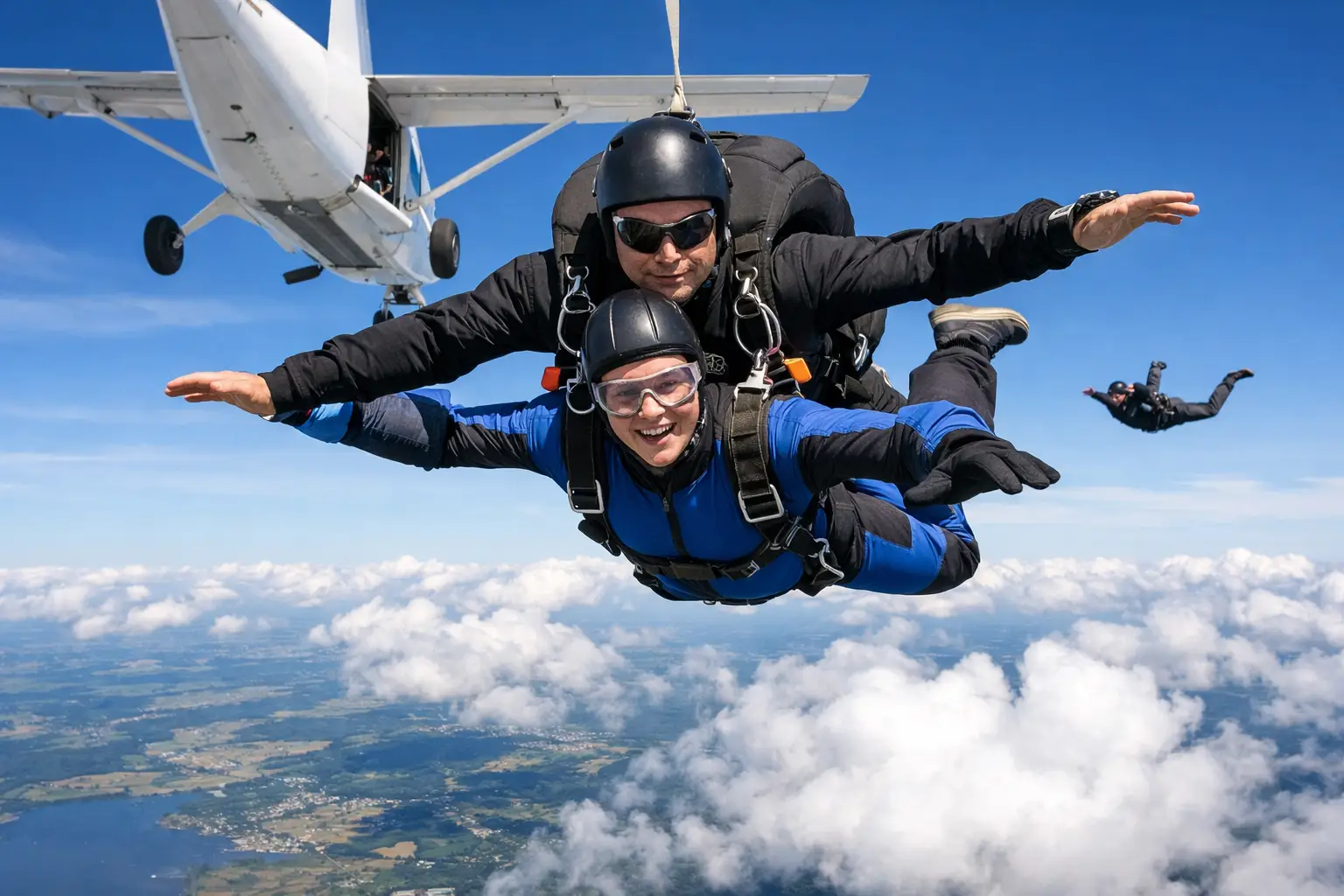
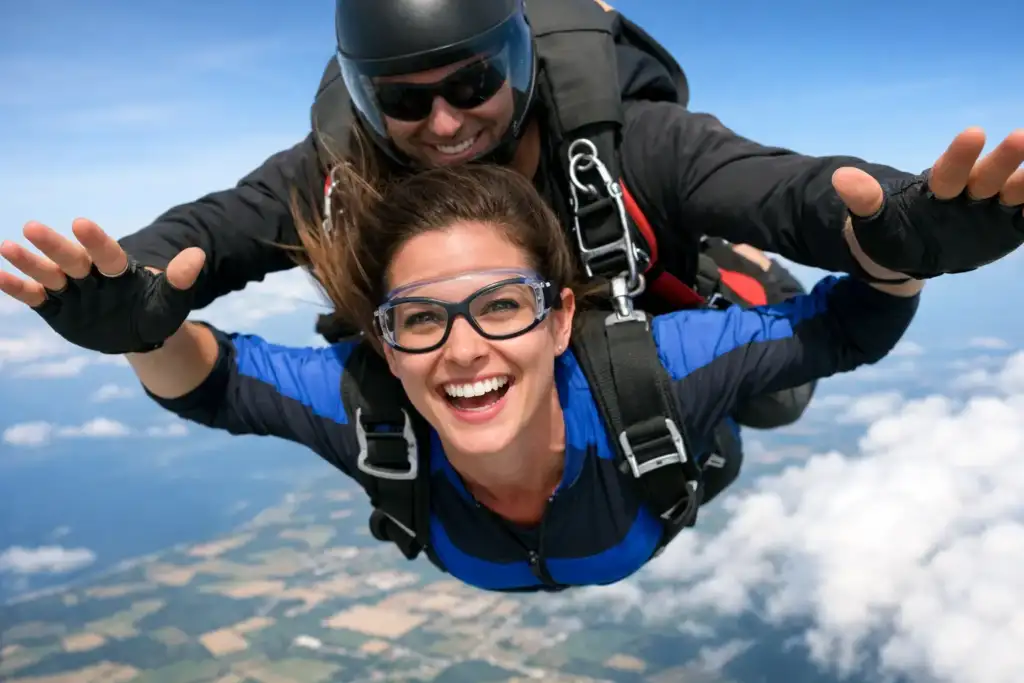
Protective goggles are typically worn over your eyes during the jump, and in many cases they fit right over standard glasses. These goggles matter because freefall brings strong wind pressure. Without eye protection, your eyes would water heavily, and seeing clearly would be difficult whether you wear glasses or not.
How Glasses Stay Secure in Freefall
This is where most people get nervous. They are not really asking whether glasses are allowed. They are asking whether their glasses are going to fly off their face somewhere over Tennessee.
The good news is that tandem operations are used to this. The goggles help hold your glasses in place, and your instructor will check your gear before you board the plane. If your frames are especially large, loose, or fragile, mention that early so the staff can help you think through the best option.
That said, there is always a practical side to it. No one should promise that every pair of glasses is risk-free in every situation. Fit matters. Lightweight frames that already slide down your nose on a normal day may not be ideal. Well-fitted glasses are usually the better choice. If your frames are bent, loose, or already one step away from retirement, this may be the day to wear a backup pair instead.
Glasses vs. Contacts for Skydiving
If you have both glasses and contacts, you may wonder which is better. The answer depends on what feels most comfortable and reliable for you.
Contacts can work well for skydiving, especially under goggles. Many jumpers prefer them because there are no frames to manage. You get a wide field of vision, and there is less concern about glasses shifting. But contacts are not automatically the better choice for everyone. If your eyes dry out easily, if you are new to contacts, or if you simply see better in your glasses, forcing a change on jump day is usually not the move.
Glasses are often the more predictable option because they are what you already trust. You know how they fit. You know how you see in them. For a first-time tandem jump, familiar can be a very good thing.
If you normally wear contacts and plan to jump in them, you should still wear the provided goggles. Those goggles are part of the experience either way. They protect your eyes from wind and help you stay comfortable from exit to landing.
What to Expect on Jump Day if You Wear Glasses
A good skydive experience should feel exciting, not confusing. If you wear glasses, the process is usually very simple.
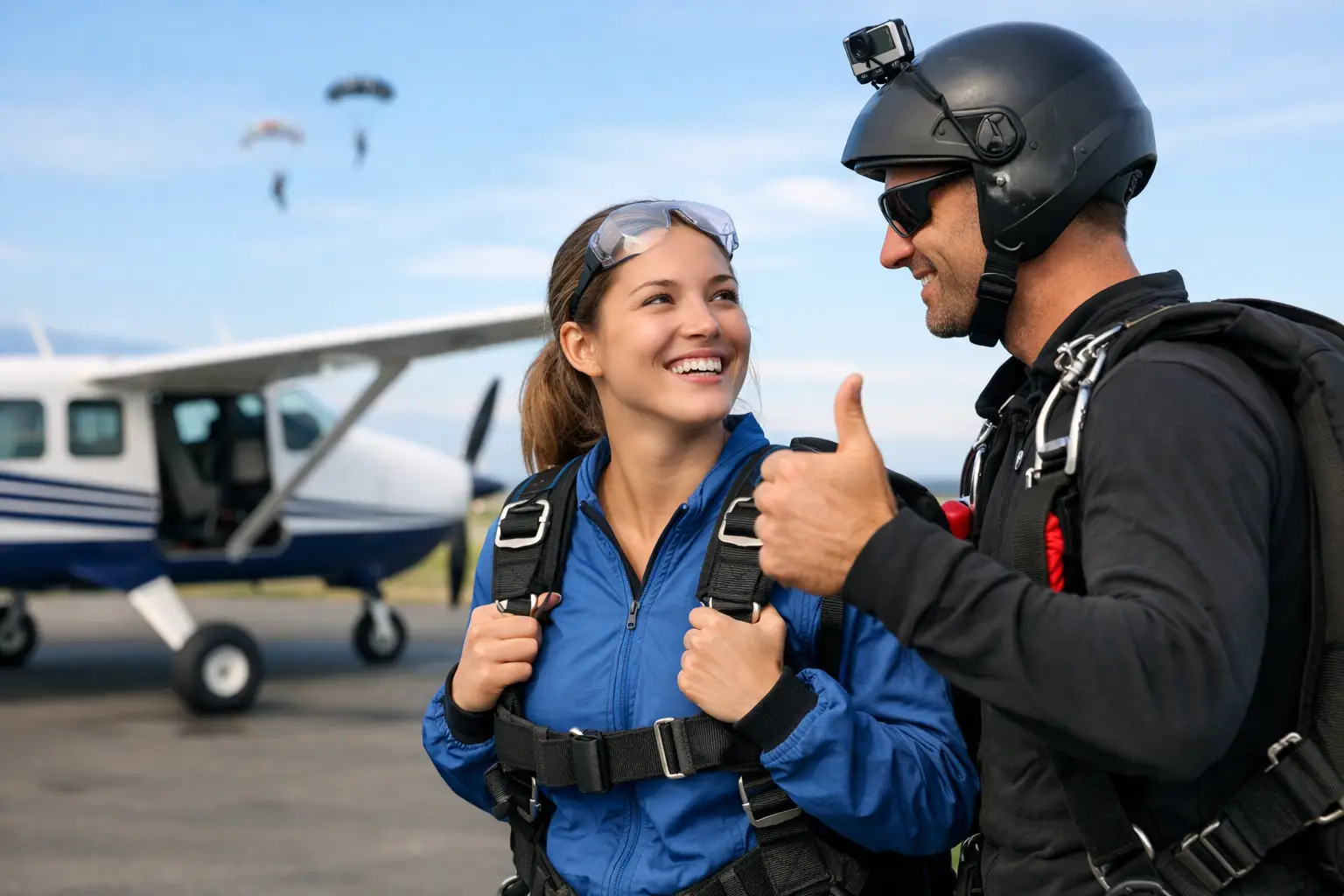
When you arrive, let the staff know that you wear prescription eyewear. Your tandem instructor can make sure your goggles fit properly and that your glasses are secure before boarding. This is not a special request or an unusual situation. It is routine.
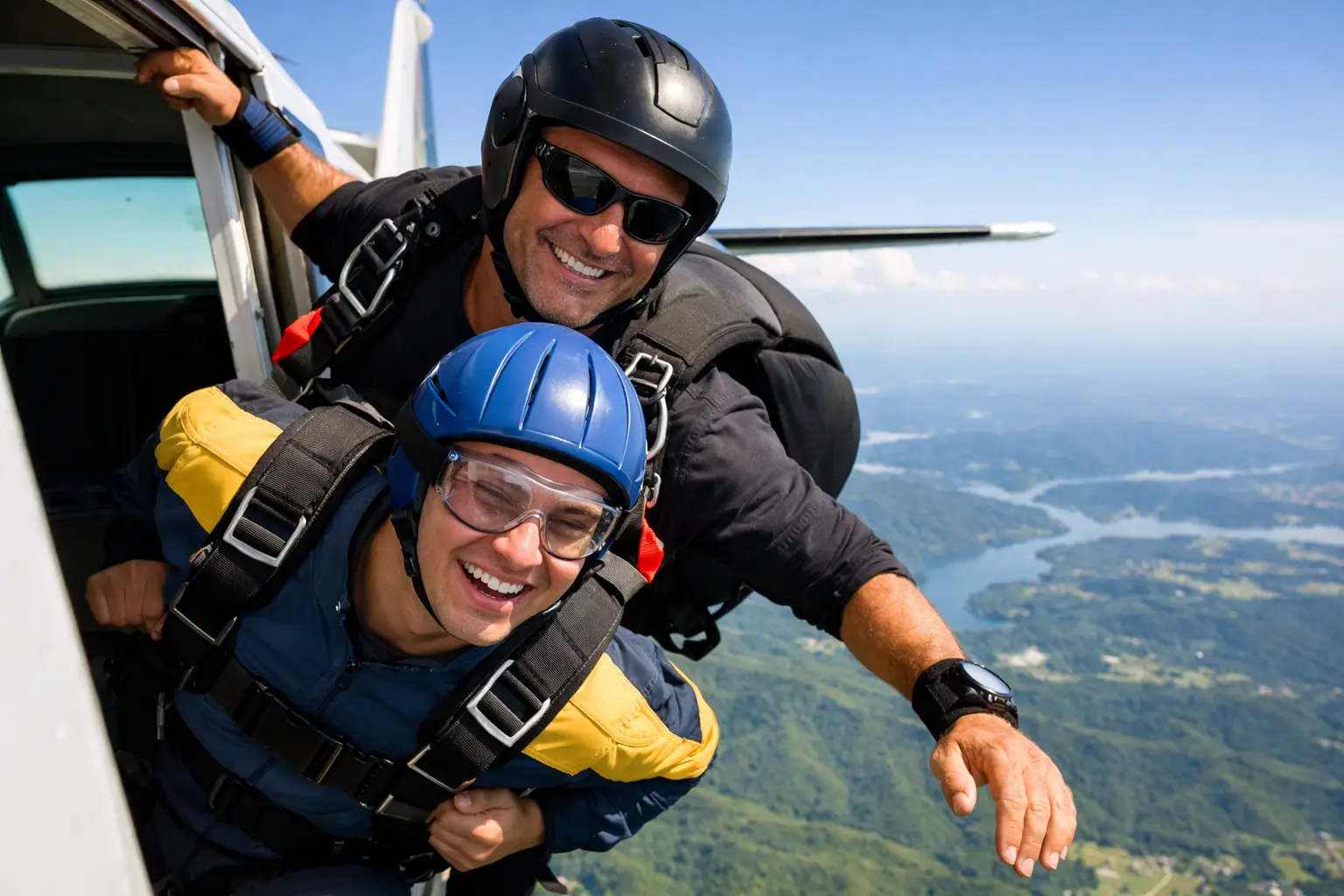
During the plane ride up, you will keep your glasses on just as you normally would. Before exit, your instructor will make any final gear checks. Once the door opens, the focus shifts from nerves to adrenaline. In freefall, the goggles do the work of shielding your eyes and helping keep your glasses in place. Under canopy, things slow down, and you get the reward for all that pre-jump anticipation – the view.
And that view is a big reason clear vision matters. Seeing the patchwork of fields, the rolling Middle Tennessee landscape, and the ground rising up as you come in for landing is part of what makes the experience so memorable.
A Few Smart Tips Before You Skydive With Glasses
There is not much you need to do, but a little preparation helps. If you can, wear a pair of glasses that fit well and feel secure. Avoid frames that are already slipping or sitting crooked. If you own a backup pair, bringing it along is a smart move.
You may also want to use a glasses strap before and after the jump if that is part of your normal routine, but always follow your instructor’s guidance on what should or should not be worn during the skydive itself. Comfort is important, but safety and proper gear fit come first.
It also helps to keep expectations realistic. Your goggles may press your glasses slightly against your face, especially if your frames are thicker. That does not usually stop anyone from enjoying the jump, but it is worth knowing in advance. The goal is secure and functional, not fashion-perfect.
When It Depends
Most people can skydive with glasses without any issue, but there are a few situations where the answer becomes more specific.
If your prescription is extremely strong and you cannot function visually without your glasses, tell the staff that clearly. If your frames are unusually oversized, heavily curved, or delicate, ask whether the available goggles will fit well over them. If you have had recent eye surgery or another medical concern related to your vision, that is a separate issue from simply wearing glasses and should be discussed before booking or jumping.
This is one of those cases where honesty helps everything go smoother. The more your instructor knows, the better they can help you prepare. Tandem skydiving is a guided experience, and communication is part of that safety-first approach.
Will Glasses Affect Your Photos or Video?
Usually, no – at least not in a bad way. If anything, your glasses help you look like yourself in the footage. For a lot of people, that matters. This is a milestone moment, and the best photos are the ones that actually feel like you, not a version of you trying to manage without seeing clearly.
There can be minor glare depending on light and angle, and larger frames may be more noticeable on camera. But those are small details compared to the value of being able to see the horizon, your instructor, and the reaction on your own face as the freefall starts.
If you are adding a photo or video package, wearing whatever helps you feel confident and comfortable is usually the right call.
The Real Answer to Can You Skydive With Glasses
Yes, you can, and plenty of first-time jumpers do. Wearing glasses should not keep you from experiencing the rush of exit, the blast of freefall, and the quiet, unreal beauty of the canopy ride back down.
At Middle Tennessee Skydiving, that kind of question is exactly what first-timers should ask. It shows you are thinking ahead, and that is a good thing. A professional tandem experience is not about throwing you into the unknown. It is about giving you clear answers, expert guidance, and the confidence to enjoy every second of an adrenaline-filled freefall.
If glasses are part of your everyday life, they can be part of your skydive too. Show up, speak up, trust your instructor, and get ready to see the whole thing clearly.