How to Prepare Mentally for Skydiving
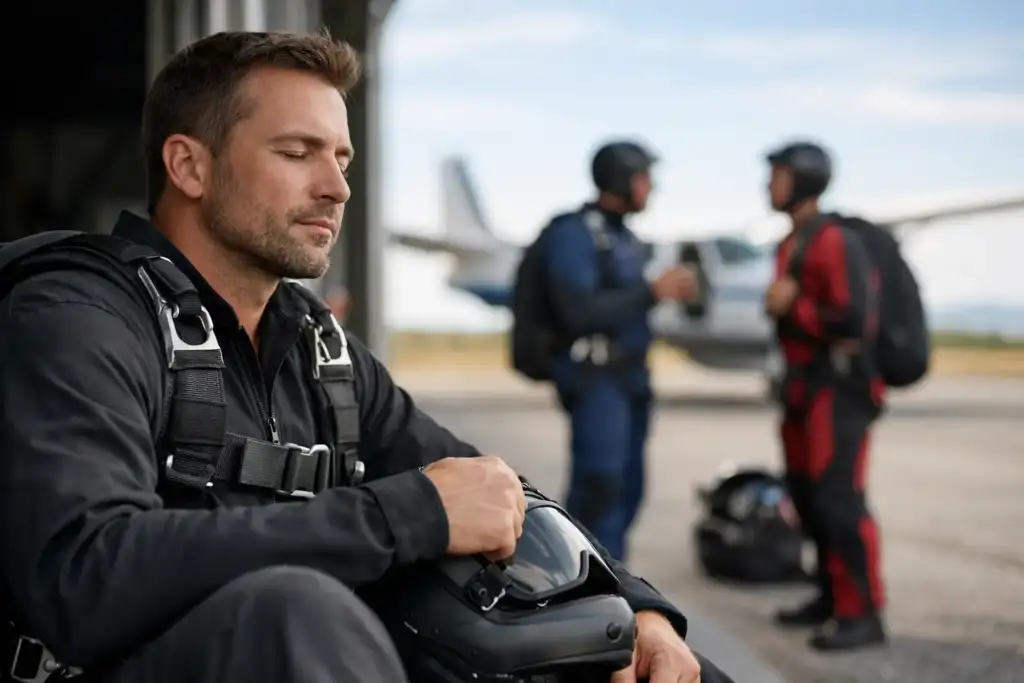
That moment usually hits in the car, not on the plane. You booked the jump, told your friends, maybe even added the photo package – and now your brain starts asking loud questions. What if I panic? What if I freeze? If you are wondering how to prepare mentally skydiving, the good news is this: nerves are normal, and they do not mean you are not ready.
For most first-time jumpers, the mental side is bigger than the physical side. Tandem skydiving is designed for beginners. You are harnessed to a trained, licensed instructor, guided from check-in through landing, and talked through every major step. The real challenge is not becoming fearless. It is learning how to carry some fear without letting it run the show.
Why your mind fights skydiving in the first place
Your brain is built to keep you safe, not to help you leap out of an airplane for fun. So when you think about skydiving, your body may respond like there is danger right in front of you, even while you are standing on solid ground. That can look like sweaty hands, racing thoughts, a tight chest, or the strong urge to cancel.
That reaction does not automatically mean something is wrong. It means your nervous system is doing its job. The key is understanding that fear and actual risk are not the same thing. A professionally run tandem skydive includes trained instructors, structured procedures, maintained equipment, and a clear safety process. Your body may still act like it is under attack, but the experience itself is controlled and guided.
This is why mental preparation matters. You are not trying to talk yourself into feeling nothing. You are training your mind to trust the process long enough to enjoy the thrill.
How to prepare mentally for skydiving before jump day
The strongest confidence usually comes from familiarity. The more unknowns you remove before your jump, the less room your imagination has to create worst-case scenarios.
Start by being honest about what exactly makes you nervous. For some people, it is the height. For others, it is giving up control, worrying about motion sickness, or not knowing what the exit feels like. Naming the fear makes it easier to manage. A vague sense of dread feels huge. A specific concern feels solvable.
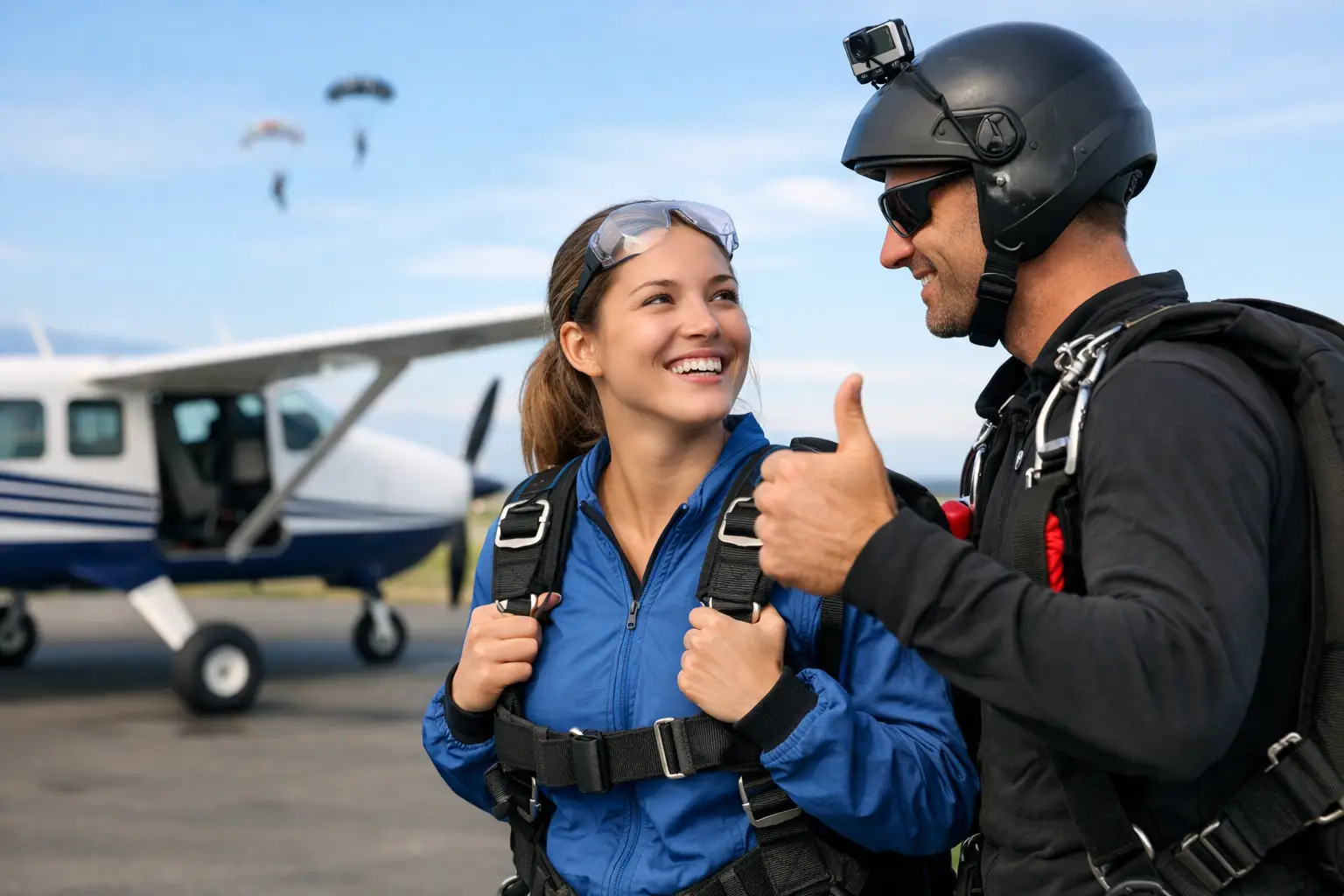
It also helps to picture the day in order. You arrive, check in, meet your instructor, go through a safety briefing, get fitted into gear, board the plane, climb to altitude, exit with your instructor, experience freefall, then float under canopy and land. When you mentally rehearse a clear sequence, your brain has fewer gaps to fill with panic.
Watch your self-talk too. If you keep saying, “I am going to lose it,” your body listens. Swap that for something more grounded, like, “I will be nervous, and I can still do this,” or, “My instructor will guide me through every step.” Confidence does not have to sound dramatic. Usually it sounds calm, practical, and repetitive.
Don’t aim to eliminate fear
A lot of people think they need to feel 100 percent ready before they jump. That standard is what creates extra stress. Most first-time skydivers do not feel completely calm. They feel excited, nervous, and slightly unreal all at once.
That mix is part of the experience. If you wait for fear to disappear, you may keep moving the goalpost. Instead, aim for manageable nerves. The right question is not, “How do I stop being scared?” It is, “How do I stay steady enough to move forward?”
That shift matters. It takes you out of a battle with your emotions and puts you into a more useful mindset. You can be scared and still be ready. You can feel adrenaline and still listen, breathe, and enjoy the jump.
Use simple tools that calm your body fast
Mental preparation is not only about thoughts. Your body influences your mind just as much. If your breathing is shallow and your muscles are tight, your brain reads that as danger. If your breathing slows and your body loosens up, your brain gets a different message.
The easiest tool is controlled breathing. Try inhaling for four seconds, holding for four, and exhaling for six. Do that a few times before you leave home, while you wait, and before boarding the plane. A longer exhale helps reduce the intensity of the fight-or-flight response.
Another helpful move is to keep your focus narrow. Do not mentally jump from the plane while you are still in the parking lot. Stay with the next step only. Check in. Meet your instructor. Listen to the briefing. Put on the harness. Walk to the plane. Fear grows when your mind races too far ahead.
Physical tension also feeds panic. Relax your jaw. Drop your shoulders. Unclench your hands. These small resets sound minor, but they work because they interrupt the body language of fear.
Trust the system, not just your courage
One of the best ways to prepare mentally for skydiving is to stop treating it like a solo test of bravery. Tandem skydiving is built around guidance. You are not expected to know how to do everything yourself, and you are not left to figure it out midair.
This is where choosing a professional operation matters. A strong safety culture changes the mental experience. When your instructor is experienced, clear, and calm, that confidence transfers. When the briefing is organized and the process is straightforward, your brain has less reason to stay on high alert.
At Middle Tennessee Skydiving, first-time jumpers are guided through the entire experience by licensed, USPA-certified instructors, which makes a big difference for anyone battling pre-jump nerves. Trust grows when you know you are in capable hands.
That trust does not mean shutting your brain off. It means letting real information carry more weight than fear-based imagination. Ask questions. Listen carefully. Follow instructions. Confidence is often built through clarity, not hype.
What to do the night before and the morning of your jump
Mental prep gets a lot harder when your body is running on empty. Try to get decent sleep the night before, even if you are too excited to sleep perfectly. Eat a light, balanced meal before your jump instead of skipping food or loading up on junk. Hunger, dehydration, and too much caffeine can make anxiety feel stronger than it really is.
It also helps to protect your mindset. If you have one friend who keeps joking about doom and disaster, maybe do not make them your pre-jump hype person. Be around people who are excited for you, not people feeding your nerves for entertainment.
On the morning of your jump, keep your routine simple. Wear comfortable clothes. Arrive with enough time that you do not feel rushed. Remind yourself that nervous energy is not a warning sign. For many people, it is just the price of doing something unforgettable.
The plane ride is often the hardest part
A lot of first-time jumpers assume the scariest moment is freefall. In reality, the build-up on the way to altitude is often tougher mentally. You have time to think, anticipate, and imagine. Once the jump actually starts, things move fast and your training kicks in.
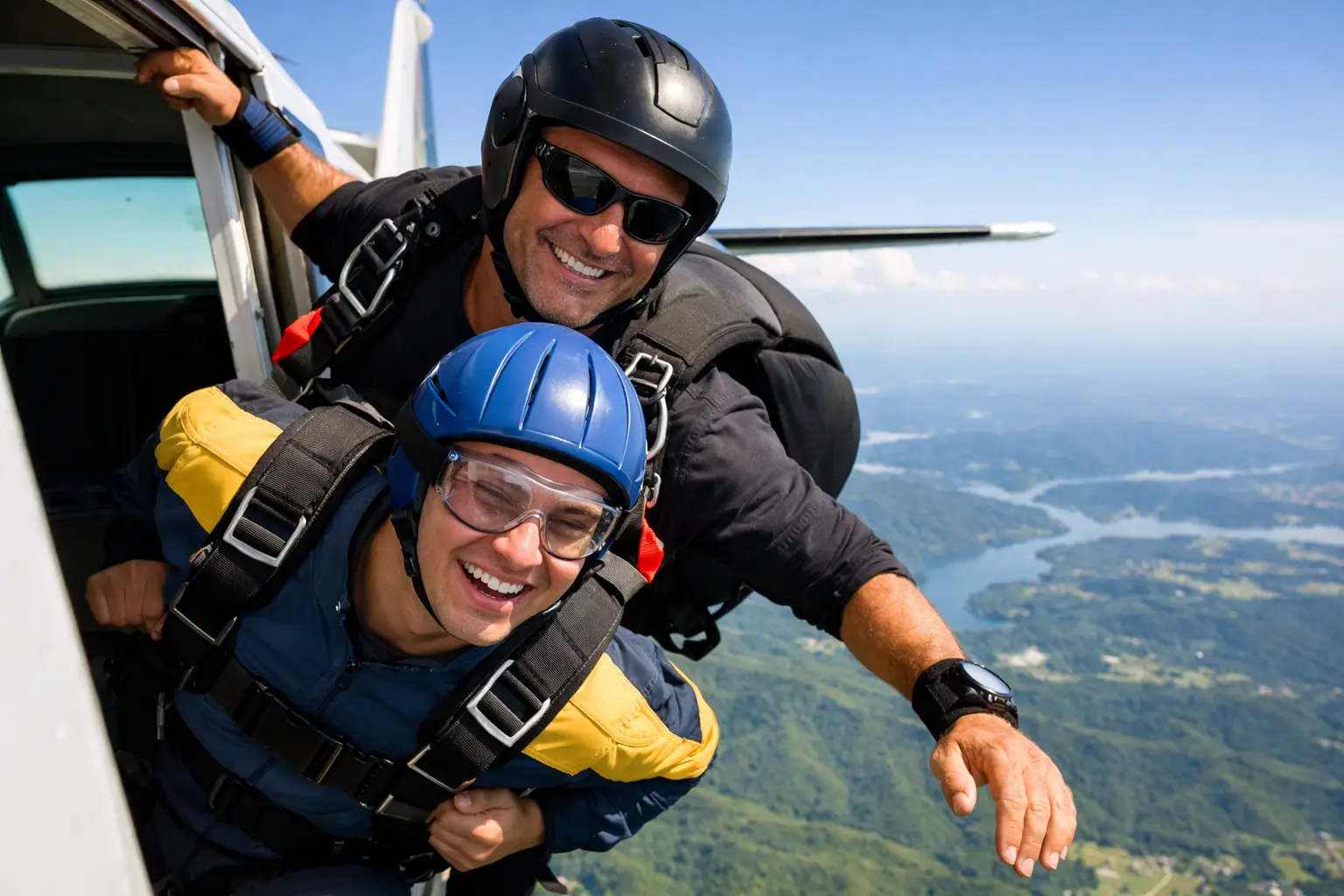
This is why it helps to have a plan for the ride up. Stay connected to your instructor. Breathe. Look outside if that feels grounding, or keep your eyes on your instructor if that feels better. There is no prize for pretending to be relaxed. If you are nervous, say so. Experienced tandem instructors have seen it all, and calm communication helps.
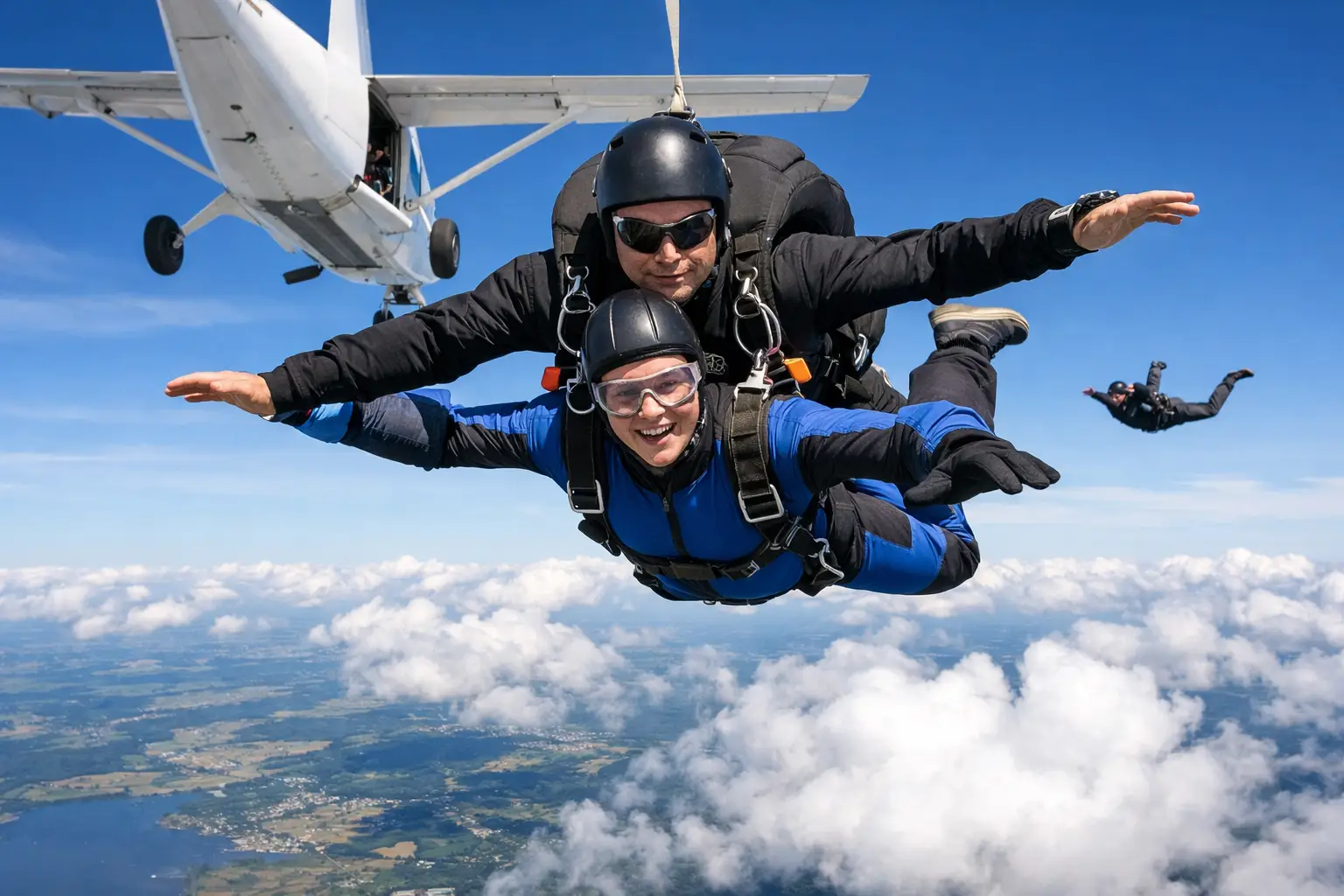
It is also useful to remember that the exit is brief, and freefall does not feel like standing on the edge of a ladder. Most people are surprised that it feels more like intense wind and motion than a dropping sensation. Anticipation is often worse than the reality.
After the jump, expect a mental high
Part of learning how to prepare mentally for skydiving is knowing what waits on the other side. Many jumpers land feeling proud, relieved, loud, emotional, or completely stunned in the best way. That rush comes from doing something your fear told you not to do.
And if your experience is not perfectly calm or graceful, that is fine too. Some people scream. Some laugh nonstop. Some stay quiet until they hit the ground and then cannot stop smiling. There is no perfect emotional performance for a first jump.
What matters is that you showed up, trusted the process, and let yourself have the experience. That is where the real confidence comes from – not from feeling fearless, but from proving to yourself that fear does not always get the final vote.
If your heart is racing before jump day, take that as a sign that this means something to you. Then breathe, listen, and take the next step. Sometimes the best memories start exactly where your comfort zone ends.