What Happens Before Skydiving First Time
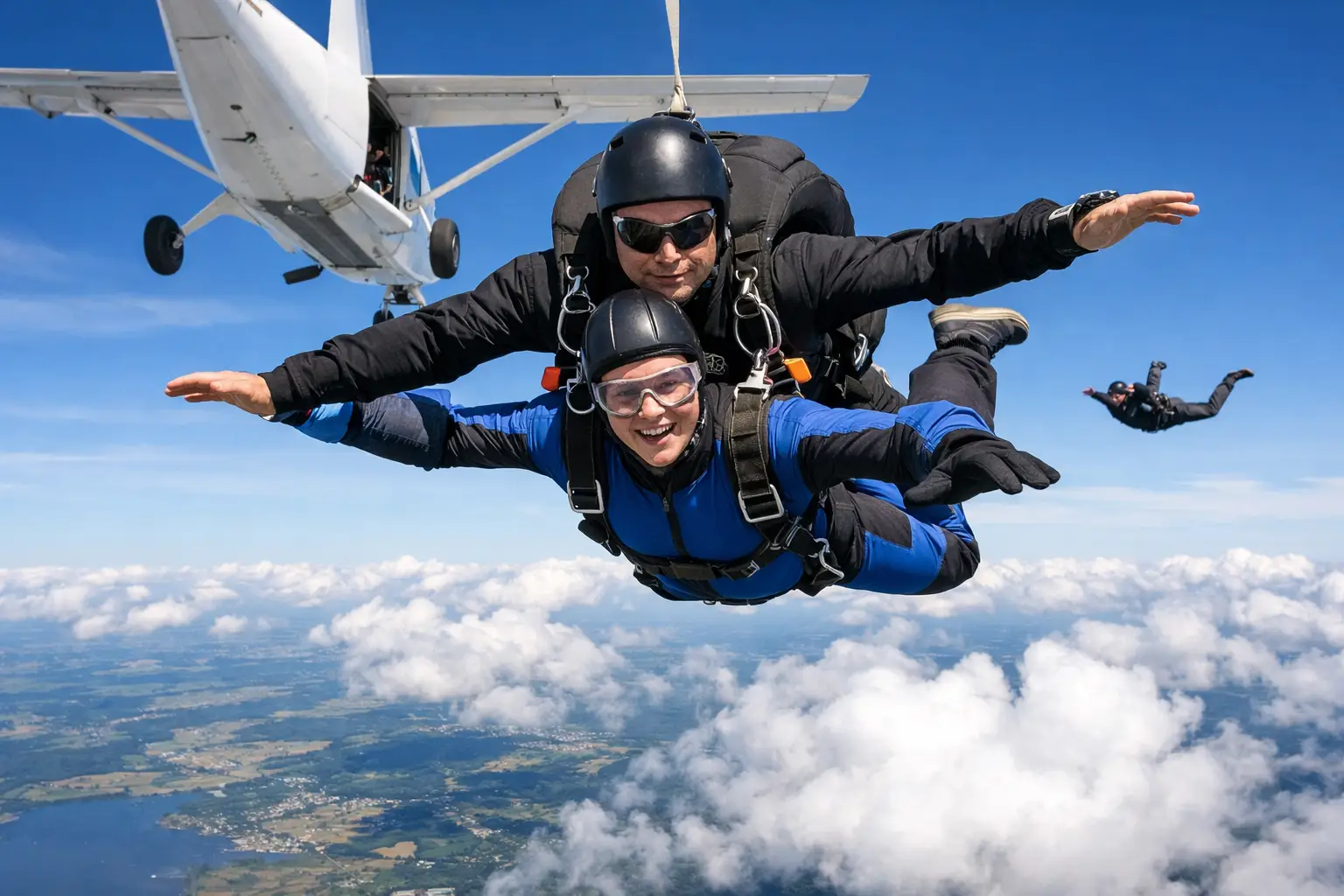
That nervous energy usually starts before you even reach the dropzone. If you are wondering what happens before skydiving, the short answer is this: you check in, meet your instructor, go through a safety briefing, get fitted for gear, and prepare step by step for takeoff. For first-time tandem jumpers, the process is built to replace guesswork with confidence.
That matters, because most people are not afraid of skydiving itself as much as they are afraid of the unknown. Once you understand how the pre-jump experience works, the whole day starts to feel a lot more manageable. You are not expected to show up already knowing anything. That is exactly why tandem skydiving exists.
What happens before skydiving at the dropzone
Your day starts on the ground, not in the airplane. After you arrive, you will check in, complete the required paperwork, and confirm the details of your jump package. If you added photo or video coverage, that is usually handled during this part of the process too.
The paperwork is not there to intimidate you. It is part of a professional operation and gives you a clear overview of the activity, expectations, and safety standards. Staff will also often confirm basics like your reservation, your weight, and whether weather conditions are cooperating. Skydiving is a weather-dependent activity, so flexibility matters. A sunny day does not always mean jump conditions are perfect, and if a delay happens, it is usually because the team is prioritizing safety over speed.
There can also be some waiting involved. That is normal. Aircraft schedules, wind conditions, cloud cover, and the flow of other jumpers all affect timing. If you are the kind of person who likes a minute-by-minute plan, this is one place where it helps to stay loose. The reward is worth it.
Meeting your tandem instructor
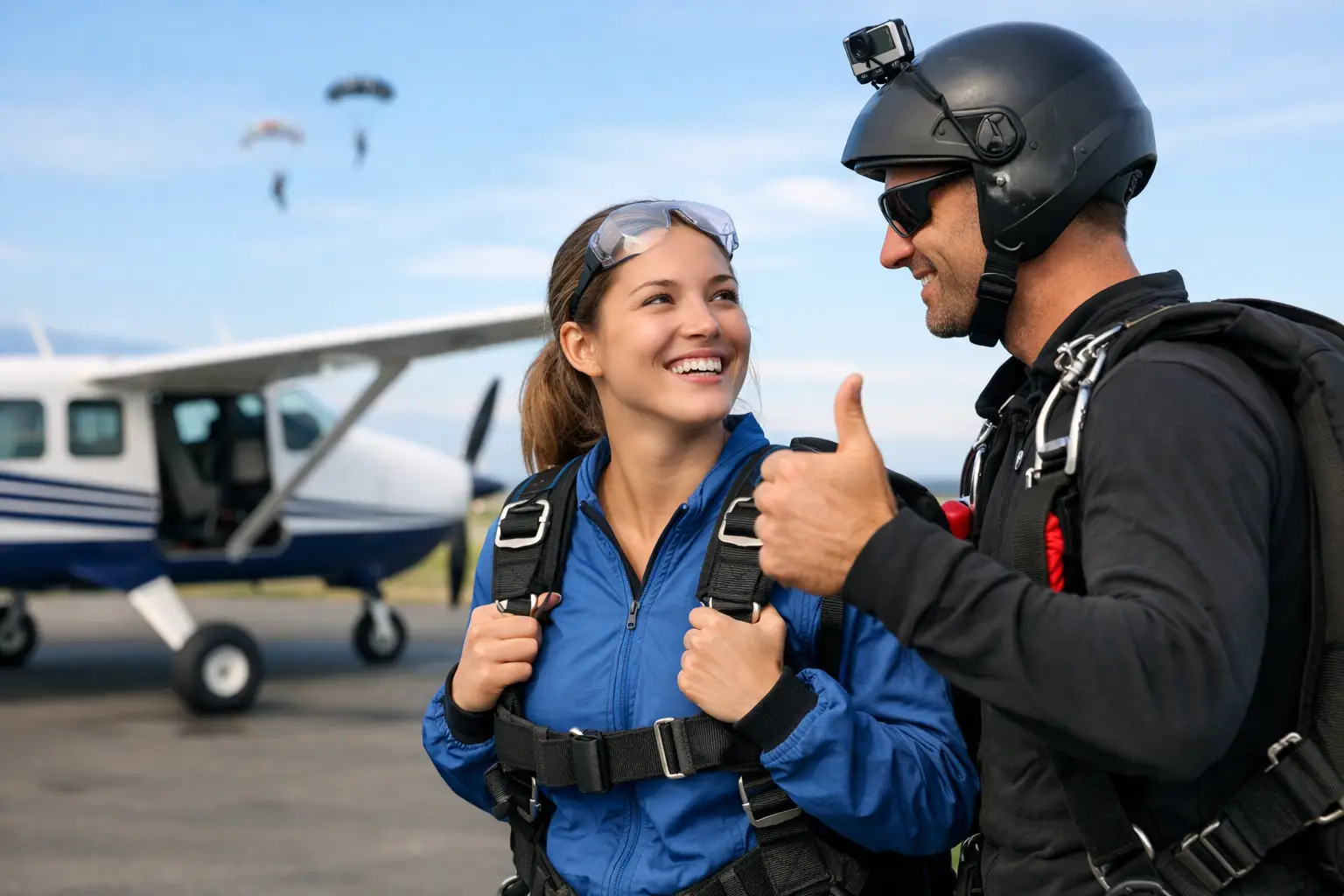
One of the biggest turning points in the day is meeting the person you will actually jump with. In a tandem skydive, you are attached to a licensed, highly experienced instructor who handles the technical side of the jump. That alone changes the experience for first-time jumpers. You are not being asked to become an expert in one morning. You are being guided by one.
This is usually the moment when a lot of nerves settle down. You can ask questions, say out loud that you are anxious, and get direct answers from someone who has done this many times before. A good instructor will be calm, clear, and straightforward. They know what first-timers worry about because they hear those concerns every day.
Some people want every detail. Others just want to know the basics and get moving. Either approach is fine. The goal is the same: you understand what is going to happen, what your role is, and how your instructor will lead the jump from exit to landing.
The safety briefing before skydiving
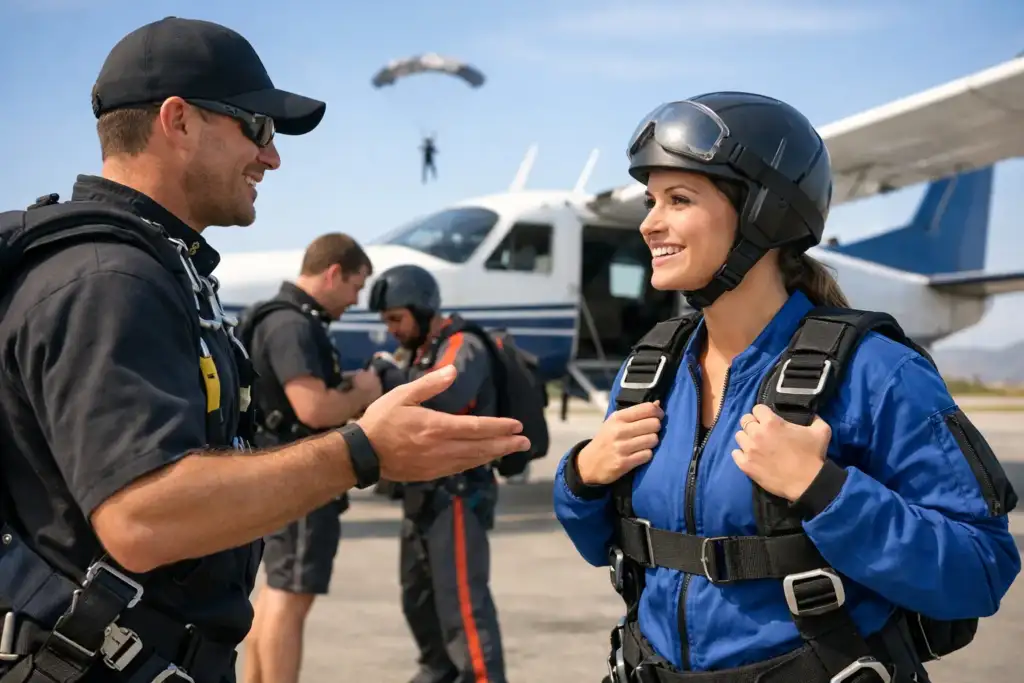
This is the part people often imagine as complicated, but it is usually simple and focused. The briefing covers the key parts of the jump without overwhelming you. You will learn how the harness works, how to position your body during exit, what to do during freefall, and how to lift your legs for landing.
For tandem skydiving, your job is important, but it is not highly technical. You are there to listen, follow directions, and stay in the right body position when your instructor tells you to. That is very different from training for a solo jump, which takes far more instruction and practice.
The briefing may include a few practice movements on the ground. You might rehearse the arch position, head placement, and leg position for landing. This is not about turning you into a skydiver in 20 minutes. It is about making the actual jump feel familiar when the big moment arrives.
If you are nervous, this part helps more than you might expect. Fear tends to grow in empty space. Clear instructions shrink it.
Getting geared up
After the briefing, you will get fitted into a tandem harness. This is the part that starts to make the whole thing feel real. The harness is secure and snug by design. It needs to be. Your instructor and staff will adjust it so it fits correctly and comfortably enough for the jump.
You may also be given goggles and any other required gear. Clothing matters too, even before the harness goes on. Comfortable, weather-appropriate clothes and secure shoes are usually the right call. Think practical, not fancy. You are here for an adrenaline-filled bucket-list experience, not a fashion show.
Once geared up, your instructor will likely do another check. Safety in skydiving is not based on one quick glance. It is built on repeated, deliberate checks from trained professionals. That can feel reassuring when you notice how methodical the process is.
The mental side of what happens before skydiving
There is a very specific moment before a first jump when excitement and nerves collide. You have signed the forms, listened to the briefing, put on the harness, and now there is nothing left to do but go. For some people, that is when their heart rate spikes. For others, that is when they finally relax.
Both reactions are normal.
The mental game before skydiving is not about pretending you are fearless. It is about trusting the process. A well-run tandem operation does not rush you blindly from the parking lot to the plane. It walks you through each phase with purpose. That structure helps turn a huge idea into a series of manageable steps.
It also helps to remember that anticipation is often more intense than the jump itself. Many first-timers say the build-up on the ground and the ride to altitude feel more nerve-racking than stepping out of the aircraft. Once the jump starts, your brain has something real to focus on, and the experience tends to shift fast from fear to pure adrenaline and awe.
The plane ride up
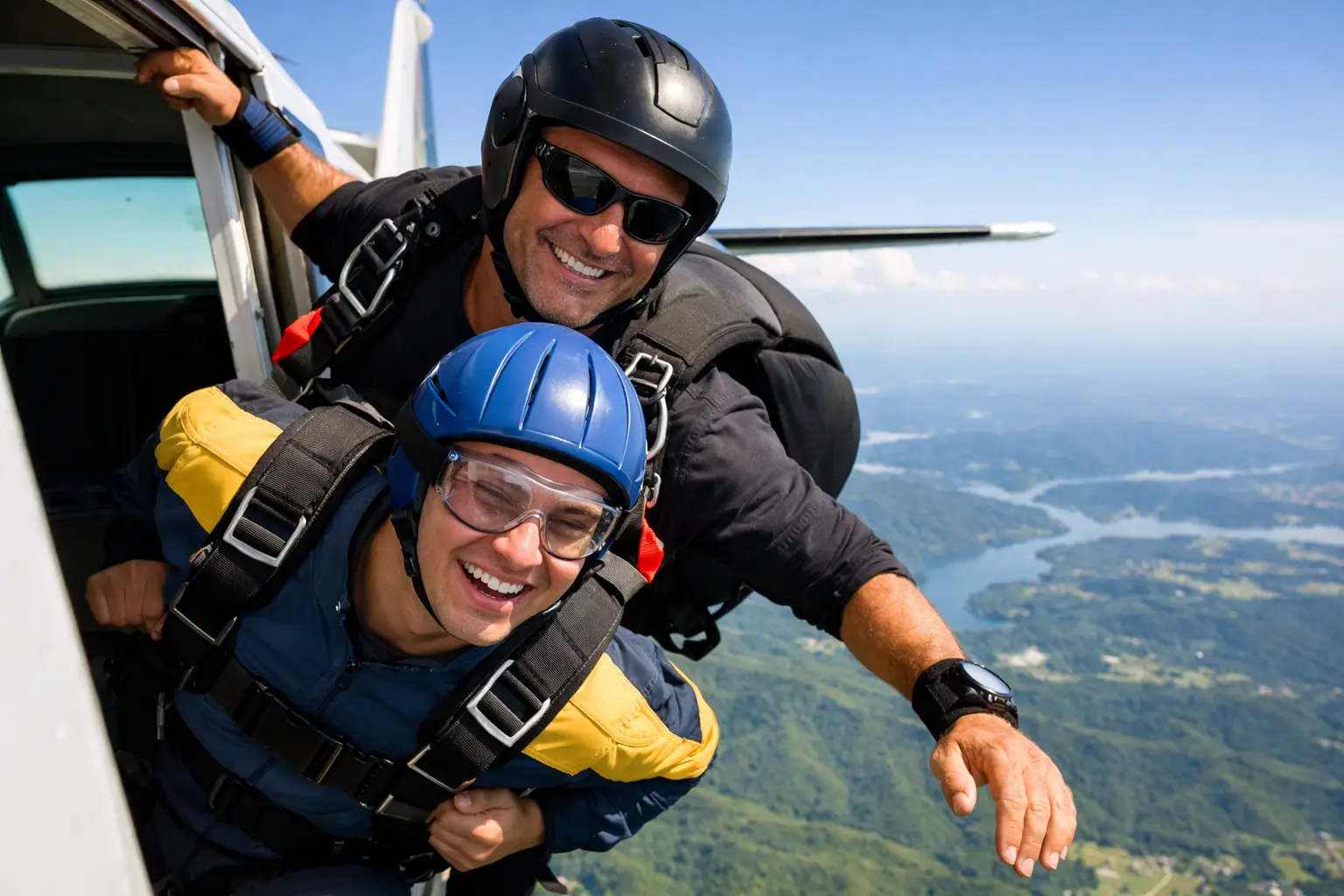
Before skydiving actually begins, there is still the flight to altitude. You will board the aircraft with your instructor and other jumpers, settle in, and climb. This is when the view starts opening up and the reality of the experience really lands.
The ride up can feel quiet, exciting, surreal, or all three. Some people talk the whole way. Some stare out the window. Some laugh because they cannot believe they are really doing it. There is no perfect reaction.
Your instructor will continue preparing during the ascent. They may tighten or recheck parts of your harness, review body position again, and let you know what will happen at the door. This final stretch is not random. It is another layer of preparation, and it matters.
If weather or traffic in the jump order changes anything, the instructor adapts. That is one of the benefits of a tandem jump. You do not have to manage the variables yourself. You just stay connected, stay aware, and follow directions.
What first-timers should know before they arrive
If you want the pre-jump process to feel smoother, a little preparation on your side goes a long way. Eat a light, normal meal. Show up hydrated. Get a decent night of sleep. Wear comfortable clothes and lace-up athletic shoes. Avoid turning the day into some dramatic test of courage where you skip food and run on caffeine alone.
It also helps to arrive with the right expectation. Skydiving is a real aviation activity, not a carnival ride. That means timing can shift, weather can delay takeoff, and safety checks come before convenience every time. The good news is that this is exactly what you want from the team you are trusting with your jump.
If you are coming with friends, a partner, or a group, the atmosphere often gets even better. There is something special about sharing the nerves, the buildup, and the payoff. And if you are planning to capture the experience, adding media can make a big difference. The moments before the jump are part of the story too – the grin, the nerves, the final gear check, the walk to the plane.
At a place like Middle Tennessee Skydiving, that full experience matters. The jump is the headline, but the confidence you build before takeoff is what makes the whole day feel unforgettable.
Why the pre-jump process matters
People sometimes think the skydive starts when the airplane door opens. It does not. The experience starts when you arrive and hand your trust to a professional team. Everything before takeoff is designed to support the moment you leave the plane – not just for safety, but for confidence.
That is why the best pre-jump experiences feel both exciting and grounded. You want the thrill. You also want to know that trained people are paying attention to every detail, answering your questions clearly, and preparing you for what is ahead.
If you are thinking about booking your first tandem jump, do not let uncertainty be the thing that stops you. What happens before skydiving is not a mystery once you see how the day is structured. It is a guided process built to take a first-time jumper from nervous curiosity to the kind of memory that stays with you long after your feet touch the ground.